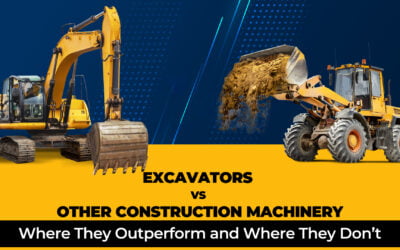
Construction Excavators vs. Other Machinery: Where They Outperform and Where They Don’t
Choosing the right equipment is critical to the success of any construction project. While construction excavators are widely used for their...


In construction and demolition projects, the hydraulic breaker hammer is crucial for efficiently breaking through rigid materials such as concrete and rock, significantly accelerating project progress. This guide thoroughly examines the essential factors when choosing the proper breaker hammer for excavators or mini excavators. It delves into matching hydraulic hammer specifications (including impact energy class) with excavator (or skid steer) capabilities to ensure optimal performance and avoid potential equipment damage. Furthermore, this article explores the financial considerations of renting versus purchasing a breaker hammer. It provides industry professionals with a comprehensive analysis to make informed decisions based on their specific project requirements and economic constraints.

Hydraulic breaker hammers are high quality hydraulic hammers fitted to excavators (and skid steers) for demolishing concrete structures or rocks. They are widely used in the construction, mining, and demolition industries. This overview will discuss hydraulic breaker hammers’ design, function, and applications, providing insights into why they are indispensable tools in these sectors.
A hydraulic breaker hammer converts the hydraulic energy provided by the excavator machine into mechanical energy delivered as powerful blows. The core components of a hydraulic breaker include the piston, cylinder, and chisel. Here’s how they work:
Hydraulic breaker hammers are versatile tools known for incredible reliability that are used in a variety of applications:
Hydraulic breaker hammers offer several benefits:
Hydraulic breaker hammers are essential tools that enhance productivity and safety in construction, mining, demolition, and quarrying. Their robust design and powerful and precise braking capabilities make them invaluable in any setting where hard materials must be efficiently broken down.

Selecting the correct breaker hammer for your excavator is crucial for enhancing operational efficiency and achieving optimal results in construction and demolition projects. This section will guide you through matching the right breaker hammer to your excavator, considering the technical compatibility, the variety of breaker hammers available, and the specific requirements of your projects. Job site conditions also play a crucial role in determining the most suitable hydraulic hammer, as different environments may demand specific features or performance levels.
The selection process is influenced by both technical specifications and job site factors, ensuring you choose the best breaker hammer for your needs.
The compatibility between the excavator and the breaker hammer is fundamental to ensure efficient and safe operations. Here are the key specifications to consider:
Different types of breaker hammers are designed to suit various environments and tasks. Understanding these can help you choose the right one for your needs:
1. Silenced Breakers: These breakers are enclosed within a sound-mitigating housing that significantly reduces noise output. These are typically known as box hydraulic breaker hammers. They are ideal for urban or residential areas where noise pollution is a concern. They help comply with local noise regulations without sacrificing performance.
2. Vibration-Reduced Breakers: Equipped with advanced vibration-dampening technology, these breakers minimize the vibrations transmitted to the operator. This not only improves operator comfort and reduces fatigue but also prolongs the lifespan of the excavator’s arm by reducing stress.
3. Automatic Power Adjustment Breakers: These breakers feature automatic adjustment capabilities, allowing them to alter their impact energy based on the hardness of the material they encounter. This adaptive feature ensures optimal energy usage, improving efficiency and reducing wear.
4. Selector Grab and Monobloc Breakers: Selector grab breakers offer versatility with easy tool changes, allowing operators to quickly switch between attachments and improve productivity on the job site. Monobloc breakers, built from a single piece of steel, offer enhanced durability and lower maintenance due to fewer moving parts.
The choice of breaker should also be tailored to the specific conditions and requirements of the project:
Nature of the Project: Different types of projects, such as demolition, trenching, or excavation, require different breakers. For example, a heavily reinforced concrete demolishing project would benefit from a robust breaker designed for high-impact energy.
Material Hardness and Volume: The material’s hardness is a decisive factor in selecting a breaker. More complex materials demand breakers with higher impact energy to break them efficiently. The volume of material to be processed also affects the choice; larger volumes may require a more powerful breaker to maintain productivity. Additionally, the breaker’s effectiveness in handling large volumes or tough materials is a key consideration for project planning.
By carefully assessing these factors—understanding the excavator’s capabilities, choosing the appropriate type of breaker, and considering the project’s specific needs—you can effectively select a hydraulic breaker hammer that not only fits your excavator but also maximizes productivity and efficiency for your construction or demolition projects.

Deciding whether to rent or buy a breaker hammer involves a detailed cost analysis to determine the most economically viable option based on the project’s duration and financial implications. Working with an authorized dealer can help customers make informed decisions and access expert guidance, ensuring they select the right equipment for their needs. This section will explore the cost considerations for renting and purchasing a breaker hammer, examining the short-term and long-term economic impacts and highlighting the advantages and disadvantages of each option.
The decision to rent or buy often hinges on the projected duration of your projects:
Understanding the full spectrum of financial implications for both renting and buying is crucial:
Breaker hammer rental offers distinct advantages and some potential drawbacks:
Advantages:
Disadvantages:
Purchasing a breaker hammer also has its advantages and limitations:
Advantages:
Disadvantages:
In conclusion, renting or buying a breaker hammer should be based on a thorough analysis of project duration, financial capacity, operational needs, and long-term business strategies. This approach ensures the decision aligns with immediate project requirements and broader financial objectives.


In conclusion, selecting the proper breaker hammer for your excavator is a multifaceted decision encompassing technical specifications, project requirements, and financial considerations. By evaluating factors such as hydraulic capacity, project scope, and cost implications, informed decisions can be made to maximize efficiency and minimize expenditures. Whether opting for rental flexibility or long-term ownership, choosing the ideal breaker hammer empowers construction and demolition professionals to achieve unparalleled impact and efficiency in their endeavors.

Choosing the correct breaker depends on aligning the hammer’s hydraulic flow, pressure range, and weight class with your excavator’s capabilities. A properly matched breaker ensures optimal energy transfer, higher productivity, and minimal wear on the machine. Using an oversized or undersized hammer can lead to poor performance, reduced impact efficiency, and even costly damage to the carrier’s hydraulic system or structure.
Each type of breaker is designed for specific job site needs. Silenced breakers are encased in noise-reducing housings, making them ideal for urban, residential, or noise-sensitive projects. Vibration-reduced breakers feature dampening technology that improves operator comfort, reduces fatigue, and extends the lifespan of excavator components. Standard breakers, while louder and transmitting more vibration, deliver maximum impact force for heavy-duty construction, mining, and quarrying applications.
The decision comes down to project frequency and financial strategy. Renting is ideal for short-term or occasional projects, allowing you to reduce upfront costs and avoid maintenance responsibilities while accessing the latest models. Purchasing is more cost-effective for frequent or long-term use, providing greater flexibility, unlimited operational hours, and potential resale value. Businesses with consistent demand often see a higher return on investment through ownership.
Hydraulic breaker hammers are versatile attachments used across construction, demolition, mining, and quarrying. They excel at breaking reinforced concrete, demolishing building foundations, trenching through hard ground, splitting large boulders, and fragmenting quarry rock. Their controlled impact and high power make them indispensable for projects requiring precision and force in material reduction or site preparation.
A correctly matched breaker significantly enhances job site performance by reducing cycle times, increasing production rates, and minimizing equipment strain. This leads to fewer maintenance interruptions, lower fuel consumption, and improved safety conditions. Over time, these benefits translate into reduced operational costs, faster project turnaround, and improved profitability — key priorities for B2B contractors and project managers.
Get in touch with us now!
Choosing the right equipment is critical to the success of any construction project. While construction excavators are widely used for their...

Excavators have long been the backbone of earthmoving operations, valued for their digging precision, reach, and raw lifting power. But in today’s...

When it comes to keeping excavation projects on schedule, having the right parts for the right equipment is non-negotiable. For procurement teams...