Construction Excavators vs. Other Machinery: Where They Outperform and Where They Don’t
Choosing the right equipment is critical to the success of any construction project. While construction excavators are widely used for their...

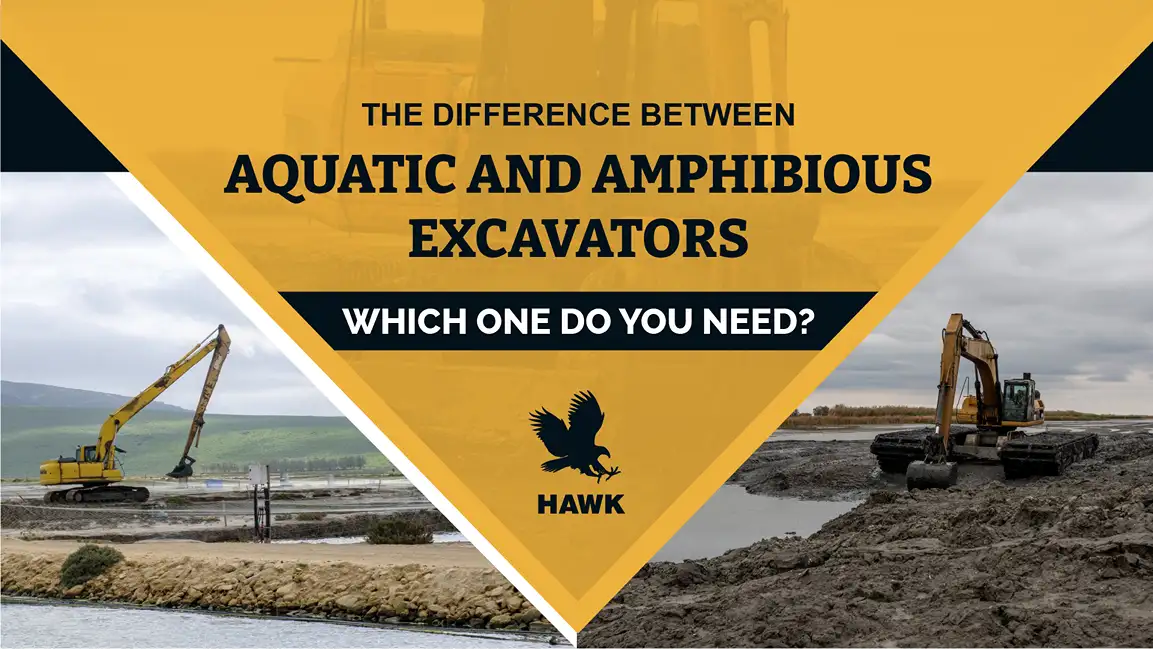
Excavation equipment has become an essential tool for tackling challenging environments, particularly water-based projects. From dredging waterways to constructing flood defenses, the need for specialized machinery has grown significantly. Among the various options available, aquatic excavators and amphibious excavators stand out as innovative solutions designed to handle these demanding tasks.
Selecting the right excavator for your specific project is crucial to achieving efficiency and minimizing environmental impact. With technological advancements, the line between aquatic excavation and traditional land-based excavation has blurred, giving rise to equipment capable of operating in both water and wetland environments.
This blog will explore the unique features, advantages, and applications of aquatic and amphibious excavators, helping you make an informed decision about your next project.


An aquatic excavator is a specialized piece of machinery designed for operations in water-based environments. It is equipped to perform tasks in fully submerged or semi-submerged conditions, making it ideal for challenging aquatic excavation projects.
Aquatic excavators are engineered to function seamlessly in environments where traditional excavators would struggle. These machines are typically mounted on pontoons or floating platforms, enabling them to navigate and work in lakes, rivers, and coastal areas. The hydraulics and attachments are specially designed to handle the resistance and challenges of underwater operations, ensuring precise excavation and material removal.

By leveraging their advanced features and capabilities, aquatic excavators have become indispensable for industries that operate in and around water. Their ability to handle submerged and semi-submerged conditions makes them a preferred choice for a variety of challenging tasks.

An amphibious excavator is a highly versatile machine engineered to operate effectively on both land and water. Designed to handle unstable and marshy terrains, they are perfect for environments that require mobility across different types of surfaces.

Amphibious excavators are designed to traverse solid ground and waterlogged environments seamlessly. The pontoon undercarriage system allows the excavator to float and maintain stability while working in shallow water or swamps. The unique design also ensures that the excavator can maneuver in soft, unstable terrains without the risk of sinking or tipping over.
Amphibious excavators have become a preferred solution for projects that require adaptability and reliability in diverse and challenging terrains. Their innovative design and performance make them valuable assets for industries working in both land and aquatic environments.

Understanding these key differences helps in selecting the right excavator for your project. Both aquatic and amphibious excavators offer unique advantages, making them invaluable for water-based and challenging terrain projects.

By carefully evaluating these factors, you can select the ideal excavator for your project’s unique requirements. Whether it’s deep-water excavation or mixed-terrain versatility, the right machine can significantly enhance efficiency and ensure project success.
Advancements in engineering are continuously pushing the boundaries of what aquatic and amphibious excavation equipment can achieve. New materials, improved hydraulic systems, and smarter control mechanisms are making these machines more durable, efficient, and capable of handling increasingly complex tasks. For example, the integration of autonomous technology and GPS-based navigation systems is enhancing precision in underwater and wetland operations.
Manufacturers prioritize sustainability by designing machines that minimize environmental impact. Features such as low-emission engines, biodegradable hydraulic fluids, and noise-reduction technologies are becoming standard. Additionally, enhanced safety measures, including advanced stability systems and remote monitoring capabilities, are improving operational security and reducing the risk of accidents.
As the world emphasizes sustainable practices, aquatic and amphibious excavators are finding new roles in environmental restoration projects. From reshaping wetlands to combat climate change to dredging waterways for renewable energy installations, these machines are pivotal in enabling sustainable development. The growing demand for eco-friendly infrastructure is likely to spur further innovation in this field.
The future of aquatic and amphibious excavation equipment is bright, with ongoing advancements set to expand their applications and capabilities. These trends highlight the industry’s commitment to efficiency, environmental stewardship, and safety, ensuring these machines remain indispensable tools for years to come.

Choosing between aquatic and amphibious excavators ultimately depends on your project’s unique demands. While aquatic excavators excel in fully submerged conditions, amphibious excavators provide unparalleled versatility for mixed terrains. By understanding the key differences in design, operating environments, mobility, and maintenance requirements, you can make an informed decision that aligns with your project needs.
Before making your selection, it’s essential to assess factors such as terrain type, water depth, environmental impact, budget, and regulatory requirements. Whether you’re interested in deep-water excavation or navigating marshy landscapes, the right excavator will enhance efficiency and contribute to the success of your project.
Get in touch with us now!
Choosing the right equipment is critical to the success of any construction project. While construction excavators are widely used for their...

Excavators have long been the backbone of earthmoving operations, valued for their digging precision, reach, and raw lifting power. But in today’s...

When it comes to keeping excavation projects on schedule, having the right parts for the right equipment is non-negotiable. For procurement teams...