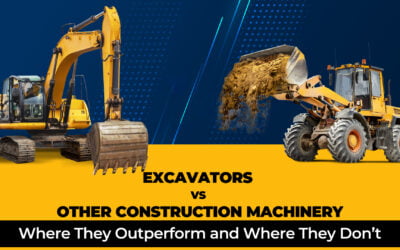
Construction Excavators vs. Other Machinery: Where They Outperform and Where They Don’t
Choosing the right equipment is critical to the success of any construction project. While construction excavators are widely used for their...


Dredging plays a vital role in maintaining waterways, restoring ecosystems, and supporting infrastructure development across a wide range of industries. From clearing silted harbors to restoring wetlands and managing flood risks, the choice of dredging equipment can significantly influence project success. Among the many options available, two primary approaches dominate the field: conventional dredging methods and amphibious excavator dredging. Each technique offers distinct advantages, limitations, and use cases, depending on terrain conditions, project scope, and environmental requirements.
As the demand for more adaptable and environmentally conscious solutions grows, the use of amphibious dredge excavators has gained momentum in areas where traditional barge-mounted systems struggle to operate. Equipped with features like floating pontoons and specialized dredge bucket excavators, these machines are designed to function in shallow, swampy, or soft-soil environments with precision and efficiency. This article provides a comprehensive comparison between conventional dredging methods and amphibious dredging technology, helping contractors, engineers, and project managers determine the most effective approach for their specific dredging needs.

Amphibious excavator dredging refers to the use of specially engineered dredging excavators capable of operating efficiently in environments where conventional land or water-based equipment fails. These machines are purpose-built to function in saturated, unstable, or semi-submerged conditions such as wetlands, marshlands, swamps, and shallow water bodies. Unlike standard excavators, an amphibious dredge excavator features enhanced mobility and stability on soft or watery terrain, making it an indispensable tool for environmental dredging and hydraulic projects.
The core objective of amphibious excavator dredging is to provide a reliable solution for sediment removal, channel deepening, and land reclamation in areas where access is limited and the ground is too soft to support heavy equipment. These machines bridge the gap between floating dredgers and land-based units by combining mobility with dredging capabilities in challenging and often sensitive ecosystems.
The standout features of an amphibious dredge excavator revolve around its ability to float, maneuver, and perform efficient dredging tasks in waterlogged or semi-submerged conditions. Key components include:
These design elements ensure that amphibious excavators can travel across aquatic terrain, perform stable excavation, and minimize environmental impact compared to larger barge-mounted dredging systems.
Amphibious excavator dredging is particularly valuable for projects where environmental sensitivity and access limitations are key considerations. Typical applications include:
In each of these scenarios, the adaptability and low-ground-pressure design of amphibious dredge excavators offer a safer, more efficient, and environmentally conscious alternative to traditional dredging methods.

Traditional dredging relies on large-scale, purpose-built equipment designed primarily for deepwater and offshore projects. The two most common approaches are mechanical dredging and hydraulic dredging, each with distinct operational methods and suitable applications.
While effective in many scenarios, conventional dredging methods depend heavily on stable operating platforms and often require support vessels and infrastructure. Unlike a dredging excavator designed for amphibious tasks, these systems are less adaptable to constrained or sensitive environments.
Conventional dredging is best suited for large-scale or high-volume applications where access by water is not a challenge. These include:
In these environments, conventional methods provide powerful and efficient excavation capabilities, especially when paired with dedicated disposal infrastructure and open access to waterborne transport routes.
Despite their advantages, traditional dredging systems face significant limitations in certain operational contexts:
For these reasons, when projects involve delicate ecosystems or limited access, a dredging excavator with amphibious excavator dredging capabilities, equipped with specialized tools like a dredge bucket excavator, may offer a more practical and environmentally responsible alternative.

Understanding the key differences between amphibious excavator dredging and traditional dredging methods is essential for selecting the right approach for your project. While both use forms of dredging excavator technology, they differ significantly in terms of mobility, efficiency, costs, and environmental impact. Here’s how these two approaches compare:
Amphibious dredge excavators are engineered for environments where conventional equipment simply cannot operate. Their floating pontoons and extended reach allow them to traverse marshes, wetlands, swamps, and shallow waterways with ease. This mobility makes amphibious excavator dredging ideal for projects with difficult terrain or limited access.
On the other hand, conventional dredgers require stable, open-water environments and supporting infrastructure such as barges or spud systems. These limitations restrict their effectiveness in soft or shallow conditions, making them unsuitable for certain inland or environmentally sensitive projects.
When equipped with a dredge bucket excavator, an amphibious dredge excavator delivers high-precision sediment removal. Operators can target specific areas, control dredging depth, and minimize unnecessary disturbance, which is crucial for restoration or ecological projects.
Conventional dredging systems, while capable of removing large volumes of material quickly, often sacrifice precision. Suction and cutter suction dredgers are excellent for deepwater, bulk sediment removal, but lack the fine control required for projects that demand accuracy in shallow or delicate ecosystems.
Amphibious excavator dredging typically requires fewer support systems and less setup time. There’s no need for tugboats, transport barges, or extensive anchoring systems. As a result, the mobilization and operating costs are generally lower, especially for small to mid-sized projects.
Conversely, conventional dredging involves higher logistical overhead. The cost of transporting and assembling floating platforms, fuel, crew, and maintenance for multiple components adds up quickly. These expenses make it a less economical choice for projects that don’t require large-scale excavation.
One of the major advantages of using a dredging excavator in amphibious form is its reduced environmental footprint. Amphibious excavator dredging offers targeted sediment removal, creating minimal turbidity and disruption to aquatic habitats. This is particularly important for wetland restoration, wildlife conservation, and flood mitigation projects.
In contrast, conventional methods—especially hydraulic dredging—can create large sediment plumes and disturb benthic habitats. The scale of operation often increases the risk of ecosystem disruption, particularly in projects lacking strict turbidity control measures.


Selecting the appropriate dredging method requires a clear understanding of your project’s technical demands, environmental conditions, and operational constraints. Whether you opt for a traditional system or an amphibious dredge excavator, aligning the method with your project’s goals will significantly impact overall efficiency, cost, and environmental compliance. Below are the key factors to evaluate when choosing between amphibious excavator dredging and conventional methods.
The first step in determining the right approach is analyzing the core requirements of your project—namely, sediment composition, water depth, and geographical layout. If your site includes soft sediment, shallow water, marshy terrain, or hard-to-access zones, an amphibious dredge excavator is likely the more effective option. Its buoyant undercarriage and versatile design allow it to perform with stability in areas where barge-mounted systems fail.
In contrast, if your operation is focused on deepwater excavation or bulk sediment removal over large open areas, a traditional dredging excavator using mechanical or hydraulic methods may be more suitable due to its high-volume capabilities.
Budget constraints often dictate dredging strategies. For small to mid-sized projects with limited access and tighter margins, amphibious excavator dredging offers a cost-effective solution. It requires fewer support vessels, minimizes setup time, and operates with lower fuel and labor costs. Additionally, when paired with a dredge bucket excavator, it allows for accurate material removal, reducing over-dredging and associated expenses.
Traditional dredging, on the other hand, often involves higher capital and operating costs due to the need for auxiliary equipment like barges, anchors, and pipelines. While this investment may be justified in long-term or large-scale projects, it can be excessive for smaller or environmentally sensitive jobs.
If the project is located in ecologically delicate zones, such as wetlands, wildlife habitats, or protected coastal areas, then minimizing environmental impact becomes a top priority. In such cases, amphibious dredge excavators are the preferred choice. Their ability to perform targeted dredging with minimal sediment plume generation makes them ideal for habitat restoration and low-impact sediment management.
Conversely, conventional dredging methods often result in greater turbidity and sediment dispersion, increasing the risk of disrupting aquatic ecosystems. If environmental regulations are strict or if community impact is a concern, amphibious excavator dredging is a smarter, more sustainable approach.
Time-sensitive projects also benefit from the speed and agility of amphibious dredge excavators. Their self-propelled design and easy setup reduce downtime and simplify logistics, especially in remote or fragmented project sites. This translates into faster deployment and execution with fewer delays.
For complex operations requiring mass sediment transport, underwater pipelines, or long-distance slurry movement, conventional systems may provide better infrastructure support, albeit with greater planning and lead time.

Ongoing maintenance is a critical factor in determining the long-term efficiency and cost-effectiveness of any dredging excavator. Whether deploying an amphibious dredge excavator or conventional dredging equipment, understanding the specific maintenance needs of each type ensures better performance, fewer breakdowns, and reduced downtime. Here’s how these two systems compare in terms of upkeep.
Amphibious excavator dredging involves unique maintenance routines focused on both aquatic mobility and sediment removal capabilities. Since these machines operate in wet, corrosive, and sediment-heavy environments, regular inspection and servicing are essential.
Key maintenance tasks include:
While maintenance is more frequent due to constant exposure to mud and water, tasks are generally straightforward and require minimal downtime or specialized tools.
Conventional dredging systems—especially hydraulic dredgers—feature complex mechanical and fluid systems. Their maintenance is less frequent but more intensive and expensive when it occurs.
Key focus areas include:
These machines often need specialized technicians and downtime for heavy repairs, which can significantly increase operating costs.
When evaluating lifecycle costs, an amphibious dredge excavator tends to have lower total maintenance expenses due to its simpler mechanical systems and ease of access. The need for frequent, but uncomplicated tasks like dredge bucket greasing, pontoon checks, and cleaning is offset by the absence of high-maintenance hydraulic pumps or cutter heads.
In contrast, conventional dredging systems come with high repair and replacement costs for their advanced hydraulic and mechanical assemblies. Prolonged service intervals can lead to expensive failures if preventive maintenance is delayed.
Maximizing performance while minimizing environmental impact is key to successful dredging operations. Whether using a dredging excavator for conventional or amphibious excavator dredging, adopting best practices improves productivity, extends equipment lifespan, and ensures regulatory compliance. Below are essential strategies to optimize dredging efficiency across both methods.
Choosing the correct equipment configuration is the foundation of an efficient dredging project. For amphibious dredge excavators, it’s crucial to match the dredge bucket excavator size, reach, and cutting capacity to the specific conditions of your project, such as sediment type, excavation depth, and terrain stability.
Similarly, track type and undercarriage design must be tailored to the worksite. For soft or waterlogged environments, wide, pontoon-style tracks provide essential buoyancy and low ground pressure, allowing the excavator to operate smoothly without sinking or getting stuck. In conventional systems, the right pump capacity, cutter head, or clamshell design must align with the material being dredged to avoid energy waste and equipment wear.
Properly sized and configured equipment ensures more efficient dredging cycles, reduces operator fatigue, and lowers the risk of mechanical failures.
Even the most advanced dredging excavator can underperform without skilled handling. Operator expertise plays a critical role in optimizing fuel consumption, minimizing unnecessary wear, and executing precise excavation.
For amphibious excavator dredging, operators must understand how to balance buoyancy, maneuver over unstable terrain, and position the dredge bucket excavator for accurate sediment removal. Techniques such as gradual swing patterns and controlled bucket penetration can significantly reduce resistance and mechanical strain.
Providing comprehensive training on equipment-specific functions, maintenance routines, and safety protocols not only improves efficiency but also extends the operational life of your dredging fleet.
Environmental stewardship is increasingly vital in modern dredging operations. Projects involving amphibious dredge excavators often occur in sensitive ecosystems like wetlands or coastal zones, requiring proactive monitoring to limit impact.
Implementing turbidity controls, such as silt curtains, and using real-time sediment dispersion monitoring helps reduce the environmental footprint of both amphibious and conventional dredging methods. Controlled excavation techniques, including staged dredging and low-turbulence digging with a dredge bucket excavator, minimize plume generation and habitat disturbance.
Additionally, maintaining a feedback loop between environmental data and operational strategy enables project managers to make real-time adjustments that balance efficiency with ecological responsibility.

In conclusion, choosing between conventional dredging and amphibious excavator dredging depends on a careful evaluation of project needs, environmental conditions, and operational constraints. While traditional dredging excels in deepwater, high-volume applications, the versatility and precision of an amphibious dredge excavator make it the ideal solution for challenging terrains such as wetlands, marshes, and shallow waterways. With the added advantage of lower mobilization costs, targeted dredging using a dredge bucket excavator, and minimal ecological disruption, amphibious excavator dredging offers a smart, efficient alternative for modern sediment management projects.
Get in touch with us now!
Choosing the right equipment is critical to the success of any construction project. While construction excavators are widely used for their...

Excavators have long been the backbone of earthmoving operations, valued for their digging precision, reach, and raw lifting power. But in today’s...

When it comes to keeping excavation projects on schedule, having the right parts for the right equipment is non-negotiable. For procurement teams...