In today’s construction industry, having the right equipment is essential for improving project efficiency, productivity, and safety. Modern types of construction equipment allow contractors to handle complex tasks with precision, lower labor costs, and meet tight deadlines. Whether working on large infrastructure projects, commercial construction projects, or smaller residential builds, a project’s success often depends on the quality and functionality of the equipment used.
The variety of construction equipment available is extensive, from powerful construction excavators for earthmoving to specialized construction equipment attachments that enhance versatility. Each type plays a unique role, and understanding their key functions and benefits is crucial for any contractor to stay competitive. This blog will highlight the most critical types of construction equipment—from excavators and loaders to bulldozers and specialized attachments—that help optimize performance on the job site.
Key Heavy Equipment Components and Uses
Heavy equipment, also known as heavy machinery or construction equipment, forms the backbone of modern construction projects. These powerful machines are specifically engineered to handle demanding tasks such as earthmoving, lifting, and transporting materials across job sites. From massive excavators and bulldozers to versatile wheel loaders, the most common types of heavy equipment are essential for efficiently managing materials and earth on construction sites. Understanding the main categories of heavy equipment and their specific uses enables contractors to select the right machinery for each job, ensuring that projects are completed safely, on time, and within budget. Whether it’s digging foundations, moving large loads, or preparing land for new structures, heavy equipment is indispensable for tackling the toughest challenges in construction.
Earthmoving Equipment
Earthmoving equipment is the backbone of most construction projects. Earthmoving machines are heavy-duty equipment essential for construction site preparation, known for their robustness, reliability, and critical role in ensuring efficiency and success in industrial projects. It is designed to move large quantities of soil, rock, and debris quickly and efficiently. This equipment is vital for tasks such as excavation, grading, and foundation work. Without these powerful machines, construction projects would face significant delays and increased labor costs, making earthmoving equipment essential for every contractor’s arsenal.
Key Types of Earthmoving Equipment:
Modern earthmoving equipment offers a significant mechanical advantage over early human or animal-powered methods, allowing for much greater efficiency and productivity on construction sites.
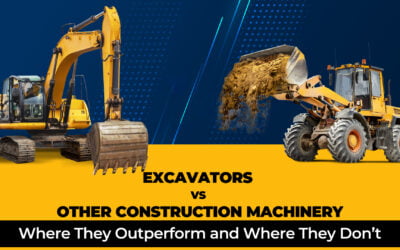
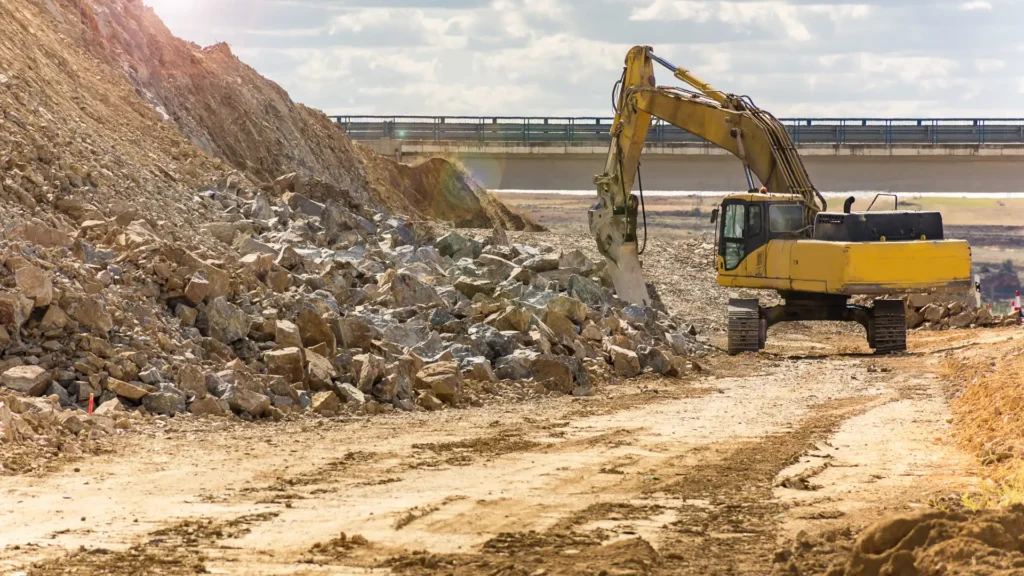
Excavators: One of the most recognizable pieces of construction machinery, construction excavators are indispensable for a wide range of tasks, including digging trenches, breaking holes, and demolishing structures. Their hydraulic system powers a boom, dipper, and bucket, allowing them to dig deep into the earth. Excavators are highly versatile, often paired with different types of construction equipment attachments such as grapples or augers, which enhance their functionality for specialized jobs like forestry work or mining. The effectiveness of an excavator depends greatly on the skill and training of the operator, who must maximize efficiency and ensure safety on the job site. Their ability to handle and load heavy materials, combined with their impressive power, makes them a must-have for any major construction project.
Bulldozers: A bulldozer is a powerful tractor equipped with a large metal blade on the front, used primarily for clearing land and grading the earth. These machines are essential for pushing large quantities of dirt, rubble, or sand to prepare a site for foundation work or road construction. Their heavy-duty nature and substantial power make them ideal for tackling rough terrain, and their ability to level large areas of land in a short amount of time significantly speeds up the early stages of a construction project.
Backhoe Loaders: Combining the functionality of an excavator and a loader, backhoe loaders are compact and highly versatile. Their front-mounted bucket is used to efficiently load and carry materials, while the back-mounted digger is perfect for trenching, digging, and other earthmoving tasks. This two-in-one design makes backhoe loaders ideal for smaller to medium-sized projects where multiple types of work need to be done with a single machine. Contractors often rely on them for tasks such as utility trenching, material handling, and minor demolition.
Motor Graders: Motor graders are crucial for road construction and fine grading work. With a long blade positioned between the front and rear axles, these machines create smooth, even roads or prepare a site for asphalt laying. Their precise control allows operators to fine-tune the grading process, ensuring that surfaces are level and ready for subsequent construction layers. In addition to grading, motor graders can also be used to haul materials or debris as part of site preparation. Motor graders are often employed in road maintenance, helping to ensure the longevity and smoothness of paved surfaces.
Material Handling Equipment
Material handling equipment plays a crucial role in construction projects, as it is responsible for the safe and efficient transportation, lifting, and positioning of materials on-site. From moving heavy loads of steel and concrete to placing delicate components at precise heights, these machines are vital for maintaining workflow and reducing manual labor. Properly utilizing the right type of construction equipment, such as cranes, forklifts, and telehandlers, helps ensure that materials are delivered and installed with speed and accuracy, contributing to the overall productivity and safety of the project.
Key Types of Material Handling Equipment:
Cranes: Cranes are one of the most critical pieces of construction equipment for lifting and moving heavy materials across large distances or to significant heights. There are several types of construction equipment cranes, each suited to specific tasks:
Tower Cranes: Typically used in the construction of tall buildings, these cranes are anchored to the ground and provide exceptional height and lifting capacity. They are essential for hoisting steel beams, concrete slabs, and other materials to high floors.
Mobile Cranes: Versatile and movable, mobile cranes can travel to different parts of a job site, making them ideal for projects that require flexibility in material handling.
Rough Terrain Cranes: Designed for off-road applications, rough terrain cranes are mounted on four large rubber tires and are commonly used on uneven or rugged sites. Their ability to navigate challenging environments makes them perfect for large-scale infrastructure or remote construction projects. The large rubber tires provide excellent traction, allowing these cranes to operate safely and efficiently on difficult and unstable surfaces.
Forklifts: Forklifts are indispensable for transporting heavy materials over short distances. These machines are often used in warehouses and job sites to lift and move pallets, crates, and other construction materials with ease. Forklifts come in various sizes and configurations, allowing contractors to handle loads in tight spaces. Their compact design and maneuverability enable them to operate efficiently in tight spots, making them ideal for confined or restricted areas. They can be equipped with various types of construction equipment attachments to further enhance their functionality. Their compact design and maneuverability make them ideal for moving materials between different parts of the site or loading/unloading trucks.
Telehandlers: Telehandlers combine the lifting capability of a crane with the versatility of a forklift. Featuring an extendable boom, telehandlers can lift materials to considerable heights or reach into difficult-to-access areas, making them perfect for tasks like positioning materials on rooftops or placing items in elevated storage areas. With the option to attach different tools, such as buckets or pallet forks, telehandlers are extremely adaptable and are often used for tasks that require precision and flexibility. Their ability to handle both vertical and horizontal lifting tasks makes them a valuable asset on any job site.
Construction Vehicles
Construction vehicles are vital for moving materials, tools, and equipment across the job site, ensuring smooth operations and reducing the need for manual labor. A reliable vehicle is essential for transporting machinery, supplies, and waste to and from the job site, which is crucial for efficient project management. These vehicles are designed to handle heavy loads, navigate rugged terrain, and perform specific tasks that facilitate construction processes. From transporting bulk materials to preparing the ground for utilities, construction vehicles are indispensable in virtually every type of construction project.
Key Types of Construction Vehicles:
Dump Trucks: Dump trucks are some of the most commonly used types of construction equipment for transporting large quantities of materials, such as dirt, gravel, sand, and debris. These heavy-duty vehicles come equipped with hydraulic systems that lift the bed, allowing the material to be easily dumped at the desired location. Whether clearing out debris from a demolition site or delivering construction aggregates, dump trucks provide a reliable solution for material transportation. Their capacity to move significant volumes of materials efficiently makes them critical for projects like road building, excavation, and site preparation. In large-scale infrastructure projects, a dump truck is also essential for transporting materials such as asphalt or concrete to paving machines, supporting road paving and construction operations.
Concrete Mixers: Concrete mixers are essential for ensuring that concrete is mixed thoroughly and delivered to the job site in optimal condition. These vehicles keep the concrete agitated during transportation, preventing it from setting prematurely. Construction excavators and workers rely on ready-mix concrete delivered by these mixers to create foundations, walls, and other structural elements. For large-scale projects, concrete mixers are indispensable, ensuring that the right mix is available on time, which is crucial for maintaining the project’s workflow and meeting construction deadlines.
Trenchers: Trenchers are specialized construction vehicles designed to dig trenches efficiently and quickly for laying pipes, cables, or drainage systems. These machines come in various sizes and configurations, from smaller walk-behind units to large, heavy-duty models capable of digging deep and wide trenches. Trenchers eliminate the need for manual digging, significantly speeding up tasks like installing underground utilities. In addition to trenchers, specialized drills such as rotary blast hole drills and autonomous drills are used in construction or mining projects to create holes, enhancing safety and efficiency during these operations. Their ability to cut through tough soil and rock makes them ideal for infrastructure projects, including laying pipelines, installing fiber optic cables, and setting up drainage systems for both urban and rural developments.
Transportation Options
Transportation equipment is a critical component of any successful construction project, ensuring that materials, machinery, and waste are moved efficiently to and from the job site. Heavy construction equipment such as dump trucks play a vital role in hauling earth, aggregates, and debris, keeping projects on schedule and minimizing downtime. There are various types of transportation vehicles designed for different tasks—some, like dump trucks and flatbeds, are built for on-road use with rubber wheels, while others, such as bulldozers and excavators, operate on tracks or treads and are intended for on-site movement. Using the right transportation equipment not only protects valuable machinery and materials during transit but also helps reduce overall costs and boost productivity on construction sites. By streamlining logistics, contractors can ensure that every phase of the project runs smoothly and efficiently.
Lifting Equipment
Lifting equipment refers to tools and machinery designed to safely and efficiently lift heavy objects, making them essential for vertical construction projects. Whether it’s lifting materials to elevated work platforms or positioning heavy beams during structural assembly, lifting equipment ensures that materials and workers can reach the required heights while maintaining safety and efficiency. These tools are critical in the construction of multi-story buildings, bridges, and other infrastructure where height and precision are crucial factors.
Key Types of Lifting Equipment:
Hoists: Hoists are devices used to lift and lower heavy materials vertically. They can be operated manually or powered by electricity, air, or hydraulic systems. Manual hoists are often used for smaller loads where precision and control are more critical than speed. On the other hand, powered hoists are more suitable for heavy loads that need to be lifted repeatedly over long vertical distances, such as in high-rise construction. Hoists are commonly used in conjunction with cranes or scaffolding systems to move materials safely and efficiently between floors or different levels of a construction site.
Scissor Lifts: Scissor lifts provide workers with a stable platform to access elevated areas, whether for installing structural components or conducting inspections. These machines are equipped with a crisscrossing support structure that extends vertically when operated, offering a reliable and safe platform for both workers and materials. Scissor lifts are essential for interior and exterior tasks that require access to moderate heights, such as painting, electrical work, or drywall installation. Their simplicity and ease of use make them an indispensable part of many construction projects, particularly when mobility and height accessibility are needed.
Boom Lifts: Boom lifts offer greater flexibility and reach compared to scissor lifts, making them ideal for accessing difficult-to-reach areas in construction zones. They feature a hydraulic arm that can extend both vertically and horizontally, providing superior reach and maneuverability. This makes boom lifts ideal for tasks like installing roofing, working on tall structures, or accessing areas that require precision and elevation, such as around obstacles or in confined spaces. Boom lifts come in different configurations, including articulating boom lifts, which can bend around corners orobstructionss, and telescopic boom lifts, which provide a longer, straight reach. Their ability to navigate complex construction environments makes them a critical tool for many projects.
Aerial Equipment
Aerial equipment is essential for construction projects that require workers and materials to be safely elevated to significant heights. This category of construction equipment includes specialized machines designed to provide secure and efficient access to elevated work areas, making tasks like landscaping, paving, and bridge construction much safer and more productive. Boom lifts, for example, feature a hydraulic arm with a platform or bucket at the end, allowing workers to reach high or hard-to-access spots with ease. Scissor lifts offer a stable, vertical lift for both workers and materials, making them ideal for indoor and outdoor construction projects where height and stability are crucial. Aerial work platforms provide versatile solutions for a variety of tasks, from maintenance and repairs to complex construction jobs, ensuring that workers can perform their duties safely and efficiently at any elevation. By utilizing aerial equipment, contractors can complete essential tasks on bridges, tall structures, and other elevated sites with confidence and precision.
Key Types of Aerial Equipment:
Boom lifts: Provide safe and efficient elevation for workers, allowing access to high and hard-to-reach areas on construction projects.
Scissor lifts: Offer stable vertical lifting for both workers and materials, ideal for a wide range of indoor and outdoor construction tasks.
Aerial work platforms: Versatile platforms used for maintenance, repair, and construction, delivering a secure and stable workspace at height.
Concrete Equipment
Concrete equipment is designed specifically for handling, transporting, and shaping concrete during construction. From pouring concrete in hard-to-reach areas to ensuring a smooth finish, these machines are essential for various tasks in building foundations, roads, bridges, and other concrete-based structures. Proper use of concrete equipment is crucial for achieving structural integrity, durability, and a flawless finish in construction projects.
Key Types of Concrete Equipment:
Concrete Pumps: Concrete pumps are vital for delivering concrete to areas that are difficult to access with traditional methods, such as tall buildings or remote sections of a job site. These pumps use high-pressure hydraulic systems to transport concrete through pipelines, ensuring that it is placed precisely where it’s needed. Whether it’s for high-rise construction, large slabs, or intricate architectural elements, concrete pumps save time and labor by streamlining the concrete placement process. Their precision also helps reduce waste and ensure that the concrete is evenly distributed, contributing to the overall quality of the project.
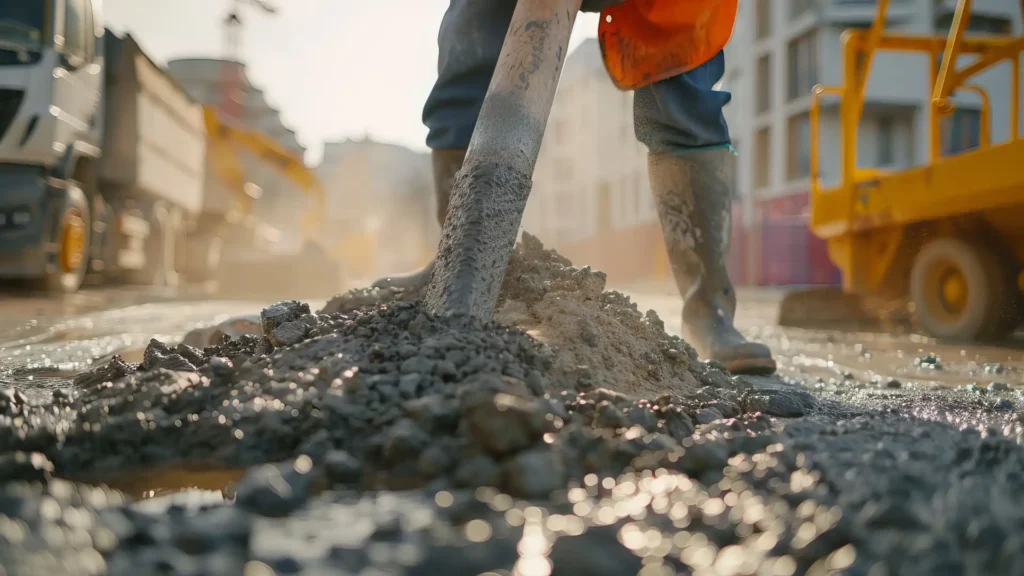
Concrete Vibrators: Concrete vibrators are essential tools used to eliminate air bubbles and ensure that poured concrete settles evenly. When concrete is poured, air pockets can become trapped within the mix, which can compromise the structural integrity and finish of the concrete once it hardens. Concrete vibrators agitate the wet concrete, forcing air to rise to the surface and ensuring a compact, smooth, and uniform finish. This process improves the density of the concrete and helps it adhere better to reinforcing bars (rebar), ensuring a stronger, more durable structure.
Concrete Saws: Concrete saws are specialized tools used for cutting concrete slabs and surfaces with precision. These saws are designed to handle the hardness of concrete and are equipped with diamond-tipped blades that can cut through concrete, asphalt, and other tough materials. Concrete saws are commonly used for creating expansion joints, cutting out sections of damaged concrete, or shaping slabs to fit specific project requirements. Their precision makes them indispensable for tasks that require accurate cuts, such as installing utility lines or creating pathways in roads and sidewalks.
Compaction Equipment
Compaction equipment is designed to compress soil, gravel, or asphalt to create solid and stable foundations for construction projects. Proper compaction is essential to prevent soil settlement and ensure the longevity and structural integrity of buildings, roads, and other infrastructure. Whether preparing the ground for a foundation or ensuring a smooth, durable surface for paving, compaction equipment plays a crucial role in the early stages of construction.
Key Types of Compaction Equipment:
Roller Compactors: Roller compactors are the workhorses of road construction and large-scale earthmoving projects. These heavy machines use large, cylindrical drums to roll over and compress materials like soil, gravel, and asphalt. The weight of the machine, combined with the pressure applied by the drum, ensures that materials are densely packed, reducing the risk of future settlement or shifting. Roller compactors are often used in road paving, where they provide a smooth, even surface that can withstand heavy traffic. Their ability to cover large areas quickly makes them essential for leveling and compacting expansive sections of ground. A common type of roller compactor is the road roller, which is specifically used for compacting crushed rock and creating solid base layers in various construction projects.
Plate Compactors: For smaller or more confined areas, plate compactors offer an ideal solution. These machines feature a flat, vibrating plate that presses down on the soil or gravel, compacting it evenly and efficiently. Plate compactors are perfect for compacting soil in tight spaces, such as trenches or around foundations, where larger machines like roller compactors cannot easily maneuver. Their portability and ease of use make them a go-to tool for preparing small areas for concrete slabs, paving stones, or landscaping projects.
Rammers: Rammers, also known as tampers, are handheld machines designed to compact granular soils in confined areas. They are highly effective at compressing loose soil or gravel in trenches, around utility pipes, or in other narrow spaces where larger equipment can’t operate. Rammers apply force through a small plate or foot, which pounds the ground in quick, repetitive motions, compacting the soil to the required density. This type of compaction equipment is particularly useful for ensuring stability in areas that require high levels of precision, such as under foundations or around retaining walls.
Specialized Construction Equipment Attachments
Specialized types of construction equipment attachments are tools that can be added to existing machinery, such as construction excavators, to expand their functionality and allow them to perform a wider range of tasks. By simply switching attachments, contractors can transform a single piece of equipment into a versatile machine capable of handling diverse tasks, from breaking through solid rock to lifting heavy materials. This adaptability is essential in construction projects where different jobs need to be completed efficiently without the need for additional equipment. There are also other uses for specialized attachments, including miscellaneous tools and accessories designed for specific jobs beyond standard machinery.
Key Construction Equipment Attachments:
Hydraulic Hammers: Hydraulic hammers, also known as breakers, are powerful attachments commonly used with excavators to break through tough surfaces like rock, concrete, and asphalt. These attachments use hydraulic force to deliver high-impact blows, making them indispensable for demolition work, road repair, or tunneling projects. By attaching a hydraulic hammer to an excavator, contractors can perform heavy-duty demolition without needing a separate machine, significantly speeding up the job and improving overall efficiency.
Grapples: Grapples are specialized attachments designed for lifting, sorting, and handling bulky or irregularly shaped materials. Commonly used in demolition, waste handling, and forestry projects, grapples are capable of securely gripping and moving materials like debris, scrap metal, or logs. When paired with an excavator or loader, a grapple attachment becomes a powerful tool for clearing sites, sorting materials, or loading trucks. Their versatility makes them essential for projects that require precision handling of materials in rugged or chaotic environments.
Augers: Augers are spiral-shaped attachments used for drilling precise holes in the ground. These attachments are particularly useful in construction and landscaping for tasks such as drilling holes for posts, fence installations, or foundation piers. Augers can be attached to excavators or skid steers, making them highly effective for projects that require deep, consistent holes in soil or rock. Their ability to quickly and accurately drill through various ground types makes them an invaluable tool for contractors in industries such as construction, agriculture, and utility installation.
Heavy Machinery Maintenance
Proper maintenance of heavy machinery is essential for maximizing the lifespan, safety, and productivity of construction equipment on job sites. Regular upkeep tasks—such as lubricating hydraulic rams, checking track tension, and inspecting key components—help prevent unexpected breakdowns and costly repairs. By investing in routine maintenance, contractors can ensure that their equipment operates at peak performance, reducing downtime and keeping projects on track. Advances in technology, including telematics and diagnostic tools, now allow operators and maintenance teams to monitor machinery health in real time, schedule preventive maintenance, and quickly address potential issues before they escalate. Prioritizing heavy machinery maintenance not only enhances safety for workers but also helps control costs, minimize environmental impact, and ensure that construction projects are completed efficiently and safely from start to finish.
Conclusion
Understanding the various types of construction equipment is essential for contractors aiming to maximize efficiency, safety, and productivity on the job site. From earthmoving and material handling to concrete and compaction tasks, each type of equipment plays a vital role in modern construction projects. By incorporating specialized types of construction equipment attachments, contractors can further enhance the versatility of their machinery, allowing them to tackle a wide range of tasks with precision and speed. Familiarity with these tools ensures that projects are completed on time, within budget, and to the highest standards of quality.