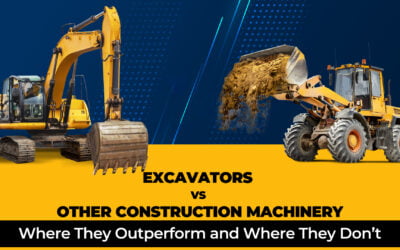
Construction Excavators vs. Other Machinery: Where They Outperform and Where They Don’t
Choosing the right equipment is critical to the success of any construction project. While construction excavators are widely used for their...


The foundation of any successful infrastructure project begins with efficient excavation on construction sites. Whether it’s laying the groundwork for highways, bridges, or massive urban developments, excavation equipment plays a pivotal role in shaping the landscape and ensuring the smooth progression of the project. Without the right tools, construction teams can face costly delays and structural issues, making it essential to use the appropriate excavating machinery for each stage of development. Whether we’re talking about mini, medium or large excavators, these machines are designed to handle everything from site clearing to foundation preparation, ensuring that every phase of construction is executed with precision and efficiency.
Excavation equipment is not just about digging—it’s about precision, power, and adaptability. From clearing land to preparing foundations, these machines are at the heart of any large-scale project, helping to complete tasks efficiently, safely, and with minimal environmental disruption. In large infrastructure projects, where time and precision are crucial, the right machinery can make all the difference between success and failure. This blog will explore how different types of excavating machinery contribute to the successful completion of complex infrastructure projects, and we will examine the excavator accessories and excavator brands leading the industry with innovative solutions for modern construction needs.


Excavation serves as the cornerstone of any large-scale infrastructure project. Whether it’s the construction of a new highway, bridge, or urban complex, excavation equipment is the first on-site, responsible for laying the groundwork that allows all subsequent stages to proceed smoothly. By preparing the land, compact and medium excavators ensure that foundations are stable and that the terrain is suitable for heavy construction. Without proper excavation, the integrity of the entire project can be compromised, leading to costly repairs or even structural failures down the road.
Excavation not only involves digging but also site grading, digging trenches, and preparing drainage systems. This meticulous groundwork ensures that the terrain can support the weight and demands of large-scale infrastructure. The role of excavating machinery in this phase is critical—whether it’s breaking ground for deep foundations, laying pipelines, or creating complex drainage systems, the precision and power of the equipment set the tone for everything that follows.
Large excavators can be instrumental in improving overall project efficiency. Large-scale infrastructure projects often operate on tight schedules, with numerous interdependent stages that need to be completed in sequence. Delays in excavation can have a domino effect, pushing back deadlines and inflating costs. By using advanced excavation equipment, construction teams can optimize performance, reducing the time needed to prepare sites and ensuring the project stays on schedule.
Moreover, modern excavator accessories—such as specialized buckets, grapples, and hydraulic attachments—enhance versatility, enabling machines to perform multiple functions with minimal downtime. This adaptability not only speeds up the excavation process but also cuts down on the need for additional machinery, keeping projects within budget. The efficiency of the excavation phase directly correlates with the project’s overall timeline, making it essential to select the right tools for the job.
By investing in high-quality machinery from reputable excavator brands, project managers can ensure that their excavation operations are carried out with precision and speed, reducing the risk of delays and helping the project meet both its financial and time-based goals.

Excavators are the most essential excavation equipment used in large-scale infrastructure projects. Compact excavators are particularly useful in tight spaces and urban environments due to their smaller size and maneuverability. They are known for their strength and versatility. These powerful machines are equipped with a rotating platform, a long arm, and a bucket, making them ideal for a wide range of construction tasks. Their primary roles include digging, trenching, and loading materials such as soil, gravel, or debris.
Excavators are indispensable in infrastructure projects, delivering precision and power that help keep operations efficient. Popular excavator brands such as Caterpillar, Komatsu, and Volvo are renowned for their durable machinery, designed to handle tough environments while providing excellent performance in a variety of tasks.
Backhoe loaders are highly versatile, combining the features of both a loader and an excavator. Skid steers are another versatile piece of equipment, known for their ability to operate in confined spaces and perform tasks such as digging pools and site cleaning. This flexibility allows them to handle multiple tasks on a job site, from digging and trenching to loading and transporting materials. Their ability to switch between excavating and loading makes them particularly valuable for smaller to medium-scale projects, as well as for specific tasks within larger projects.
The versatility of backhoe loaders ensures that they can quickly adapt to a wide variety of construction needs, offering efficiency in scenarios where space and budget constraints make using separate machines impractical.
Bulldozers play a crucial role in grading and land leveling, making them indispensable for preparing large areas of land in infrastructure projects. Bulldozers are also effective in landscaping uneven terrain, providing the necessary power to grade hilly areas and create a level surface. These powerful machines are equipped with a wide, flat blade mounted at the front, which pushes soil, debris, or rock to create a level surface. Bulldozers are particularly important in road construction, site leveling, and large-scale land development projects.
Bulldozers provide the heavy-duty power needed to handle the toughest earthmoving tasks, ensuring that the project site is properly prepared for subsequent stages.
When projects require precise trench digging, such as for laying utility lines, irrigation systems, or drainage channels, trenchers become the equipment of choice. Trenchers are also effective for digging pools, especially in residential areas where precision and minimal disruption are required. Trenchers are designed to dig narrow, deep trenches with minimal disruption to the surrounding area, making them ideal for jobs that require precision.
The ability of trenchers to create clean, precise trenches allows infrastructure projects to proceed efficiently without the need for additional excavation work.
Graders are vital for leveling and shaping surfaces, especially in road construction projects. Graders are essential for heavy-duty construction jobs, providing the precision needed to create smooth, even surfaces for road construction and other large-scale projects. These machines are equipped with a long blade that can be adjusted to create a smooth, even surface. Graders are often used after bulldozers have cleared the land to fine-tune the surface before paving begins.
Graders ensure that surfaces are properly prepared, helping to prevent issues like uneven pavement or drainage problems in the future.
By incorporating a variety of excavation equipment such as excavators, backhoe loaders, bulldozers, trenchers, and graders, infrastructure projects can be completed more efficiently, with each machine playing a specialized role in the process. Leading excavator brands such as Caterpillar, Komatsu, and Volvo provide reliable and high-performance machinery that helps keep projects on schedule and within budget.

Highway and road construction projects require extensive use of excavation equipment to ensure that the land is properly prepared for the heavy load of vehicles and the long-term durability of the roadways.
Before any asphalt or concrete is laid, the land must be meticulously prepared to provide a stable foundation for the road. Excavators and bulldozers play a crucial role in this phase by clearing the area of vegetation, rocks, and debris. Bulldozers level the terrain while excavators dig deep to remove excess soil and lift heavy debris, creating a solid base that will support the weight of the road. This initial groundwork is essential for the longevity of the infrastructure, as improper foundation preparation can lead to costly repairs in the future.
In addition to preparing the land for the road itself, highways and major roadways often require the installation of underground utilities such as power, water, and drainage systems. Trenchers are vital for this task, as they can precisely dig the narrow, deep trenches needed to lay these utilities without disturbing the surrounding area. This efficiency ensures that utility lines are installed accurately and quickly, preventing delays in the road construction schedule.
Bridge and tunnel construction is among the most complex forms of infrastructure development, requiring heavy-duty machinery to meet the demands of deep excavation and precise foundation work.
Building bridges and tunnels often involves deep excavation to create solid foundations that can withstand immense loads and pressures. Dragline excavators are particularly effective for these tasks, providing the reach and power needed for deep excavation in large-scale projects. Heavy-duty excavators and backhoe loaders are ideal for digging the large, deep holes required for bridge piers or tunnel shafts. Their power and reach allow them to remove large amounts of soil, rock, and debris quickly, which helps keep these high-stakes projects on track.
Urban bridge and tunnel projects often require precision work in confined or difficult-to-access areas. Mini excavators are particularly useful in these environments, offering the maneuverability needed to navigate tight spaces while performing precise excavation tasks. Compact and specialized excavators are perfect for these environments, allowing construction crews to dig deep while navigating tight spaces. Whether it’s working around existing infrastructure in cities or within limited construction zones, these machines offer the precision and control needed to meet project specifications without disrupting surrounding areas.
As cities grow, the demand for efficient excavation equipment in urban development projects becomes increasingly important. From clearing land for buildings to installing critical utility infrastructure, these machines are essential for ensuring that urban construction projects run smoothly.
Bulldozers and graders play a key role in preparing urban land for large-scale developments, including high-rise buildings, complexes, and residential neighborhoods. Bulldozers clear the land of debris, trees, and rocks, while graders level the terrain to ensure a smooth, even surface. This groundwork is essential to create a stable foundation, especially in densely populated areas where space is limited, and the terrain may be uneven.
Urban development projects often require extensive utility infrastructure installation, such as sewage, gas, and electrical lines. Trenchers and backhoes are indispensable for these tasks, enabling the precise digging of trenches needed to lay these utilities. Vacuum excavators are particularly effective for these tasks, using powerful suction pipes and water jets to remove soil with precision and minimal disruption. The ability of these machines to perform efficiently in crowded urban areas ensures that vital infrastructure can be installed without significant disruption to the surrounding environment.
In each of these infrastructure projects, excavating machinery proves indispensable, with specialized machines like trenchers, bulldozers, backhoe loaders, and graders working together to streamline construction efforts. Whether it’s highway construction, bridge building, or urban development, excavator accessories and leading excavator brands like Caterpillar, Komatsu, and Volvo provide the versatility, power, and precision needed to tackle the complex challenges of large-scale projects.


Hydraulic breakers are powerful attachments used to break through hard rock, concrete, and other tough materials, making them indispensable in large-scale projects where deep excavation is required. These attachments rely on advanced hydraulic power mechanisms to deliver the force needed to break through hard rock and concrete. Whether working on roadways, tunnels, or demolishing existing structures, hydraulic breakers provide the force needed to clear stubborn materials quickly. They are especially critical in preparing deep foundations for bridges, skyscrapers, or tunnels, as they allow excavators to perform heavy-duty demolition and earth removal without needing additional specialized equipment.
Augers are ideal attachments for drilling holes with precision and efficiency, making them crucial for projects that require piles or utility poles. Suction excavators, also known as vacuum excavators, are another tool that can be used for precise soil removal in delicate underground applications. In large infrastructure developments like road and bridge construction, augers allow for the quick and accurate installation of foundational elements. By drilling deep into the ground, they provide a reliable solution for placing poles, piles, or even signposts, ensuring that projects proceed on schedule without delays caused by manual digging.
Rippers are designed to loosen densely packed soil or frozen ground, making excavation easier in challenging environments. Wheeled excavators can also be equipped with rippers to handle tough terrain, providing the mobility needed for urban projects. These accessories are particularly useful in colder climates where the ground becomes hard and difficult to manage. Rippers break up compacted or frozen soil, allowing excavators to remove it more efficiently. This accessory is highly valuable in infrastructure projects in northern regions, where ground conditions can delay construction unless specialized tools like rippers are utilized.
By utilizing specialized excavator accessories like hydraulic breakers, augers, and rippers, construction teams can dramatically enhance the efficiency of their operations, ensuring that even the most difficult excavation tasks are completed quickly and with precision. These attachments allow excavation equipment to adapt to various terrains and project needs, further proving the versatility and necessity of modern excavating machinery in large infrastructure projects.

In conclusion, excavation equipment plays a vital role in large-scale infrastructure projects, from preparing land with excavators and bulldozers to ensuring precision with trenchers and graders for road construction, bridges, tunnels, and urban development. Each type of excavating machinery contributes to the efficiency and success of these projects, supported by essential excavator accessories like hydraulic breakers, augers, and rippers that enhance productivity in challenging environments. Selecting the right equipment and attachments is crucial for maintaining efficiency, staying within budget, and ensuring the overall success of the project, making it imperative for project managers to choose wisely based on the specific demands of their infrastructure work.

In major infrastructure developments, various excavation equipment such as standard excavators, long-reach excavators, and amphibious excavators are crucial. These machines handle tasks ranging from site clearing to foundation preparation, ensuring precision and efficiency throughout the project.
Excavator accessories like specialized buckets, hydraulic breakers, and grapples can significantly enhance performance. For example, clamshell buckets are ideal for material handling, while hydraulic breakers are used for demolishing concrete structures. Choosing the right accessories tailors the excavator to specific project needs.
Leading excavator brands such as Caterpillar, Komatsu, and Volvo are renowned for their durable machinery, designed to handle tough environments while providing excellent performance in various tasks. Selecting reputable brands ensures reliability and support throughout the project lifecycle
Selecting appropriate excavation equipment is vital for project success. Proper equipment ensures efficient site preparation, accurate foundation work, and adherence to project timelines. Conversely, inadequate machinery can lead to delays, increased costs, and potential structural issues.
Get in touch with us now!
Choosing the right equipment is critical to the success of any construction project. While construction excavators are widely used for their...

Excavators have long been the backbone of earthmoving operations, valued for their digging precision, reach, and raw lifting power. But in today’s...

When it comes to keeping excavation projects on schedule, having the right parts for the right equipment is non-negotiable. For procurement teams...