
HAWK Long Reach Arm System
Designed to extend your reach
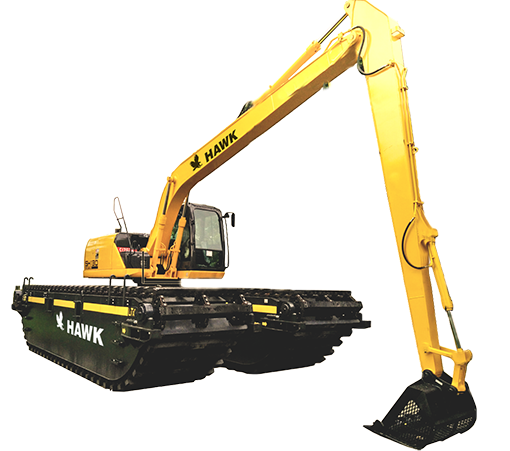
The HAWK Long Reach Arms for excavators are heavy-duty arms that can transform any normal excavator into a super-reach excavator. These excavator long reach arms are designed to boost a standard excavator’s reach by at least 50%, offering additional digging depth.
HAWK Long Reach Arms are compatible with other powerful attachments, such as demolition attachments, clamshells and various grapples, enhancing their versatility for different tasks and increasing overall productivity.
Quality Assurance
HAWK’s production facility is certified in 2011, meaning we ensure consistency in quality manufacturing and on-time delivery of long reach arms for excavators. HAWK is also a CE certified manufacturer of excavator long reach arms. Each product unit of our long reach arms bears the ‘CE’ logo. While manufacturing the units of long reach arms for excavators, HAWK stays compliant in maintaining high quality to ensure that the customers receive the highest quality and standard product they are looking for.


All Products
Careful selection of the appropriate long reach arm model is essential to ensure the equipment matches your project requirements and reach capabilities.
Model | Excavator Weight | Length | Boom Length | Stick Length | Bucket | Download |
|---|---|---|---|---|---|---|
7-8 Ton | 26’3″ (8 m) | 16’0″ (4.8 m) | 9’3″ (2.8 m) | 0.24 yd³ (0.18 m³) |  | |
10-13 Ton | 36′ (11 m) | 21’4″ (6.5 m) | 14’4″ (4.4 m) | 0.65 yd³ (0.5 m³) | | |
10-13 Ton | 41′ (12.5 m) | 23’6″ (7.2 m) | 16’9″ (5.1 m) | 0.52 yd³ (0.4 m³) | | |
14-16 Ton | 36’1″ (11 m) | 21’6″ (6.5 m) | 13’9″ (4.1 m) | 0.65 yd³ (0.5 m³) | | |
14-16 Ton | 44’4″ (13.5 m) | 23’6″ (7.2 m) | 16’6″ (5 m) | 0.52 yd³ (0.4 m³) | | |
18-22 Ton | 44’5″ (13.5 m) | 25’6″ (7.8 m) | 17’7″ (5.4 m) | 0.78 yd³ (0.6 m³) | | |
18-22 Ton | 49’3″ (15 m) | 28’5″ (8.7 m) | 20’6″ (6.3 m) | 0.65 yd³ (0.5 m³) | | |
18-22 Ton | 54’2″ (16.5 m) | 30’6″ (9.3 m) | 22’8″ (6.9 m) | 0.52 yd³ (0.4 m³) | | |
23-26 Ton | 49’3″ (15m) | 28’5″ (8.7 m) | 20’6″ (6.2 m) | 0.92 yd³ (0.7 m³) | | |
23-26 Ton | 57’5″ (17.5 m) | 30’6″ (9.3 m) | 22’8″ (6.9 m) | 0.78 yd³ (0.6 m³) | | |
23-26 Ton | 60’8″ (18.5 m) | 33’12” (10.4 m) | 26’1″ (8 m) | 0.65 yd³ (0.5 m³) | | |
27-32 Ton | 54’2″ (16.5 m) | 30’9″ (9.4 m) | 21’10” (6.7 m) | 0.92 yd³ (0.7 m³) | | |
27-32 Ton | 62’4″ (19 m) | 34’0″ (10.4 m) | 25’1″ (7.7 m) | 0.79 yd³ (0.6 m³) | | |
33-36 Ton | 65’7″ (20 m) | 37’3″ (11.3 m) | 27’9″ (8.5 m) | 1.05 yd³ (0.8 m³) | | |
33-36 Ton | 68’11” (21 m) | 38’10” (11.8 m) | 29’4″ (9 m) | 0.92 yd³ (0.7 m³) | | |
38-45 Ton | 68’11” (21 m) | 38’11” (11.9 m) | 28’11” (8.8 m) | 1.31 yd³ (1 m³) | | |
38-45 Ton | 72’2″ (22 m) | 40’9″ (12.3 m) | 30’5″ (9.3 m) | 1.05 yd³ (0.8 m³) | | |
46-50 Ton | 72’2″ (22 m) | 40’4″ (12.3 m) | 30’5″ (9.3 m) | 1.18 yd³ (0.9 m³) | | |
60-65 Ton | 75’6″ (23 m) | 42’6″ (12.9 m) | 32’9″ (10 m) | 1.60 yd³ (1.2 m³) | | |
70-75 Ton | 78’9″ (24 m) | 45’0″ (13.7 m) | 33’9″ (10.3 m) | 1.70 yd³ (1.3 m³) | | |
80-90 Ton | 82′ (25 m) | 47’3″ (14.4 m) | 35’1″ (10.7 m) | 1.83 yd³ (1.4 m³) | | |
100-110 Ton | 88′ 7″ (27 m) | 50’11” (15.5 m) | 37’10” (11.5 m) | 2.09 yd³ (1.6 m³) | | |
100-110 Ton | 91′ 10″ (28 m) | 52’10” (16.1 m) | 38’4″ (11.7 m) | 1.83 yd³ (1.4 m³) | | |
120-130 Ton | 91′ 10″ (28 m) | 52’7″ (16 m) | 39’11” (12.2 m) | 2.09 yd³ (1.6 m³) | | |
120-130 Ton | 95′ 2″ (29 m) | 54’10” (16.7 m) | 39’10” (12.2 m) | 1.83 yd³ (1.4 m³) | |
By Excavator Model
Excavator | Model | Length | Boom Length | Stick Length | Bucket Capacity |
|---|---|---|---|---|---|
Case CX210 | 49’3″ (15 m) | 28’5″ (8.6 m) | 20’6″ (6.2 m) | 0.92 yd³ (0.7 m³) | |
Case CX210 | 57’5″ (17.5 m) | 30’6″ (9.3 m) | 22’8″ (6.9 m) | 0.78 yd³ (0.6 m³) | |
Case CX210 | 60’8″ (18.5 m) | 33’12” (10.3 m) | 26’1″ (7.9 m) | 0.65 yd³ (0.5 m³) | |
Case CX250 | 54’2″ (16.5 m) | 30’9″ (9.4 m) | 21’1″ (6.7 m) | 0.9 yd³ (0.7 m³) | |
Case CX250 | 62’4″ (19 m) | 33’1″ (10.4 m) | 25’1″ (7.7 m) | 0.8 yd³ (0.6 m³) | |
Case CX300 | 65’7″ (20 m) | 37’3″ (11.3 m) | 27’9″ (8.4 m) | 1.05 yd³ (0.8 m³) | |
Case CX300 | 68’11” (21 m) | 38’10” (11.8 m) | 29’4″ (8.9 m) | 0.92 yd³ (0.7 m³) | |
Caterpillar 320 | 44’5″ (13.5 m) | 25’6″ (7.7 m) | 17’7″ (5.3 m) | 0.78 yd³ (0.6 m³) | |
Caterpillar 320 | 49’3″ (15 m) | 28’5″ (8.6 m) | 20’6″ (6.2 m) | 0.65 yd³ (0.5 m³) | |
Caterpillar 320 | 54’2″ (16.5 m) | 30’6″ (9.3 m) | 22’8″ (6.9 m) | 0.52 yd³ (0.4 m³) | |
Caterpillar 323 | 49’3″ (15 m) | 28’5″ (8.6 m) | 20’6″ (6.2 m) | 0.92 yd³ (0.7 m³) | |
Caterpillar 323 | 57’5″ (17.5 m) | 30’6″ (9.3 m) | 22’8″ (6.9 m) | 0.78 yd³ (0.6 m³) | |
Caterpillar 323 | 60’8″ (18.5 m) | 33’12” (10.3 m) | 26’1″ (7.9 m) | 0.65 yd³ (0.5 m³) | |
Caterpillar 325 | 49’3″ (15 m) | 28’5″ (8.6 m) | 20’6″ (6.2 m) | 0.92 yd³ (0.7 m³) | |
Caterpillar 325 | 57’5″ (17.5 m) | 30’6″ (9.3 m) | 22’8″ (6.9 m) | 0.78 yd³ (0.6 m³) | |
Caterpillar 325 | 60’8″ (18.5 m) | 33’12” (10.3 m) | 26’1″ (7.9 m) | 0.65 yd³ (0.5 m³) | |
Caterpillar 336 | 65’7″ (20 m) | 37’3″ (11.3 m) | 27’9″ (8.4 m) | 1.05 yd³ (0.8 m³) | |
Caterpillar 336 | 68’11” (21 m) | 38’10” (11.8 m) | 29’4″ (8.9 m) | 0.92 yd³ (0.7 m³) | |
Caterpillar 349 | 72’2″ (22.m) | 40’4″ (12.3 m) | 30’5″ (9.2 m) | 1.18 yd³ (0.9 m³) | |
Hitachi EX120 | 36′ (11 m) | 21’4″ (6.4 m) | 14’4″ (4.3 m) | 0.65 yd³ (0.5 m³) | |
Hitachi EX120 | 41’0″ (12.5 m) | 23’6″ (7.1 m) | 16’9″ (5.1 m) | 0.52 yd³ (0.4 m³) | |
Hitachi ZX200 | 44’5″ (13.5 m) | 25’6″ (7.7 m) | 17’7″ (5.3 m) | 0.78 yd³ (0.6 m³) | |
Hitachi ZX200 | 49’3″ (15 m) | 28’5″ (8.6 m) | 20’6″ (6.2 m) | 0.65 yd³ (0.5 m³) | |
Hitachi ZX200 | 54’2″ (16.5 m) | 30’6″ (9.3 m) | 22’8″ (6.9 m) | 0.52 yd³ (0.4 m³) | |
Hitachi ZX250 | 54’2″ (16.5 m) | 30’9″ (9.4 m) | 21’1″ (6.7 m) | 0.9 yd³ (0.7 m³) | |
Hitachi ZX250 | 62’4″ (19 m) | 33’1″ (10.4 m) | 25’1″ (7.7 m) | 0.8 yd³ (0.6 m³) | |
Hitachi ZX300 | 65’7″ (20 m) | 37’3″ (11.3 m) | 27’9″ (8.4 m) | 1.05 yd³ (0.8 m³) | |
Hitachi ZX300 | 68’11” (21 m) | 38’10” (11.8 m) | 29’4″ (8.9 m) | 0.92 yd³ (0.7 m³) | |
Hitachi ZX350 | 68’11” (21 m) | 38’11” (11.8 m) | 28’11” (8.8 m) | 1.31 yd³ (1 m³) | |
Hitachi ZX350 | 72’2″ (22 m) | 40’9″ (12.3 m) | 30’5″ (9.2 m) | 1.05 yd³ (0.8 m³) | |
John Deere 135P | 36’1″ (11 m) | 21’6″ (6.6 m) | 13’9″ (4.2 m) | 0.7 yd³ (0.5 m³) | |
John Deere 135P | 44’4″ (13.5 m) | 23’6″ (7.2 m) | 16’6″ (5 m) | 0.5 yd³ (0.4 m³) | |
John Deere 200G | 44’5″ (13.5 m) | 25’6″ (7.7 m) | 17’7″ (5.3 m) | 0.78 yd³ (0.6 m³) | |
John Deere 200G | 49’3″ (15 m) | 28’5″ (8.6 m) | 20’6″ (6.2 m) | 0.65 yd³ (0.5 m³) | |
John Deere 200G | 54’2″ (16.5 m) | 30’6″ (9.3 m) | 22’8″ (6.9 m) | 0.52 yd³ (0.4 m³) | |
John Deere 210G | 44’5″ (13.5 m) | 25’6″ (7.7 m) | 17’7″ (5.3 m) | 0.78 yd³ (0.6 m³) | |
John Deere 210G | 49’3″ (15 m) | 28’5″ (8.6 m) | 20’6″ (6.2 m) | 0.65 yd³ (0.5 m³) | |
John Deere 210G | 54’2″ (16.5 m) | 30’6″ (9.3 m) | 22’8″ (6.9 m) | 0.52 yd³ (0.5 m³) | |
John Deere 245G | 49’3″ (15 m) | 28’5″ (8.6 m) | 20’6″ (6.2 m) | 0.92 yd³ (0.7 m³) | |
John Deere 245G | 57’5″ (17.5 m) | 30’6″ (9.3 m) | 22’8″ (6.9 m) | 0.78 yd³ (0.6 m³) | |
John Deere 245G | 60’8″ (18.5 m) | 33’12” (10.3 m) | 26’1″ (7.9 m) | 0.65 yd³ (0.5 m³) | |
John Deere 300G | 65’7″ (20 m) | 37’3″ (11.3 m) | 27’9″ (8.4 m) | 1.05 yd³ (0.8 m³) | |
John Deere 300G | 68’11” (21 m) | 38’10” (11.8 m) | 29’4″ (8.9 m) | 0.92 yd³ (0.7 m³) | |
John Deere 350G | 65’7″ (20 m) | 37’3″ (11.3 m) | 27’9″ (8.4 m) | 1.05 yd³ (0.8 m³) | |
John Deere 350G | 68’11” (21 m) | 38’10” (11.8 m) | 29’4″ (8.9 m) | 0.92 yd³ (0.7 m³) | |
John Deere 470G | 72’2″ (22 m) | 40’4″ (12.3 m) | 30’5″ (9.2 m) | 1.18 yd³ (0.9 m³) | |
John Deere 870P | 82′ (25 m) | 47’3″ (14.4 m) | 35’1″ (10.6 m) | 1.83 yd³ (1.4 m³) | |
Komatsu PC200 | 49’3″ (15 m) | 28’5″ (8.6 m) | 20’6″ (6.2 m) | 0.92 yd³ (0.7 m³) | |
Komatsu PC200 | 57’5″ (17.5 m) | 30’6″ (9.3 m) | 22’8″ (6.9 m) | 0.78 yd³ (0.6 m³) | |
Komatsu PC200 | 60’8″ (18.5 m) | 33’12” (10.3 m) | 26’1″ (7.9 m) | 0.65 yd³ (0.5 m³) | |
Komatsu PC210 | 44’5″ (13.5 m) | 25’6″ (7.7 m) | 17’7″ (5.3 m) | 0.78 yd³ (0.6 m³) | |
Komatsu PC210 | 49’3″ (15 m) | 28’5″ (8.6 m) | 20’6″ (6.2 m) | 0.65 yd³ (0.5 m³) | |
Komatsu PC210 | 54’2″ (16.5 m) | 30’6″ (9.3 m) | 22’8″ (6.9 m) | 0.52 yd³ (0.4 m³) | |
Komatsu PC300 | 54’2″ (16.5 m) | 30’9″ (9.4 m) | 21’1″ (6.7 m) | 0.9 yd³ (0.7 m³) | |
Komatsu PC300 | 62’4″ (19 m) | 33’1″ (10.4 m) | 25’1″ (7.7 m) | 0.8 yd³ (0.6 m³) | |
Komatsu PC360 | 65’7″ (20 m) | 37’3″ (11.3 m) | 27’9″ (8.4 m) | 1.05 yd³ (0.8 m³) | |
Komatsu PC360 | 68’11” (21 m) | 38’10” (11.8 m) | 29’4″ (8.9 m) | 0.92 yd³ (0.7 m³) | |
Komatsu PC400 | 68’11” (21 m) | 38’11” (11.8 m) | 28’11” (8.8 m) | 1.31 yd³ (1 m³) | |
Komatsu PC400 | 72’2″ (22 m) | 40’9″ (12.3 m) | 30’5″ (9.2 m) | 1.05 yd³ (0.8 m³) | |
Komatsu PC490 | 72’2″ (22 m) | 40’4″ (12.3 m) | 30’5″ (9.2 m) | 1.18 yd³ (0.9 m³) | |
Volvo EC300 | 54’2″ (16.5 m) | 30’9″ (9.4 m) | 21’1″ (6.7 m) | 0.9 yd³ (0.7 m³) | |
Volvo EC300 | 62’4″ (19 m) | 33’1″ (10.4 m) | 25’1″ (7.7 m) | 0.8 yd³ (0.6 m³) | |
Volvo EC350 | 68’11” (21 m) | 38’11” (11.8 m) | 28’11” (8.8 m) | 1.31 yd³ (1 m³) | |
Volvo EC350 | 72’2″ (22 m) | 40’9″ (12.3 m) | 30’5″ (9.2 m) | 1.05 yd³ (0.8 m³) | |
Volvo EC480 | 72’2″ (22 m) | 40’4″ (12.3 m) | 30’5″ (9.2 m) | 1.18 yd³ (0.9 m³) | |
Volvo EC950 | 82′ (25 m) | 47’3″ (14.4 m) | 35’1″ (10.6 m) | 1.83 yd³ (1.4 m³) |
Each Long Reach Arm Kit Includes
- Boom x1 unit
- Stick x1 unit
- High-quality hydraulic bucket cylinder x1 unit
- Hydraulic tubing with clamp x1 set
- Hydraulic pressure hose x1 set
- Bucket linkage c/w 2 pins x1 set
- Bucket pin x2 pcs
- Arm cylinder pin x1 pcs
- Yoke pin x1 pcs
- EM bushings
- CE bucket c/w teeth x1 unit
- Seal kit, hydraulic bucket cylinder x1 set.
Contact us today for manufacturer’s suggested retail price on all items as well as actual prices from HAWK Excavator.
Introduction to Long Reach Excavators
Definition and Purpose
A long reach excavator is a specialized piece of heavy equipment designed to tackle projects that require reaching high distances and accessing hard-to-reach areas. These machines are indispensable on large job sites where standard excavators fall short. Long reach excavators are engineered to extend their reach significantly, making them ideal for tasks that range from 40 to 100 feet. Whether it’s reaching the upper stories of buildings or performing precise demolition work, these excavators offer the precision and control akin to a wrecking ball but with far greater finesse. Their extended reach capabilities make them perfect for a variety of applications, including deep excavation, slope finishing, and waterway management. Long reach excavators are a type of construction equipment designed to dig deeper and reach farther than standard excavators. These machines are equipped with an extended arm and boom package, allowing them to reach distances of up to 100 feet or more, depending on the model and manufacturer. This makes them ideal for a variety of excavation projects that require a long reach, such as deep excavation, ditch digging, and demolition. Plus, these are very easy to clean up, either at a car wash, or using a variety of pressure washers.
On construction sites, long reach excavators are invaluable for common applications that demand precision and extended reach. Whether it’s managing waterways, demolishing structures from a safe distance, or undertaking deep excavation projects, these machines excel where standard excavators fall short. Their ability to dig deeper and reach farther enhances efficiency and productivity, making them a preferred choice for many construction professionals.
Features of HAWK Long Reach Arms
Long reach excavators are a type of construction equipment designed to dig deeper and reach farther than standard excavators. These machines are equipped with an extended arm and boom package, allowing them to reach distances of up to 100 feet or more, depending on the model and manufacturer. These are powerful tools for demanding excavation and demolition tasks. This makes them ideal for a variety of excavation projects that require a long reach, such as deep excavation, ditch digging, and demolition. Plus, these are very easy to clean up, either at a car wash, or using a variety of pressure washers.
Essentially, long reach excavators are designed to perform tasks similar to wrecking balls but with added precision and control. On construction sites, long reach excavators are invaluable for common applications that demand precision and extended reach. Whether it’s managing waterways, demolishing structures from a safe distance, or undertaking deep excavation projects, these machines excel where standard excavators fall short. Their ability to dig deeper and reach farther enhances efficiency and productivity, making them a preferred choice for many construction professionals.
Types of Long Reach Excavators
There are several types of long reach excavators available, each designed to meet specific project needs. Standard long reach excavators are built for heavier-duty work, offering more digging force and lift capacity. These machines are perfect for applications such as deep excavation, demolition, and heavy construction, where robust performance is essential.
On the other hand, super long reach excavators are tailored for lighter-duty, long-distance applications. With an even longer reach arm and boom package compared to standard models, they are ideal for tasks like ditch digging and slope finishing. These excavators provide enhanced reach and digging capacity, making them suitable for projects that require precision over long distances. In addition, super long reach excavators often feature improved stability and reduced ground pressure, which are beneficial for working on sensitive or uneven terrain.
Extended Boom and Arm
The extended boom and arm length allows operators to access distant areas and excavate deep trenches or foundations without the need for frequent repositioning.
Robust Construction
HAWK Long Reach Arms feature sturdy, reinforced components and high-quality materials to withstand heavy-duty excavation tasks ensuring robust operations.
Precise Control
They typically come with advanced hydraulic systems and proportional joysticks, allowing operators to hold better controls while digging, grading, and material handling.
Analysis and Simulation
Quality and durability is always our top priority. Every assembly of our excavator long reach arms undergoes rigorous Simulation Stress and Strength Analysis tests to ensure best quality and extreme durability. All these tests are conducted under the strict vigilance of trained engineers and latest applications & CAD software.
NDT Test
HAWK Long Reach Arms for excavators are built to deliver power-packed performance. Thanks to our superior quality welding techniques that offer super strength and extreme durability to our long reach arms for excavators. Thorough NDT Tests are conducted on each welded assembly to ensure our excavator arms meet or exceed the quality standards
Applications of Long Reach Excavators
Long reach excavators are versatile machines that can be used in a variety of applications, including:
- Deep Excavation: Ideal for projects that require laying foundations or creating drainage systems, long reach excavators can dig deep trenches efficiently.
- Demolition: These machines are perfect for safely demolishing buildings and structures from a distance, minimizing risk to operators.
- Ditch Digging: Long reach excavators excel in ditch digging and slope finishing, providing precise and efficient results.
- Waterway Management: Used for dredging activities, clearing out silt, and maintaining waterways, these excavators are essential for managing water bodies.
- Construction: From building construction to road and bridge projects, long reach excavators are a valuable asset on any construction site.
Optional Accessories:
Pre-Plumbed Hydraulic Lines and Hose Brackets
- Pre-plumbed plug-n-play hydraulic and discharge hose lines saves time and gets the project started sooner. Attach tool and get to work.
- 3 person/8hr day doing setup equals 24 hours of labor time that can be avoided by using HAWK long arm kits that are ready on arrival. (Hydraulics & Hose Brackets Pre-Installed)
- Supports both hydraulic dredge pump attachments and standard mechanical dredging. *Pump not included.
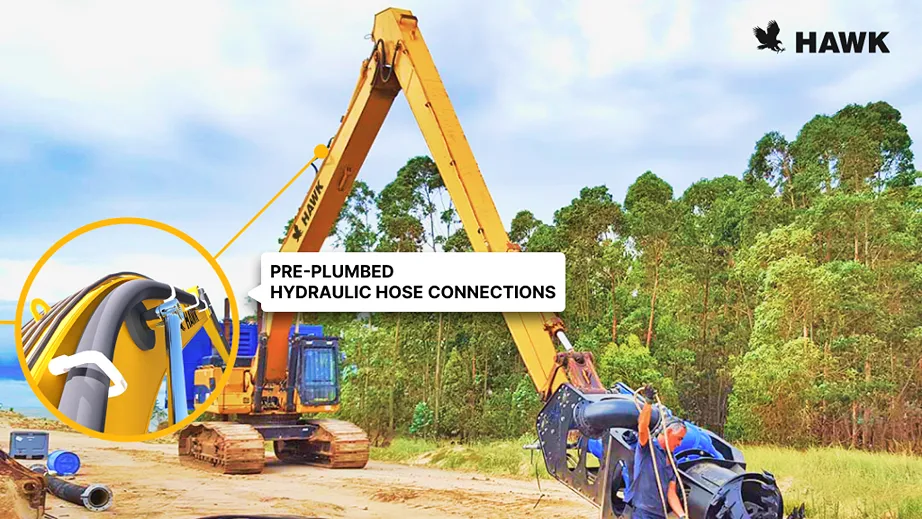
Hydraulic Hose Connections.
Every long reach assembly comes with pre-installed hose connections that are highly flexible offering the hoses durability and super strength. Our superior quality hoses account for better flow of hydraulic fluids and a conduit to keep the entire assembly moving seamlessly.
Operators can easily change hose connections to accommodate different attachments or operational needs.
Slurry Discharge Hose Brackets
The long reach arm assembly also has strong-built optional slurry discharge hose brackets designed to maximize the overall flow and throughput. Their design and build makes them highly resistant to any abrasive materials and extend their lifetime with great uptime.
Benefits of HAWK Long Reach Arms
Extended Reach
HAWK long reach arms convert any normal excavator into a superior machine by extending their overall reach. With these arms, excavators can reach areas that are difficult to reach. This becomes beneficial while dredging across rivers or canals, deep digging, and high elevation demolition.
Maximum Digging Depth
These long reach arms provide increased digging depth, allowing for efficient excavation of deep foundations, trenches, or underground utilities. They eliminate the need for frequent repositioning of the excavator, saving time and increasing productivity on the job site.
Additionally, regular maintenance of engine oil and fuel filters is crucial for optimizing fuel efficiency and performance, especially given the higher fuel consumption rates associated with long reach and super long reach excavators.
Versatility
HAWK Long Reach Arms are compatible with a range of attachments, including log grapples. This makes these arms versatile for a wide range of applications. Also, operators can switch between these attachments to execute a number of operations without any additional equipment.
Extreme Precision
The long reach arms allow operators to carry out operations with high accuracy. This feature makes any normal excavator an extremely precise machine while excavating or dredging across areas that are almost hidden or hard to access.
Fuel Efficiency
Unlike other excavator attachments, HAWK long reach arms don’t create much disturbances while in action. Employing any excavator with these long reach arms ensures lesser impact on the ecosystem and wildlife habitats.
All HAWK Long Reach Arms and booms are easy to install with your excavator to assist with a wide range of excavation, construction, and marine dredging projects.
Our Blog


Reach Beyond with Hawk
Efficient Excavation saves YOU money & time.
Long Reach vs. Super Long Reach Excavators
Long reach excavators and super long reach excavators are both designed for long-distance applications, but they come with distinct features and capabilities tailored to different project needs. Long reach excavators strike a balance between power, performance, and efficiency, making them suitable for a wide range of heavy-duty tasks. These machines are perfect for deep excavation, demolition, and other robust construction activities.
On the other hand, super long reach excavators are engineered for maximum reach and digging force. They feature an even longer boom and arm, which increases their hydraulic workload and fuel consumption. However, manufacturers often equip these machines with advanced features to minimize fuel usage, especially during extended periods of fine, detailed work. This makes super long reach excavators ideal for projects that require reaching over obstacles and performing intricate tasks at significant distances.
Comparison of Features and Capabilities
When comparing long reach excavators to super long reach excavators, it’s essential to consider their unique features and capabilities. Long reach excavators are designed for heavier-duty work, offering substantial digging force and lift capacity. They typically come with a large fuel tank to support extended operations without frequent refueling. These machines are perfect for projects that demand robust performance and energy.
In contrast, super long reach excavators are built for tasks that require exceptional reach and precision. They have a longer boom and arm, which necessitates a larger operating weight due to the heavier counterweight. This design allows them to perform detailed, time-consuming work at significant distances, making them ideal for applications like slope finishing and ditch digging. Despite their increased fuel consumption, these machines are equipped with features to enhance fuel efficiency during prolonged operations.
Maintenance and Operation
Proper maintenance and operation are crucial to ensuring the longevity and efficiency of long reach excavators. Regular maintenance tasks include checking the engine oil, hydraulic fluid, and coolant levels, and topping them off as necessary. It’s important to use the manufacturer-recommended fluids to maintain optimal performance. Additionally, operators should regularly inspect the fuel filter and drain any water or debris that may have accumulated.
Operators should always wear their seatbelt and follow best practices for operating compact track loaders (CTL) and skid steers. This includes avoiding overloading the machine, maintaining the correct tire pressure, and regularly checking and maintaining the air filter. Keeping the radiator, oil cooler, and other heat exchangers clean during operation is also essential. Regularly check for any accumulated debris and wipe down the equipment to prevent overheating and ensure smooth operation.
Best Practices for Long Reach Excavator Maintenance
To ensure optimal performance and reduce downtime, it’s essential to follow best practices for maintaining long reach excavators. Regularly check and maintain the engine oil, hydraulic fluid, and coolant levels, using the manufacturer-recommended fluids. Avoid overloading the machine and ensure the correct tire pressure is maintained. Regularly inspect and maintain the air filter to prevent dust and debris from affecting the engine’s performance.
It’s also important to keep the radiator, oil cooler, and other heat exchangers clean during operation. Check for any accumulated debris and wipe down the equipment as necessary to prevent overheating. Additionally, operators should follow the manufacturer’s guidelines for regular maintenance tasks, such as lubricating grease fittings, hydraulic hoses, and pivot points. Proper storage in a clean, dry environment when not in use can also help prevent corrosion and deterioration, ensuring the excavator remains in optimal condition for efficient operation.
Selecting the right long reach excavator for your project involves considering several key factors:
- Assess the Project Requirements: Determine the type of attachment needed and the reach required for your specific project.
- Consider Machine Stability: Ensure the excavator is well-balanced and suitable for the terrain of the project site to maintain safety and efficiency.
- Look at Attachment Options: Verify that the excavator is compatible with the attachments you plan to use, such as buckets, breakers, or grapples.
- Check the Operating Weight: Ensure the excavator’s operating weight is appropriate for the project site and the tasks at hand.
- Consider the Long Reach Boom: Make sure the long reach boom meets the project requirements in terms of reach and digging depth.
- Check the Account Sign: Ensure the excavator complies with any specific account sign requirements for your project.
By carefully evaluating these factors, you can choose the right long reach excavator for your project, ensuring efficient and safe operation. Please note that the availability of specific long reach excavator models is subject to change based on current stock and rental policies.
Frequently Asked Questions
What are long-reach excavators, and what are they used for?
Long-reach excavators, also known as long boom or long-arm excavators, are specialized excavators equipped with extended-reach attachments. These attachments feature elongated booms and arms, allowing the excavator to reach greater depths or heights than standard excavators. Long-reach excavators are commonly used for tasks such as dredging, deep excavation, slope work, and reaching over obstacles like buildings or rivers.
What are the benefits of using a long-reach excavator?
The primary benefit of using a long-reach excavator is its extended reach, enabling operators to access areas that are otherwise challenging to reach with standard excavators. Long-reach excavators are particularly useful for projects that require working in deep trenches, reaching across obstacles, or excavating below ground level. Additionally, long-reach excavators can increase productivity by reducing the need for manual labor and minimizing the time required to complete tasks.
How do I choose the right long-reach excavator for my project?
Choosing the right long-reach excavator depends on factors such as the depth or height of the excavation, the reach required, and the specific conditions of the work site. For general excavation tasks, a standard long-reach excavator may suffice. At the same time, specialized configurations may be needed for projects such as dredging or reaching over obstacles. Our team of experts can assess your project requirements and recommend the most suitable long-reach excavator configuration to meet your needs and maximize efficiency.
What types of attachments are available for long-reach excavators?
Long-reach excavators can be equipped with various attachments to suit different applications. Common attachments include buckets, hydraulic breakers, grapples, thumbs, and augers. These attachments are designed to enhance the versatility and functionality of the long-reach excavator, allowing operators to perform a wide range of tasks with precision and efficiency.
Can long-reach excavators be rented or purchased?
Long-reach excavators can be rented or purchased depending on the duration and frequency of use and budget considerations. Renting a long-reach excavator is a cost-effective option for short-term projects or occasional use, while purchasing may be more economical for long-term or frequent use. Our team can provide guidance on the best option for your specific requirements and help you select the right long-reach excavator for your project.
What maintenance is required for long-reach excavators and attachments?
Regular maintenance is essential for keeping long-reach excavators and attachments in optimal condition for efficient operation. Inspect the equipment before each use for signs of wear, damage, or hydraulic leaks, and address any issues promptly to prevent further damage or safety hazards. Lubricate grease fittings, hydraulic hoses, and pivot points according to the manufacturer’s recommendations. Proper storage in a clean, dry environment when not in use can also help prevent corrosion and deterioration.
Other HAWK Products
Explore our fleet of heavy-duty excavator accessories for a range of construction, excavation, and dredging projects.
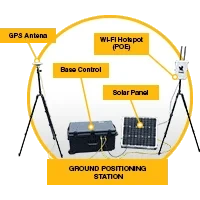
HAWK Vision
Attach the RTK GPS Positioning system to your excavator's bucket or other attachment to always know where the bucket is under the waterline. Prevent over and under dredging.
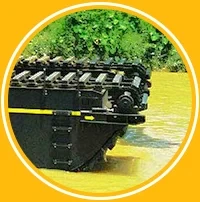
Amphibious Undercarriage
Complete amphibious undercarriage allowing you to convert your existing excavator into a swamp dredger capable of even more production in harsh areas.
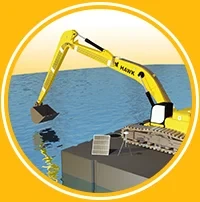
Sectional Barges
Fully modular barges ready for quick assembly at the job site. Can hold an excavator and long stick for the extended reach your excavation needs.