
Top 10 Mini Excavator Attachments for Versatile Construction Projects
Mini excavators have earned a reputation as indispensable tools in the construction industry. Compact yet powerful, these machines are designed to...


Dredging and marine construction are integral to the development and maintenance of waterfront infrastructure, including ports, harbors, and canals. These industries play a vital role in improving waterway navigation, preventing erosion, and ensuring that essential marine infrastructure remains functional. The complexities of these operations demand specialized equipment that can handle the unique challenges of working in aquatic environments, such as managing water depth, sediment removal, and providing precise control for construction tasks.
Among the many types of heavy machinery used in dredging and marine construction, the excavator trackhoe stands out as a crucial tool. Known for its powerful digging capabilities and adaptability in diverse terrains, the excavator trackhoe is particularly valuable in marine settings where access to hard-to-reach areas is required. The robust design of the trackhoe, equipped with its long arm and bucket, enables efficient excavation and material handling, making it an essential piece of equipment in both dredging operations and marine construction projects.


An excavator trackhoe is a type of heavy construction machinery designed for digging, lifting, and material handling. The term “trackhoe” is often used interchangeably with “track excavator” due to the crawler tracks that provide stability and mobility in difficult or uneven terrain. This machine is equipped with a long boom, stick, and bucket, allowing it to perform a wide range of functions, from digging trenches and foundations to lifting and moving large materials.
The primary features of an excavator trackhoe include:
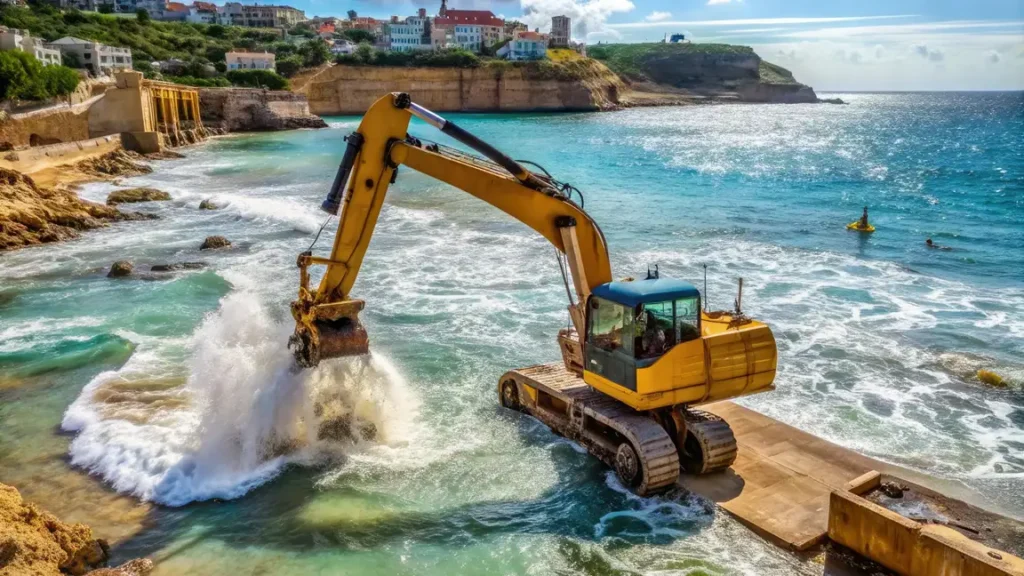
The suitability of the excavator trackhoe for dredging and marine construction lies in its key components, which are designed to handle the demanding nature of working in aquatic environments. These include:
While both a trackhoe excavator and a standard excavator are designed for similar tasks, there are key differences, particularly in marine applications:


Dredging is a vital process in marine construction, playing a crucial role in the maintenance and development of aquatic infrastructure. It involves the removal of sediments, debris, and other materials from the bottom of water bodies, such as rivers, harbors, and oceans. This operation is essential for ensuring that waterways remain navigable, safe, and functional for shipping and transportation. In addition to its importance in maintaining infrastructure, dredging also supports land reclamation, coastal protection, and environmental management. The excavator trackhoe is one of the primary machines used in dredging, thanks to its powerful capabilities and adaptability in marine environments.
One of the most critical roles of dredging in marine construction is maintaining navigable waterways for shipping and transportation. Over time, sediment, mud, and other debris can accumulate in harbors, ports, and rivers, reducing water depth and impeding the movement of ships and vessels. Dredging removes these deposits, ensuring that ships can safely navigate these waterways without risking running aground.
In this context, the excavator trackhoe plays an essential role, especially in areas where sediment build-up is significant. Its long boom and specialized dredging attachments, such as clamshell buckets or draglines, allow for precise and efficient removal of sediment, ensuring that waterways remain deep enough for safe navigation. The stability and reach of the trackhoe, even in soft or submerged conditions, are crucial for effective dredging operations in these settings.
Land reclamation is another significant area where dredging is essential. Dredged materials, particularly sand, silt, and gravel, are often used to fill low-lying areas or create new land. These reclaimed areas can be used for urban development, industrial zones, airports, and even recreational spaces. The excavator trackhoe is often employed in these projects for its ability to dig, move, and place large amounts of dredged material with precision.
For instance, in constructing new coastal developments, the excavator trackhoe can scoop up sediment from the sea floor and transport it to designated land reclamation sites. Its versatility makes it an indispensable tool in these large-scale projects, where both efficiency and precision are required.
Coastal protection and erosion control are critical components of marine construction, and dredging plays a vital role in these processes. By removing excess sediment from shorelines and reshaping the seafloor, dredging can help prevent coastal erosion, stabilize beaches, and protect valuable infrastructure from the ravages of storm surges and rising sea levels.
The excavator trackhoe is an invaluable asset in these efforts, particularly in situations where erosion has destabilized coastal areas or damaged protective barriers. Its ability to operate along the shoreline or in shallow waters allows for targeted dredging and reconfiguration of the seafloor to create protective barriers or restore natural landscapes. The machine’s mobility and extended reach allow it to work in challenging areas where erosion is most pronounced.

While dredging is essential for maintaining and improving marine construction projects, it comes with its own set of challenges, particularly in marine environments. Some of the main challenges include:

Excavator trackhoes are integral to the dredging process, offering a variety of advantages that make them uniquely suited for operations in marine environments. From their precision and reach to their adaptability and durability, these machines are built to handle the challenges of dredging with efficiency and reliability.
The excavator trackhoe excels in precision and reach, making it ideal for removing sediment and materials from water bodies. The long arm and extended bucket allow the operator to reach deep into the water, enabling accurate material extraction from the seafloor. This is especially useful in dredging tasks where precision is critical, such as removing specific layers of sediment or debris without disturbing the surrounding environment. The trackhoe’s ability to handle precise digging operations ensures that dredging can be performed efficiently, even in hard-to-reach or narrow spaces.
One of the excavator track hoe’s most significant advantages is its mobility and stability. The crawler tracks provide the machine with superior traction and balance, allowing it to work effectively on unstable, soft, or submerged surfaces common in marine environments. Unlike wheeled excavators, which can struggle on wet or muddy terrain, the trackhoe’s tracks spread the weight evenly, reducing the likelihood of getting stuck. This makes the excavator track hoe particularly valuable in dredging operations, where the terrain can be unpredictable and challenging.
The durability of the excavator trackhoe is another key factor that makes it ideal for dredging. These machines are designed to withstand harsh marine conditions, including exposure to saltwater, sediment, and other corrosive materials. The trackhoe’s components are often made from corrosion-resistant materials, ensuring longevity even when working in waterlogged environments. This resistance to wear and tear is crucial for maintaining operational efficiency in long-term dredging projects and reduces downtime for maintenance or repairs.
The excavator trackhoe is highly adaptable, with the ability to attach specialized tools and implements that are essential for dredging tasks. Attachments such as clamshell buckets, draglines, and hydraulic dredge pumps enable the machine to perform various functions, from excavating sediment to removing large debris or pumping slurry. This adaptability makes the trackhoe a versatile tool in dredging, as it can easily be modified for different types of marine operations.
Excavator trackhoes are widely used in various marine construction projects, offering the necessary functionality and precision to tackle complex tasks in aquatic environments. Here are some key applications where these machines prove invaluable:
Excavator track hoes play a vital role in shoreline stabilization, particularly in the construction of breakwaters and seawalls. These structures are essential for protecting coastal areas from the effects of erosion, storms, and rising sea levels. The excavator track hoe is used to place rocks, gravel, and other materials to build these protective barriers. Its long reach and stability on soft or unstable ground allow it to precisely position heavy materials, ensuring the effectiveness and durability of the shoreline protection systems.
Dredging is an essential part of port and harbor maintenance. Over time, sediment and debris accumulate in harbors, reducing the depth of water and potentially obstructing vessel movement. The excavator trackhoe is used to clear sediment, debris, and other obstacles, ensuring that vessels can access port facilities safely. By maintaining optimal water depths, the trackhoe helps facilitate the smooth operation of shipping and logistics, making it a critical tool in keeping ports and harbors functioning efficiently.
In marine construction, the installation of pipelines and cables beneath the seabed is a common and essential task. Excavator trackhoes are often employed in trenching operations for these projects. The machine’s long arm allows it to dig trenches on the seafloor, creating the necessary space for pipelines or cables to be laid down securely. Once the trench is excavated, the trackhoe can also be used to backfill the trench, ensuring the pipeline or cable is properly buried to prevent damage from marine traffic or natural elements.
Wetland restoration is a delicate and complex process that aims to restore the natural habitat of coastal ecosystems. The excavator trackhoe is well-suited for these projects due to its precision and ability to work in shallow or submerged areas. It is used to carefully remove invasive species, restore sediment layers, and even replant native vegetation. The trackhoe’s stability and the ability to perform intricate operations make it an essential tool in ensuring the success of wetland restoration efforts, which are critical for preserving biodiversity and mitigating flood risks.
In conclusion, the excavator trackhoe is an indispensable machine in marine construction, providing the necessary precision, mobility, durability, and adaptability for a wide range of applications. From dredging and shoreline stabilization to port maintenance and wetland restoration, these machines offer unparalleled versatility and efficiency, making them a critical tool for completing marine construction projects.
While excavator trackhoes are highly effective for dredging and marine construction tasks, they face several challenges in marine environments. These challenges stem primarily from the harsh and unpredictable conditions in which they operate. Understanding these challenges is crucial for maintaining optimal performance and ensuring the longevity of the equipment.
One of the most significant challenges for excavator trackhoes operating in marine environments is exposure to saltwater. Saltwater can cause rapid corrosion of metal parts, particularly in areas where the machine comes into direct contact with water, such as the tracks, hydraulic components, and the undercarriage. Over time, this exposure can weaken the machine’s structural integrity and reduce its efficiency. Without proper protection, the risk of rust and corrosion can significantly shorten the lifespan of the excavator.
The tracks of the excavator trackhoe are constantly exposed to abrasive conditions in marine environments. Whether it’s working in muddy or sandy conditions or operating in waterlogged areas, the tracks can experience accelerated wear and tear. Furthermore, the hydraulic systems that control the machine’s movements are also susceptible to damage from sediment, debris, and constant exposure to water. These components are crucial for the trackhoe’s functionality, and any degradation can impair performance, leading to costly repairs and downtime.
Transporting excavator trackhoes to marine construction sites can be a logistical challenge, especially if the site is located in a remote area or requires specialized equipment to access. These machines are large and heavy, requiring proper equipment to transport them to and from the worksite safely. In marine environments, the need for specialized equipment like barges, cranes, or boats to transport the excavator can add to the complexity and cost of the project.
Despite the challenges faced by excavator trackhoes in marine environments, several solutions can help maximize their efficiency and minimize the impact of these issues. By employing regular maintenance, specialized coatings, and skilled operators, marine construction companies can ensure that their trackhoes continue to perform at optimal levels, even in challenging conditions.
Regular maintenance is critical to ensure the longevity and efficiency of excavator trackhoes in marine environments. This includes routine inspections, cleaning, and servicing of the tracks, hydraulic systems, and other key components. Special attention should be paid to areas most prone to corrosion, such as the undercarriage and parts that come into contact with saltwater. Lubrication of moving parts and the timely replacement of worn components can prevent mechanical failures and ensure that the trackhoe remains in peak working condition.
To protect the excavator trackhoe from the harsh conditions of marine environments, specialized coatings and materials can be used. Anti-corrosion coatings, such as epoxy or zinc-based primers, can be applied to key components like the tracks and undercarriage to provide an additional layer of protection against saltwater corrosion. Additionally, using materials that are resistant to rust and wear, such as stainless steel or corrosion-resistant alloys, can further extend the lifespan of the machine in marine applications.
Furthermore, the use of sealed hydraulic systems and water-resistant seals can help protect critical components from the damaging effects of water and debris. These measures ensure that the excavator trackhoe can operate efficiently in marine environments with minimal risk of mechanical failure.
Another critical factor in maximizing the efficiency of excavator trackhoes in marine construction is the use of skilled operators. Experienced operators who understand the challenges of working in aquatic environments are crucial for ensuring that the machine is used to its full potential. They can optimize machine movements, reduce wear and tear, and ensure that the trackhoe performs the tasks with the highest level of precision and efficiency.

In the world of dredging and marine construction, the excavator trackhoe plays a pivotal role in ensuring the success of complex projects that require precision, mobility, and durability. Its unique design—featuring a long reach, powerful hydraulic systems, and stable crawler tracks—makes it an ideal solution for a wide range of marine tasks, from dredging waterways to shoreline stabilization. The versatility of the excavator trackhoe, coupled with its ability to work in challenging environments like soft soils, deep waters, and harsh coastal conditions, positions it as an indispensable tool in advancing marine infrastructure projects.
The excavator trackhoe stands out not only for its ability to handle tough physical demands but also for its durability in marine settings, where exposure to saltwater and harsh elements can cause significant wear on equipment. Specialized features like corrosion-resistant materials, adaptable attachments, and advanced technology ensure that trackhoes remain reliable and efficient throughout the lifespan of a project. These attributes make them an investment worth considering for any company involved in dredging, coastal protection, or other marine construction activities.
Get in touch with us now!
Mini excavators have earned a reputation as indispensable tools in the construction industry. Compact yet powerful, these machines are designed to...
Excavation equipment plays a pivotal role in construction, mining, and numerous other industries that require earthmoving and material handling....
When it comes to excavators, the John Deere 210 and Caterpillar Cat 320 are among the top choices for contractors and builders worldwide. Selecting...