Complete Guide to Excavator Dredging
What Is Excavator Dredging? Excavator dredging is the process of using a hydraulic excavator equipped with a pump attachment to remove and transport...

Machine control systems were meant to solve this problem. In practice, many still depend on basic GPS technology that only provides rough location guidance. That may be acceptable for early-stage earthmoving, but it becomes a limitation when projects require tight tolerances, precise depth control, or work in challenging conditions, such as marine or environmental dredging.
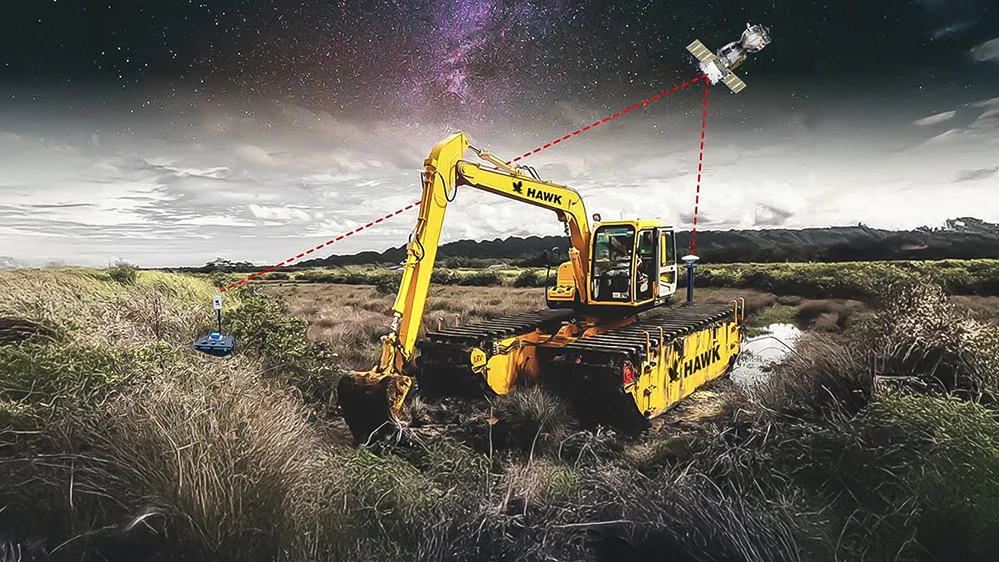
The HAWK Vision RTK GPS was built with these realities in mind. Developed by HAWK Excavator, the system focuses on delivering reliable, real-time accuracy rather than theoretical precision. RTK (real-time tracking) technology provides centimeter-level positioning that operators can trust while work is in progress, not after the fact.
As precision GPS equipment designed specifically for excavation and dredging applications, HAWK Vision fits directly into real jobsite workflows. It helps reduce guesswork, minimizes rework, and gives project teams clearer visibility into progress and depth control.
This article looks at what separates the HAWK Vision RTK GPS from other machine control systems. It focuses on practical differences, not marketing claims, and explains why this system has become relevant for contractors who value consistency, control, and measurable performance on site.

Most machine control systems promise accuracy. On paper, many of them look impressive. In real operating conditions, the experience is often very different.
Traditional systems usually rely on standard GPS positioning or basic guidance sensors. These setups can indicate the machine’s approximate location, but they struggle to show exactly where the bucket, cutter, or dredging tool is relative to the design grade. Small positioning errors add up quickly, especially in deep excavation, underwater work, or projects that require strict depth control.
Another common issue is delayed or indirect feedback. Operators often have to complete a pass before realizing they are off target. By then, material has already been removed, time has already been spent, and corrections become unavoidable. This turns machine control into a checking tool instead of a real control system.
Integration is also a challenge. Many control systems work in isolation from actual excavation workflows. They do not adapt well to dredging operations, attachment-based work, or mixed environments with constantly changing conditions. As a result, operators fall back on experience and visual judgment, which defeats the purpose of having guidance technology in the first place.
These limitations do not mean machine control systems are ineffective. They simply show that basic GPS guidance is no longer enough for modern projects. When precision, compliance, and efficiency matter, contractors need positioning systems that operate in real time, reflect actual tool movement, and remain reliable under demanding conditions. This is the gap that the HAWK Vision RTK GPS was designed to address.

The HAWK Vision RTK GPS is not an add-on created to follow a trend. It was built to solve specific problems encountered on excavation and dredging sites, where accuracy directly affects costs, safety, and project timelines.
At its core, the system uses Real-Time Kinematic positioning to deliver centimeter-level accuracy while work is in progress. Unlike standard GPS guidance, which estimates position within a broad range, a real-time tracking system continuously corrects satellite data using a local base station. This enables the system to display the excavator’s exact position and the working tool’s position in real time.
What makes the HAWK RTK GPS different is how this technology is applied. The system is designed around actual excavation workflows, not just machine location. Sensors are positioned to track boom, stick, and attachment movement so operators can see where material is being removed relative to the target depth or design profile.
HAWK Excavator developed this system with the understanding that jobsite conditions are rarely ideal. Visibility changes. Ground conditions shift. Marine and environmental projects introduce variables that basic guidance systems cannot manage well. The focus was not on adding more features, but on delivering reliable positioning data that operators can trust during every pass.
As precision GPS equipment, the HAWK Vision RTK GPS fits into real operations rather than forcing teams to adjust how they work. It supports excavation, dredging, and material removal tasks where control and consistency matter more than theoretical specifications.
On paper, most machine control systems look similar. In the field, they do not behave the same way. One of the first problems operators notice is delay. The machine moves, the bucket cuts, but the screen reacts a moment later. That small lag forces operators to slow down or second-guess what they are seeing. Over a long shift, those seconds turn into lost productivity.
The HAWK Vision RTK GPS avoids this problem by working in real time. Position updates reflect the attachment’s current state. When the bucket reaches depth, the system shows it immediately. There is no need to wait for the next pass to confirm whether the cut was right.
Another issue with many control systems is where they measure from. Tracking the machine body is not very effective once the boom starts moving. What matters is where the cutting edge is. HAWK Vision is set up around the working end of the machine. It tracks the movement of the boom, stick, and attachment, so operators can see the true excavation depth as they dig.
Jobsite conditions are rarely stable. Signals drop. Surfaces shift. Visibility changes. The system was built to stay consistent in those conditions. Base station setup, correction handling, and hardware mounting are meant to work through a full shift without constant adjustments.
Just as important, the system does not ask operators to change how they work. The display is intended for review, not management. Operators dig the same way they always have, with better information at hand. That is the difference between a control system that looks good in a brochure and one that actually gets used.
This is where the HAWK Vision RTK GPS separates itself from many other control systems. It is built around real movements, real delays, and real decisions that happen on site.


With most machine control systems, operators still spend a lot of time guessing. They dig, stop, check the screen, adjust, and try again. Even with guidance, the work rarely flows the way it should.
The HAWK RTK GPS changes that pattern. Operators know where the tool is before they stop digging. Depth, position, and alignment are visible while the cut is being made. That alone reduces the number of corrections during a shift.
Another difference shows up in planning. When positioning data is consistent, supervisors can rely on it. Cuts can be planned with tighter tolerances. Fewer check surveys are needed. Progress is easier to track without walking the site or stopping the machine.
Rework is where the gap becomes obvious. With less accurate machine control systems, over-excavation and missed depths are common. Material has to be moved twice, sometimes more. The HAWK Vision RTK GPS helps avoid that by showing the correct depth in real time, not after material has already been removed.
There is also less pressure on the operator. Instead of relying only on experience or visibility, decisions are supported by live data. That matters in poor weather, low visibility, or underwater work, where visual reference points are absent.
Over time, these differences add up. Shorter cycles. Fewer corrections. More predictable results. This is why the RTK GPS is not just another option among machine control systems, but a shift toward more controlled and repeatable excavation.
The value of a positioning system becomes clear when conditions are no longer ideal. Flat ground, clear visibility, and short cycles do not expose weaknesses. Complex projects do.
In marine and dredging work, visual reference points are limited or completely absent. Operators cannot see the cutting edge, and depth errors are expensive to correct. Under these conditions, the HAWK Vision RTK GPS provides continuous position feedback, eliminating guesswork. Operators know where they are cutting without stopping or relying on post-pass checks.
Environmental dredging adds another layer of pressure. Removing too much material can create compliance issues. Removing too little leads to repeat work. Accurate, real-time depth control enables operators to stay within defined limits while maintaining production.
In mining and tailings operations, consistency matters more than speed alone. Material removal must follow the design profiles closely to avoid instability or downstream handling issues. The system supports repeatable cuts across long shifts and multiple operators, reducing variation from one pass to the next.
Municipal and infrastructure projects bring their own challenges. Tight tolerances, inspection requirements, and public accountability leave little room for error. With reliable positioning data, progress can be verified without stopping equipment or waiting for survey updates. That helps keep schedules intact and reduces disruption.
Across these use cases, the advantage is not theoretical precision. It is control. The HAWK Vision RTK GPS supports operators in situations where experience alone is insufficient and traditional machine control systems fall short.
When contractors evaluate precision GPS equipment, the focus often goes straight to accuracy numbers. While accuracy matters, it is rarely the reason a system succeeds or fails over time.
The first real question is reliability. If a system needs frequent recalibration, constant troubleshooting, or specialist support to stay operational, it becomes a burden. The HAWK Vision RTK GPS is designed to stay stable through full shifts and changing site conditions, which reduces downtime and dependency on outside support.
The second consideration is adaptability. Fleets rarely work on one type of project. Equipment moves between sites, attachments change, and operating conditions vary. A precision system needs to follow the machine, not the project type. HAWK Vision fits into excavation and dredging workflows without being locked to a single application or environment.
Ownership cost is another overlooked factor. Cheaper control systems often create hidden expenses through rework, extended operating hours, fuel waste, and survey corrections. Over time, these costs exceed the price difference of a more capable system. The value of the HAWK Vision RTK GPS comes from reducing these operational losses rather than adding another layer of technology.
Training also matters. A system that operators resist will not deliver results. HAWK Vision is built to be checked, not managed. Operators can start using it quickly without changing their workflows. That simplicity shortens training time and increases adoption across crews.
From a long-term perspective, the system supports consistent performance across operators, machines, and projects. That consistency is what fleet owners look for when they invest in control systems that are expected to last beyond a single contract.


Machine control technology only proves its value when it removes uncertainty from the work. Accuracy on paper means little if operators still have to stop, check, adjust, and correct throughout the day.
The HAWK Vision RTK GPS stands out for addressing the real gaps in many machine control systems. It delivers reliable, real-time positioning at the working end of the machine, where decisions are actually made. That clarity reduces rework, improves consistency, and allows crews to work with confidence even in low-visibility or high-risk conditions.
For contractors and fleet owners, the system is not about adding complexity. It is about gaining control. Better control over depth. Better control over production. Better control over outcomes across different operators and project types.
As precision GPS equipment developed with real excavation and dredging workflows in mind, the HAWK Vision RTK GPS fits into how work is already done. It supports accuracy without slowing operations, which ultimately separates a useful system from one that remains unused.
In projects where margins are tight and mistakes are expensive, that difference is not technical. It is operational.
Get in touch with us now!
What Is Excavator Dredging? Excavator dredging is the process of using a hydraulic excavator equipped with a pump attachment to remove and transport...
Excavator pump attachments turn standard excavators into dredging systems by using the machine’s hydraulic power to drive a submersible slurry pump....

Yes – amphibious excavators can float, but not in the same way a boat operates in open water. These machines are built to work in wetlands,...