
RTK GPS for Excavators: When Precision Reduces Rework and Project Cost
Does RTK GPS Guidance Actually Pay Off on Excavator Projects? Yes, when grade accuracy, dredging depth, rework, survey time, or underwater...

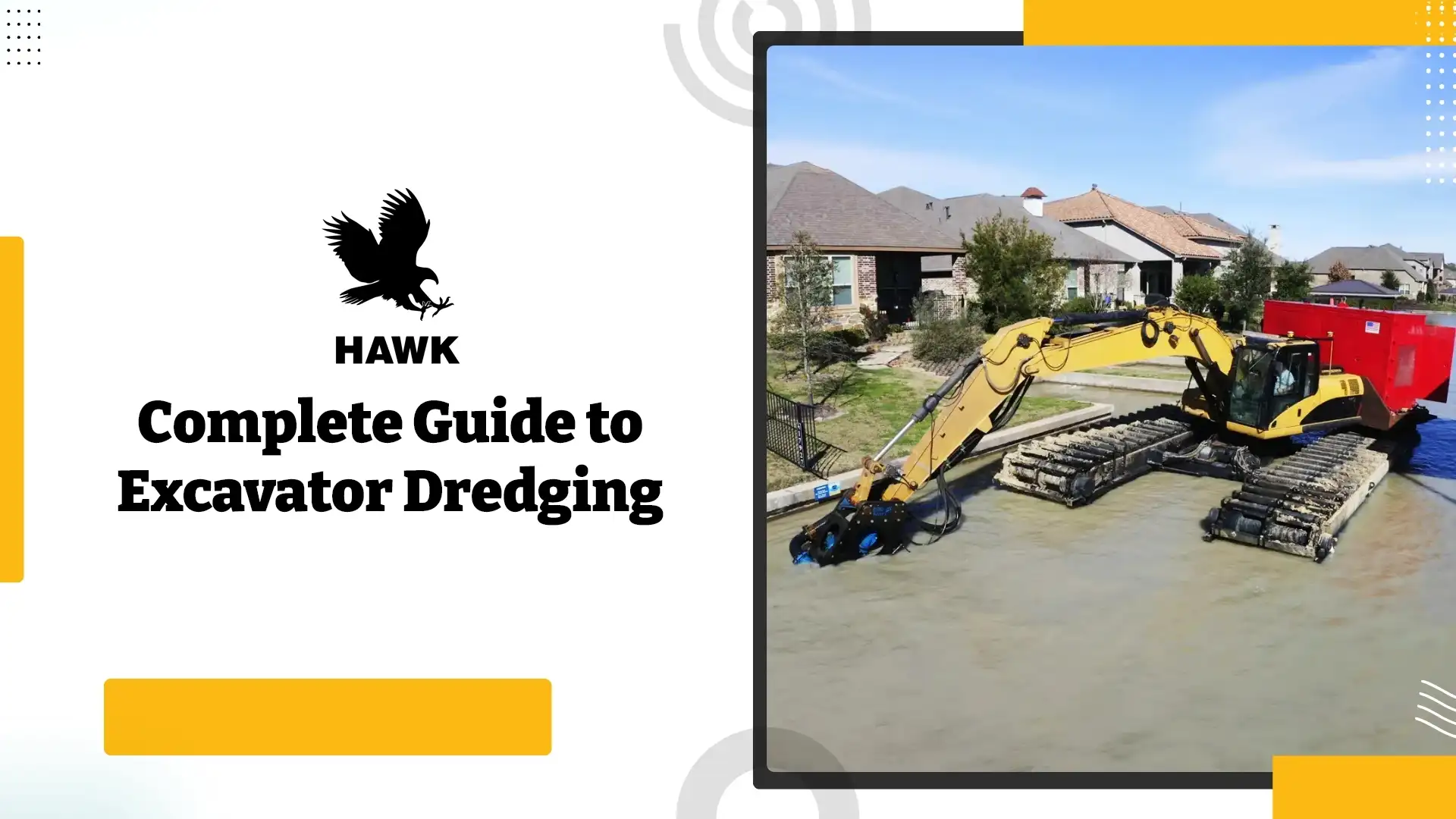

Excavator dredging is the process of using a hydraulic excavator equipped with a pump attachment to remove and transport submerged material as slurry. Instead of relying only on bucket excavation, this approach converts sediment into a pumpable slurry and moves it through a discharge pipeline. . An excavator slurry pump handles the transport of this mixture, while an excavator dredge pump is designed to combine excavation and pumping in a single operation, often with integrated agitation tools. This method is most useful in shallow water, confined areas, maintenance dredging, and projects where mobility, access, and targeted removal matter more than maximum production.
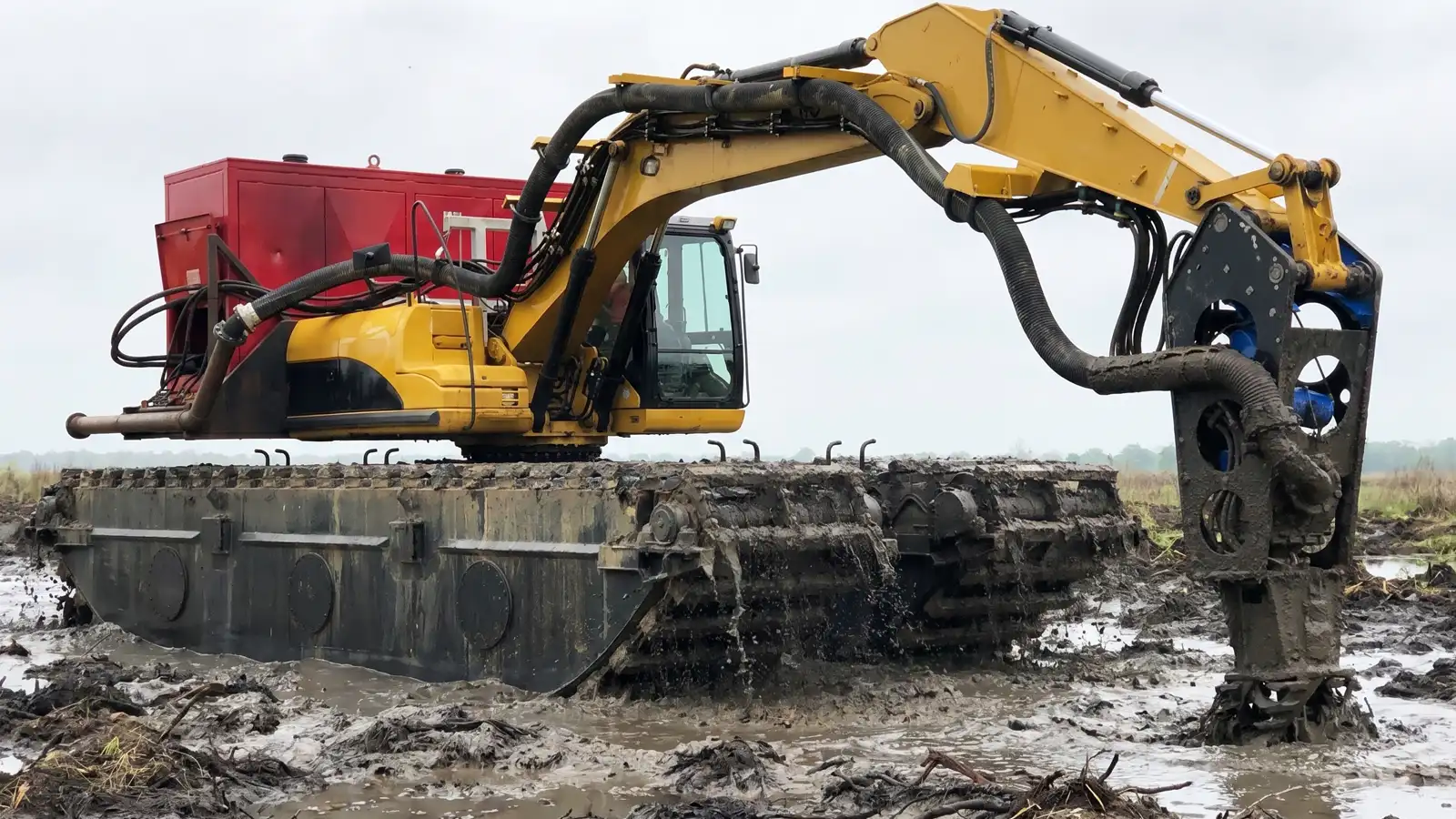
An excavator dredging system operates by combining hydraulic power, mechanical agitation, and slurry transport into a single workflow. The excavator provides the hydraulic energy required to drive the pump attachment, which can be mounted on the arm or positioned at the end of the boom. An agitator or cutter head is often integrated to break up compacted material and keep solids suspended. The discharge pipeline then carries the slurry from the pump to the designated location, which may be a containment area, dewatering system, or processing site.
This matters because excavator dredging is not just excavation with a pump added on. It is a hydraulic pumping system that only performs well when material agitation, slurry formation, pump capacity, and pipeline transport remain in balance.
Process steps:
The excavator provides hydraulic power and structural support for the dredging system. Hydraulic flow and pressure determine how effectively the pump and agitation tools operate. Machine size influences reach, digging depth, and handling capacity. Stable positioning is required, especially in soft ground or floating setups, to maintain consistent operation and control.
The excavator slurry pump handles the movement of slurry from the dredging point into the pipeline. It is typically mounted on the excavator arm and powered by the machine’s hydraulic system. Proper alignment and hydraulic matching are required to maintain flow and avoid performance losses under varying load conditions.
An excavator dredge pump is configured for direct excavation and pumping in one step. Unlike standard slurry pumps that rely on pre-loosened material, this design allows intake during digging. It supports continuous material removal and reduces reliance on separate excavation cycles.
Agitation tools are used to loosen compacted material and maintain solids in suspension. Jetting rings use water flow to break up sediment, while cutter heads mechanically cut through dense or cohesive material. Effective agitation improves slurry consistency and supports steady pump operation.
The discharge pipeline transports slurry to the required location. Pipeline length, diameter, and elevation changes influence resistance and flow efficiency. Incorrect sizing increases friction losses and reduces output, while proper configuration supports stable transport and minimizes wear.
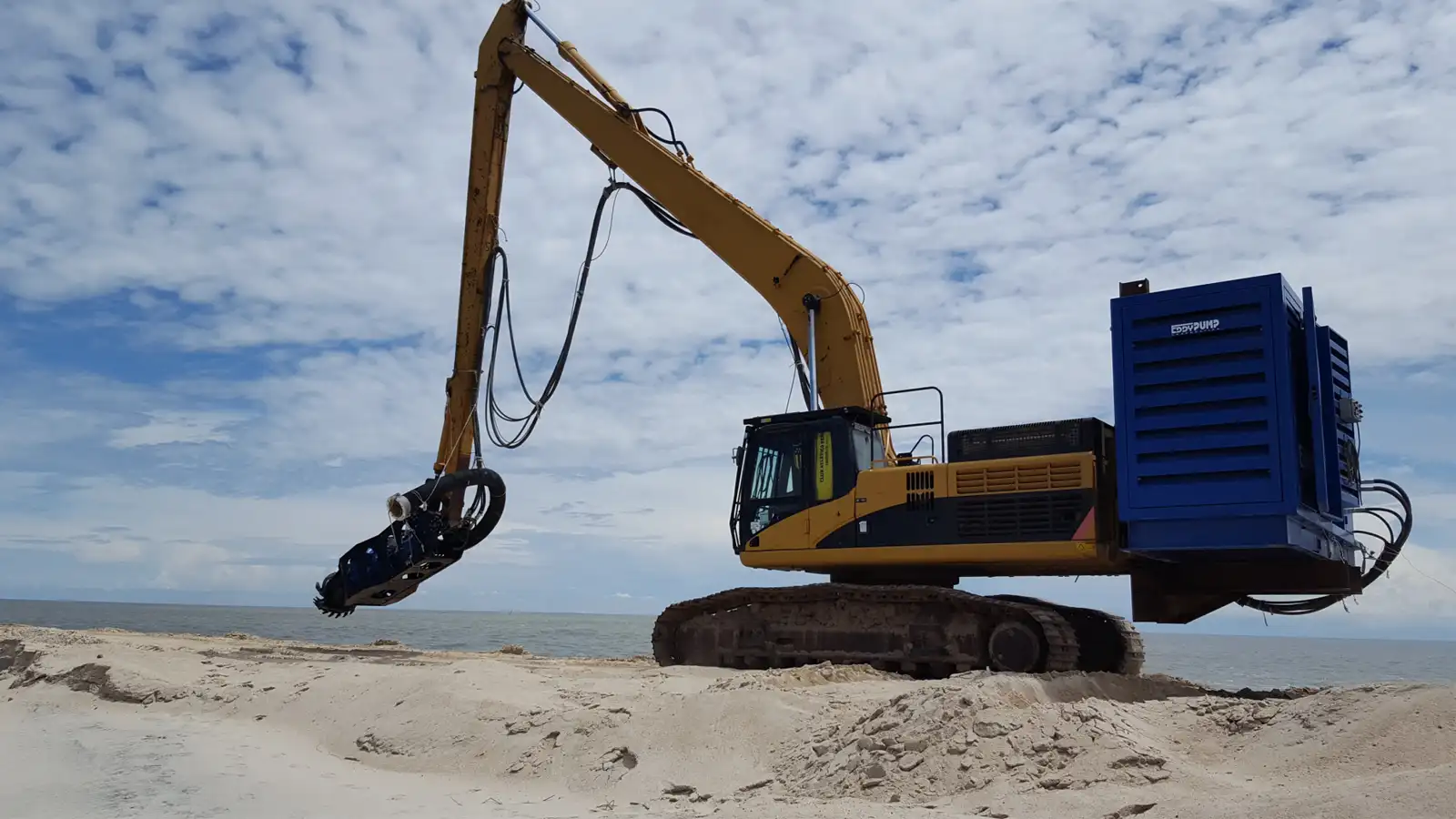

This configuration is used where the excavator can operate from stable ground along the shoreline. It is common in ponds, lagoons, and shallow basins where water depth is limited. Reach is constrained by the excavator arm length, so operations are typically focused on nearshore areas. It is suitable for controlled, small to mid-scale dredging where access is straightforward.
In deeper or wider water bodies, the excavator is positioned on a floating platform or barge. This setup allows access to rivers, ports, and channels where land-based reach is not sufficient. Stability of the barge and anchoring system becomes a key factor, along with load distribution. It supports broader coverage and enables dredging in locations that are otherwise inaccessible from shore.
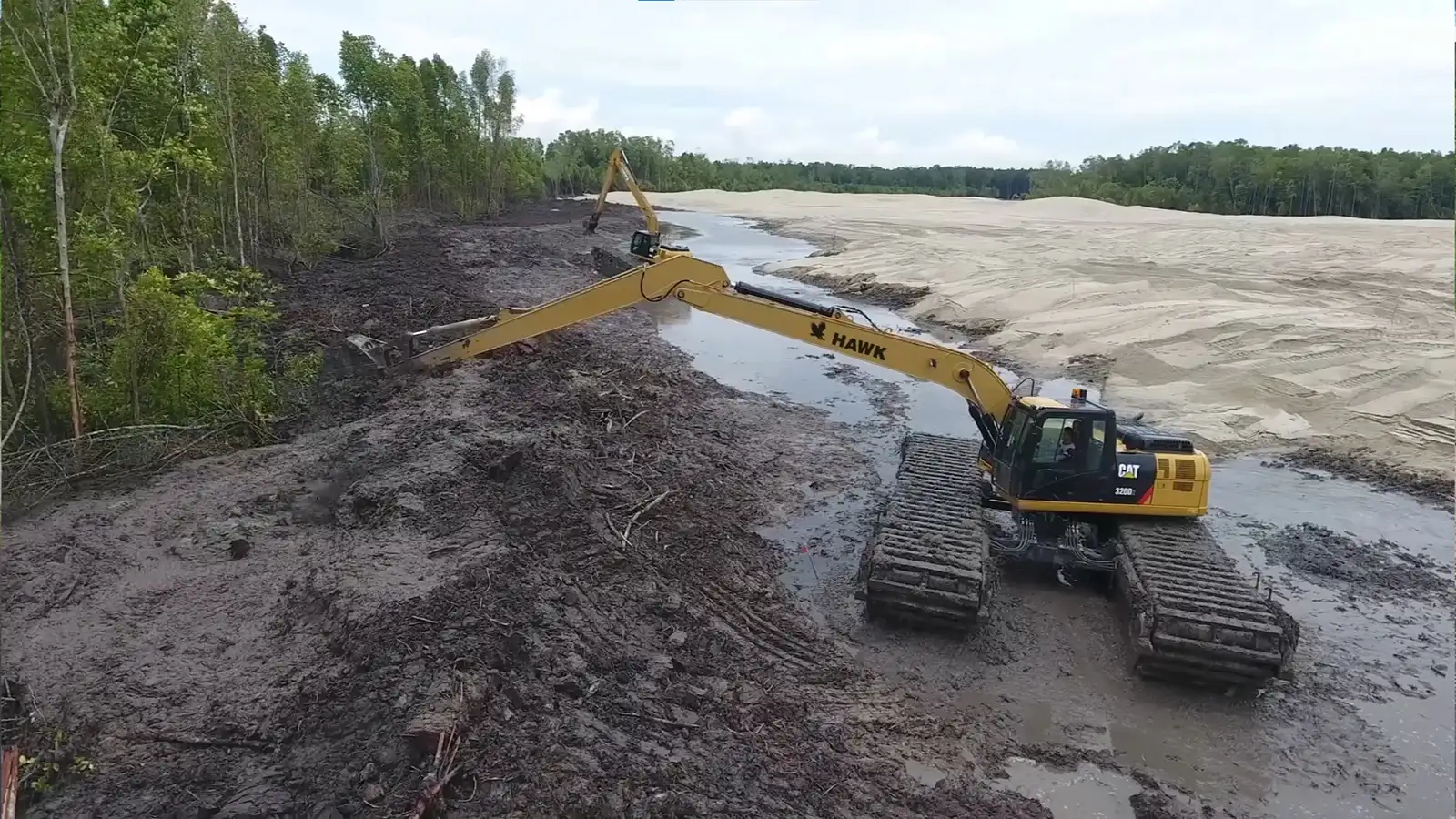
Amphibious excavators are designed to operate in soft, waterlogged, or unstable terrain such as wetlands and marshes. They use pontoons or wide tracks to distribute weight and prevent sinking. This configuration is used where both land and shallow water conditions are present, allowing movement across areas that cannot support conventional equipment.
Excavator dredging is selected based on site constraints, material behavior, and required flexibility. It is most effective when access is limited and precise removal is required, not when the project demands uninterrupted, high-volume production over long distances..
Best suited for:
Not ideal for:
The decision should be based on project scale, discharge distance, production targets, access limitation, and how often the system needs to be moved or reconfigured.
Sand and loose sediment are relatively easy to mobilize and form a stable slurry when mixed with water. These materials settle quickly if flow velocity drops, so consistent pumping is required to keep solids suspended. Performance is generally predictable, with lower resistance compared to cohesive materials.
Sludge and organic matter tend to have higher viscosity and slower settling rates. This can make slurry flow more resistant within the pipeline, even at lower solids concentration. These materials often require steady agitation and controlled flow to prevent buildup and maintain consistent transport.
Clay and dense soils are cohesive and resist initial movement. They require strong agitation or mechanical cutting to break into pumpable particles. Once mobilized, they can form thick slurry that increases pipeline resistance and affects flow efficiency, making system power and agitation critical.
Material containing rocks, debris, or variable particle sizes introduces unpredictability in flow behavior. Larger solids increase the risk of blockage and wear, influencing pump selection and internal clearance requirements. These conditions demand careful system design to maintain flow without interruptions.
The excavator supplies the hydraulic flow and pressure required to operate the pump and agitation tools. Insufficient power limits pump output and reduces the ability to handle dense or compacted material. Matching the excavator’s hydraulic capacity to the pump requirements is necessary for stable operation.
Pump design determines how effectively slurry is moved through the system. Capacity must align with the expected flow rate and material characteristics. Efficiency also depends on internal clearances, wear condition, and the ability to pass solids without clogging or excessive hydraulic loss.
The discharge pipeline introduces resistance through friction and elevation changes. Longer pipelines increase pressure losses, while vertical lift adds additional load on the system. Improper pipeline sizing or routing reduces flow and can lead to settling or blockages.
Higher solids content increases slurry weight and resistance, requiring more power to maintain flow. Variations in density affect pump performance and pipeline behavior, especially when material consistency is not uniform.
Larger and more abrasive particles increase wear on pump components and pipeline surfaces. Particle size also affects the risk of blockage and influences the type of pump design required for continuous operation.
System performance is determined by how these variables interact, not by any single component in isolation.
Excavators can be repositioned quickly across different sections of a site, making them suitable for projects that require frequent movement or phased dredging.
This method works effectively in narrow channels, basins, and restricted environments where larger dredging equipment cannot operate.
Excavator-based systems can operate from shore, barges, or amphibious platforms, eliminating the need for dedicated dredgers in many applications.
Pump attachments allow excavation and slurry transport to occur within the same system, reducing the need for separate handling or transfer steps.
The system can be started, stopped, and repositioned without complex setup, making it practical for projects that do not require continuous dredging.
In practical terms, these advantages make excavator dredging most attractive when mobilization speed, access, and targeted removal are worth more than maximum hourly output.
Excavator-based systems typically deliver lower output rates than dedicated dredging equipment, making them less suitable for high-volume, continuous operations.
System performance is directly tied to the excavator’s hydraulic power. If flow and pressure are insufficient, pump efficiency and material handling capability are reduced.
Discharge distance is limited by available power and system resistance. Longer pipelines increase friction losses and may require additional support such as booster pumps.
Changes in slurry density, particle size, or cohesiveness affect flow behavior and pumping efficiency. Inconsistent material conditions can reduce output and require adjustments during operation.
Excavator dredging differs from traditional dredging methods in how it balances mobility, production capacity, and system complexity.
The most important difference is not the equipment type alone. It is the operating model. Excavator dredging is built for flexibility and targeted removal. Traditional dredging is built for sustained production.
Excavator dredging offers high mobility and can be repositioned quickly across sites. Cutter suction dredgers have limited mobility once installed, while hopper dredgers are mobile over long distances but operate within defined transport cycles.
Excavator dredging provides moderate output suited for targeted removal. Cutter suction dredgers deliver continuous, high production for large-scale operations. Hopper dredgers handle bulk material efficiently but operate in cycles rather than continuous flow.
Excavator dredging requires minimal setup and can begin operation quickly. Cutter suction dredgers involve more complex installation, including anchors and pipeline systems. Hopper dredgers require vessel mobilization and coordinated loading and dumping operations.
Excavator dredging is suited for shallow, confined, or segmented projects. Cutter suction dredgers are used for continuous dredging in rivers, channels, and large water bodies. Hopper dredgers are typically used for offshore or large-scale sediment transport where material needs to be relocated over distance.
If the project values rapid deployment, targeted excavation, and flexible positioning, excavator dredging often makes more sense. If the project depends on continuous large-volume production, traditional dredging systems are usually the better fit.
Excavator dredging is used to remove accumulated sediment, organic buildup, and debris from ponds and lagoons. It is effective in shallow environments where access is limited and material needs to be removed without draining the water body.
In industrial settings, this method is applied to extract sludge from settling basins, storage tanks, and process ponds. It handles viscous and variable material while allowing controlled removal without interrupting surrounding operations.
Excavator dredging is used to clear sediment buildup in canals and narrow waterways to maintain flow capacity. Its ability to operate in confined spaces makes it suitable for targeted maintenance without large-scale mobilization.
Mining operations use excavator dredging to manage tailings ponds and recover settled material. It supports movement of slurry containing fine particles and process waste, helping maintain storage capacity and system efficiency.
On construction sites, excavator dredging is used to remove sediment from waterlogged areas, pits, and excavation zones. It enables controlled handling of slurry during dewatering processes and helps maintain workable site conditions.
Excavator dredging can be effective when the system is configured to match the operating conditions. Using the right excavator slurry pump or excavator dredge pump allows the machine to handle both material removal and slurry transport within a single setup. Performance is shaped by how slurry behavior, hydraulic capacity, agitation, and pipeline design work together under real operating conditions Changes in material consistency, discharge distance, or system resistance directly affect output, wear, and efficiency. This approach is best suited for projects that require flexibility, controlled material removal, faster mobilization, and the ability to work in confined or variable environments rather than continuous high-volume dredging.
The real takeaway is simple: excavator dredging works best when the system is built around the job, not when the job is forced to fit the equipment.

Not all excavators are suitable. The machine must provide sufficient hydraulic flow and pressure to operate the pump attachment. Size, stability, and reach also matter, especially for deeper or offshore work. Compatibility with the pump’s hydraulic requirements is the primary constraint.
An excavator slurry pump is used to transport a mixture of water and solids through a pipeline. It converts loosened material into a flowable slurry and moves it to a discharge location such as a containment area or processing system.
An excavator dredge pump is designed to perform excavation and pumping at the same point of operation. It often includes integrated agitation or cutting features. A standard dredge pump typically focuses on slurry transport and may require separate excavation equipment.
It depends on pump design and internal clearance. Some systems are built to pass larger particles, while others require material to be broken down before pumping. Agitation tools help reduce particle size and maintain flow.
Yes, it works well for sand and loose sediment. These materials form a stable slurry and are easier to transport compared to cohesive or high-viscosity materials.
Performance is influenced by hydraulic power, pump capacity, pipeline resistance, and slurry characteristics such as density, particle size, and abrasiveness. These factors interact, so system balance is more important than any single parameter.
Get in touch with us now!
Does RTK GPS Guidance Actually Pay Off on Excavator Projects? Yes, when grade accuracy, dredging depth, rework, survey time, or underwater...
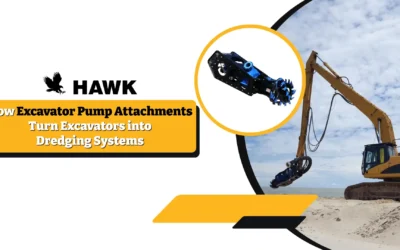
Excavator pump attachments turn standard excavators into dredging systems by using the machine’s hydraulic power to drive a submersible slurry pump....
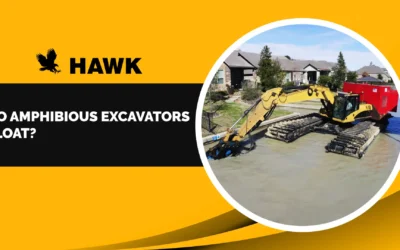
Yes – amphibious excavators can float, but not in the same way a boat operates in open water. These machines are built to work in wetlands,...