
RTK GPS for Excavators: When Precision Reduces Rework and Project Cost
Does RTK GPS Guidance Actually Pay Off on Excavator Projects? Yes, when grade accuracy, dredging depth, rework, survey time, or underwater...


Excavator pump attachments turn standard excavators into dredging systems by using the machine’s hydraulic power to drive a submersible slurry pump. Instead of only digging and relocating material, the excavator operates as an excavator dredge pump, positioning the pump and transferring slurry through a connected discharge line.
This changes the role of the machine. Rather than working in a stop-and-dump cycle like a bucket, the excavator becomes part of a continuous slurry transport system. That makes excavator pump attachments valuable for dredging, pond cleaning, mining slurry removal, canal maintenance, and industrial sludge handling, where site access, flexibility, and mobilization speed matter.
You can achieve this conversion by installing an excavator slurry pump and connecting it to the machine’s auxiliary hydraulics or to a dedicated hydraulic power unit, depending on the application. The resulting hydraulic excavator pump system allows operators to handle slurry with existing equipment instead of bringing in a full dedicated dredger.
This article explains how excavator pump attachments work, the main system components, where they are used, what advantages they offer, and where their limits begin.

An excavator pump attachment converts the excavator’s hydraulic power into slurry movement. Instead of only digging and relocating material, the machine operates as an excavator dredge pump that handles both pump positioning and material transfer.
This matters because the system replaces intermittent excavation with continuous pumping. Sand, sludge, silt, tailings, and sediment can be moved directly through a hose or pipeline to the discharge point without repeated bucket cycles.
The system combines standard excavator functions with added pumping capability.
The main components typically include:
These components work together as one integrated dredging system rather than as separate pieces of equipment.
The excavator positions the pump at the required depth and location. Hydraulic flow from the machine powers the pump, which agitates and draws in slurry. The pump then transfers the material through connected discharge lines to the designated discharge point.
This continuous process allows operators to dredge and pump with the same machine, making the excavator more than just a digging tool. It becomes a controlled, mobile slurry transfer platform.

Hydraulic output determines how effectively the system moves slurry. Flow rate controls how much hydraulic fluid reaches the pump, which directly affects pump speed and pumping capacity. Pressure determines the force available to move dense materials such as sand, sludge, and abrasive slurry.
If the excavator does not supply enough flow or pressure, the excavator slurry pump will not reach its intended output. If the pump is oversized for the excavator, efficiency drops and system strain increases.
That is why hydraulic compatibility matters. The pump, the excavator, and the material must match.
Most excavator pump attachment systems use the excavator’s auxiliary hydraulic lines to transfer power directly to the pump attachment. This keeps the setup compact and allows operators to use the machine’s existing hydraulic controls.
Some applications use a dedicated hydraulic power unit instead of relying entirely on the excavator’s onboard hydraulic system. That can be useful when the project requires more stable power, more output, or a larger dredging attachment than the excavator alone can support.
A mismatch between excavator hydraulic capacity and pump demand creates real performance problems.
Common issues include:
That is why excavator dredge pump selection should never be based on pump size alone. Hydraulic flow, pressure, material density, solids content, and discharge distance all have to be considered together.
To convert an excavator into a dredging system, the setup usually follows three connected steps:
Mount the pump attachment
The slurry pump is attached to the excavator arm in place of or alongside the bucket configuration, depending on the system design. This allows the excavator to control the pump’s position, depth, and reach.
Connect the hydraulic lines
The pump is connected to the excavator’s auxiliary hydraulic circuit or to an external hydraulic power unit. This provides the flow and pressure required for pumping.
Set up the discharge pipeline
Hoses or pipelines are attached to move slurry away from the work area. The route must be planned based on discharge distance, elevation, and site layout to avoid unnecessary resistance.
Once these elements are in place, the excavator functions as a complete dredging and slurry transfer unit.
Once installed, the excavator controls both movement and pumping.
A typical operating sequence looks like this:
The result is a controlled pumping process where the excavator manages placement while the pump handles continuous material transport.
System performance depends heavily on site-specific setup.
The biggest factors include:
Material type
Sand requires more power because of density and abrasiveness. Silt and sludge move more easily but may still require agitation. Mixed materials can increase wear and reduce efficiency.
Pump size versus excavator capacity
The pump must match available hydraulic power. Too much pump for too little machine causes poor performance. Too little pump may underutilize the excavator.
Discharge distance and elevation
Longer discharge runs increase friction loss. Vertical lift adds resistance. Both reduce effective output if not accounted for during system design.
These are not side issues. They are what determine whether the system performs well or underperforms in the field.

Excavator dredge pump systems are commonly used in mining applications to handle tailings, slurry, settled solids, and process sediment in pits, ponds, and containment areas.
The advantage here is direct slurry movement. Instead of digging, loading, transporting, and dumping, the material can be pumped continuously through a discharge pipeline.
Sediment builds up over time in ponds and lagoons, reducing storage capacity and affecting performance. An excavator slurry pump allows operators to remove silt and sludge without fully draining the basin in many cases.
This makes the system useful for retention ponds, settling ponds, process lagoons, and wastewater-related applications where downtime is costly.
In shallow or narrow waterways, access is usually one of the biggest limitations. Excavators can operate from the bank, from prepared access points, or from specialized deployment setups while placing the pump exactly where sediment accumulates.
That makes excavator dredge pump systems a good fit for maintenance dredging where control and access matter more than maximum production.
Industrial facilities often need to remove slurry, sludge, or settled solids from pits, tanks, basins, and containment zones. A hydraulic excavator pump allows this material to be transferred without installing permanent pumping infrastructure.
This is especially useful for cleanouts, plant maintenance, and emergency sediment removal.
Excavator pump attachments are also useful in civil and infrastructure work where slurry, sediment, and water must be removed quickly from trenches, culverts, canals, underpasses, and work pits.
In these jobs, the value is not just pumping. It is rapid mobilization with a machine already present on-site.

The choice usually comes down to job conditions, not brand preference or theory.
Many dredging sites cannot support a full dedicated dredger due to depth, space, bank conditions, or staging limitations. Excavators can work from stable ground or temporary access positions where larger dredging systems are harder to deploy.
Excavators are easier to move between work zones than most dedicated dredging systems. This matters in projects with multiple ponds, segmented canals, scattered sediment pockets, or intermittent cleanout areas.
Installing a pump attachment is often faster than mobilizing and assembling a separate dredging unit. That gives excavator-based systems a real advantage in maintenance work, emergency response, and shorter-duration projects.
The excavator gives the operator direct control over depth, placement, and reach. That level of control is valuable when working around structures, lined basins, confined areas, or irregular sediment buildup.
These advantages make excavator-based systems highly practical for targeted dredging work. They do not replace every dredger, but they solve many jobs more efficiently.
Excavator pump attachments improve dredging performance by combining excavation control with continuous pumping.
Key advantages include:
The excavator already on-site becomes the dredging platform, which reduces the need for separate machines.
The arm allows operators to place the pump exactly where material needs to be removed.
Excavators can operate in environments where large dredgers cannot easily mobilize.
In the right configuration, excavator slurry pump systems can move abrasive or solids-heavy material more effectively than general-purpose pumping setups.
The system also simplifies project logistics.
Additional benefits include:
For many contractors and municipalities, that practical flexibility is the main selling point.

Excavator pump attachments work well in controlled, targeted, and access-constrained conditions. But they do have limits, and pretending otherwise is bad engineering and bad marketing.
Excavator-based systems usually handle short to medium discharge distances effectively. As pipeline length and elevation increase, pressure loss and flow loss reduce efficiency.
For long-distance slurry transport, dedicated dredging systems or booster-supported systems are often the better choice.
The pump system depends on available hydraulic flow and pressure. If the excavator cannot support the attachment properly, the pump cannot deliver stable or efficient performance.
This directly limits pump size, production rate, and application range.
Excavator dredge pump systems are built for mobility and flexibility, not for every high-volume production job. If the project requires uninterrupted, large-scale material removal over long periods, a dedicated dredger is usually the correct tool.
That is the dividing line. Excavator pump attachments are excellent for many targeted dredging tasks, but they are not a one-size-fits-all replacement for purpose-built dredging equipment.
Excavator pump attachments convert a standard excavator into a dredging system by using hydraulic power to drive slurry movement. The excavator handles positioning, depth control, and reach, while the pump enables continuous material transfer through a discharge line.
That changes the job from intermittent digging to continuous slurry transport.
This approach works best in environments where access is limited, setup time matters, or dredging needs are intermittent rather than continuous. It suits pond cleaning, canal maintenance, mining slurry handling, industrial sludge removal, construction dewatering support, and other projects where mobility and control matter as much as raw production.
When the system is matched correctly to hydraulic capacity, material type, and discharge conditions, it gives operators a flexible and effective way to perform dredging work without bringing in a full dedicated dredger.

An excavator dredge pump is a hydraulic attachment that allows an excavator to move slurry instead of only digging material. It uses the machine’s hydraulic power to pump sand, silt, sludge, tailings, and other slurry mixtures through a discharge pipeline.
The excavator powers the slurry pump through its auxiliary hydraulic system or, in some configurations, through a dedicated hydraulic power unit. Hydraulic flow and pressure drive the pump and allow it to move material through connected hoses or pipelines.
The correct excavator size depends on the pump requirements, the material being handled, and the desired output. Medium to large excavators are commonly used because they provide higher hydraulic flow and pressure, but smaller excavators can also be effective in confined or lighter-duty applications when properly matched.
These systems can handle sand, silt, sludge, sediment, tailings, and other slurry mixtures. Performance depends on solids size, slurry density, hydraulic power, and pump design.
Pumping distance depends on hydraulic power, pump size, hose diameter, slurry properties, pipeline layout, and discharge elevation. Excavator-based systems usually perform best over short to medium distances unless the system is specifically engineered for more.
A dedicated dredger is the better option when the project requires continuous, high-volume dredging, longer discharge distances, or production levels beyond the hydraulic and operational limits of an excavator-based system.
Get in touch with us now!
Does RTK GPS Guidance Actually Pay Off on Excavator Projects? Yes, when grade accuracy, dredging depth, rework, survey time, or underwater...
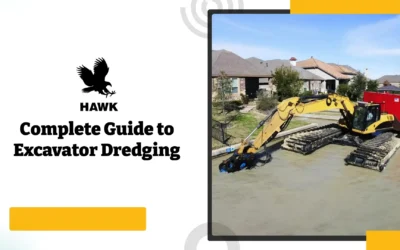
What Is Excavator Dredging? Excavator dredging is the process of using a hydraulic excavator equipped with a pump attachment to remove and transport...

Yes – amphibious excavators can float, but not in the same way a boat operates in open water. These machines are built to work in wetlands,...