
RTK GPS for Excavators: When Precision Reduces Rework and Project Cost
Does RTK GPS Guidance Actually Pay Off on Excavator Projects? Yes, when grade accuracy, dredging depth, rework, survey time, or underwater...

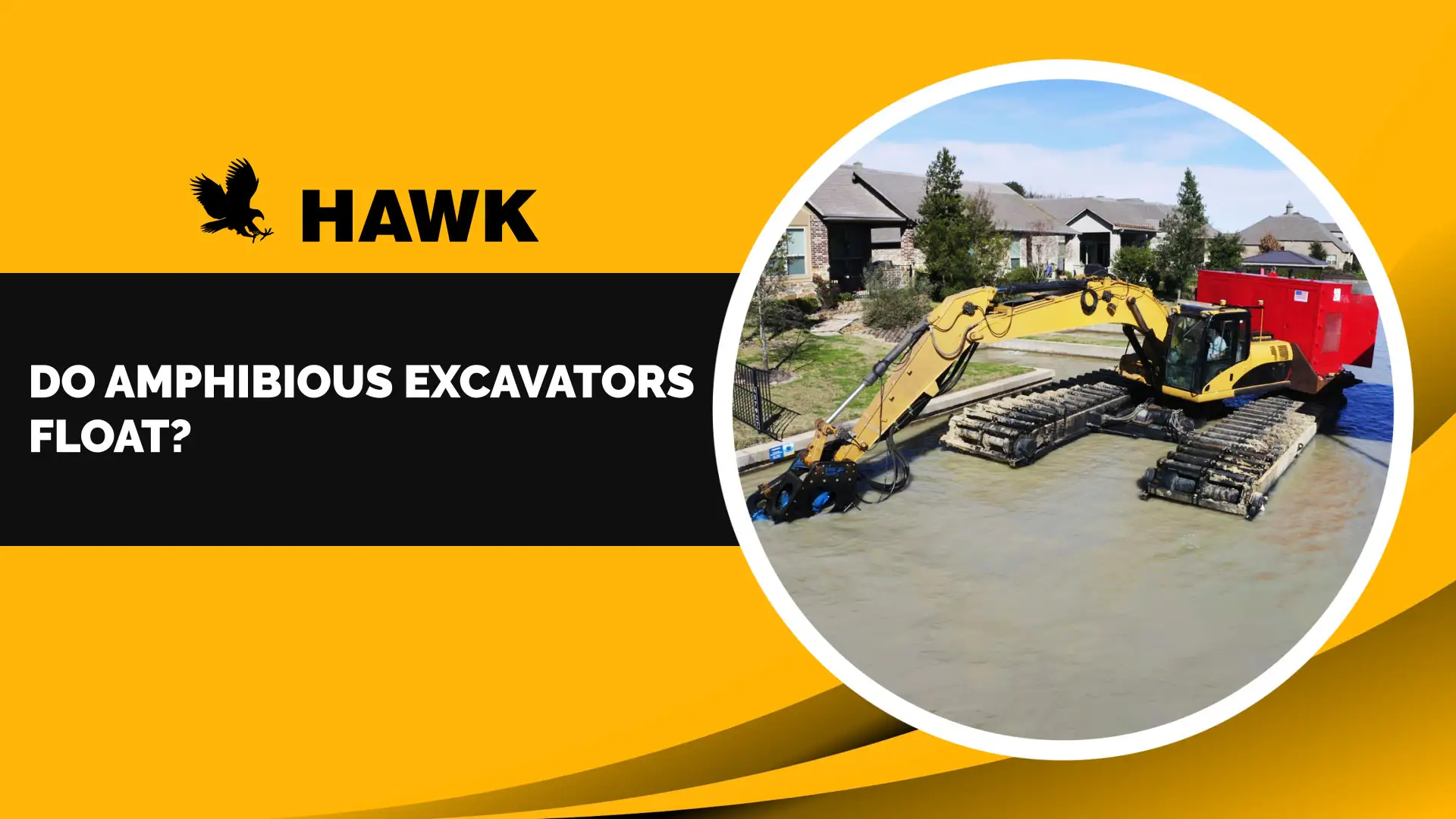
These machines are built to work in wetlands, marshes, shallow water, and soft ground where a standard excavator would sink, lose traction, or become unsafe to operate. Instead of relying on a conventional tracked undercarriage alone, an amphibious excavator uses sealed pontoons that spread the machine’s weight across a much larger surface area. That wider footprint reduces ground pressure and creates enough buoyancy to support the machine in waterlogged environments.
In simple terms, amphibious excavators float because their pontoons displace water and generate buoyant force. At the same time, their design helps keep the machine balanced while moving, digging, or repositioning in unstable terrain. That is what makes them valuable for dredging, flood control, wetland restoration, canal maintenance, shoreline work, and other projects where conventional excavators struggle.

The principle is straightforward. As the pontoons enter the water, they push water aside. That displaced water creates an upward force that supports the machine’s weight. When buoyant force d equals the weight of the excavator and its load, the machine can remain supported without sinking.
You can think of it in practical terms. The heavier the hydraulic excavator, the more water the pontoons must displace to keep it afloat. That is why pontoon size, shape, and construction matter so much. Larger or additional pontoons increase flotation and stability, which is why different machines are configured for different operating environments and water depths.
Pontoons form the core of amphibious excavator flotation. They are typically reinforced, sealed structures designed to support the excavator in harsh and unpredictable working environments. Their wide and elongated footprint lowers ground pressure, which allows the machine to travel over soft, saturated ground that would trap a conventional excavator almost immediately.
That reduced ground pressure is one of the biggest practical advantages of amphibious equipment. In wetlands, marshes, and shallow dredging zones, staying supported is not just about floating. It is about remaining stable enough to work productively without tearing up the site or burying the machine.
Floating alone is not enough. Stability depends on how the machine carries its weight. In an amphibious excavator, engineers position the engine, cab, and hydraulic systems so the load is balanced as evenly as possible across the pontoons. When weight is poorly distributed, the machine can tilt, become unpredictable, or lose working stability.
This becomes especially important when the excavator digs. As the boom extends, Lifts, or swings, the center of gravity shifts. A well-distributed structure absorbs those changes without becoming unstable, but still has to be operated with care.
This is where real-world operation separates theory from practice. Amphibious excavators do not behave like standard excavators on firm, dry ground. Once the machine is in use, control shifts from design to operation. Every movement you make affects balance. Extending the boom forward pushes the center of gravity outward. Pulling it back brings that weight in again.
Small, controlled movements keep the floating excavator steady. Sudden actions do the opposite. In water or soft ground, there’s less resistance to counter those shifts, so instability shows up faster than it would on solid ground.
This is why stability matters more here than with standard construction equipment. In wetlands and dredging conditions, the machine depends on both its design and the operator’s control to stay level. When both work together, the excavator can move, dig, and reposition without losing balance.

Not exactly.
This is one of the most important distinctions to make. Amphibious excavators are designed to work in shallow water, marshes, and soft ground — not to function like open-water marine vessels. Many models are most effective when they still have some bottom contact or are working in shallow zones where flotation and support work together. Some open-water applications require extra pontoons, anchoring legs, or specialized amphibious dredging setups.
So yes, they float — but the better way to say it is this: they are engineered to remain supported and stable in environments where conventional excavators cannot operate safely.

There is no one-size fits all answer. Operating depth depends on machine size, pontoon design, overall weight, water conditions, bottom conditions and whether the machine uses added flotation or anchoring systems. In most cases, you’ll see them working in water depths where the pontoons remain partially submerged but still provide enough surface support to keep the machine stable.
The exact limit depends on the pontoon height and overall machine design. If the water level rises too high, the excavator loses the balance between flotation and control. At that point, stability drops and operation becomes unsafe. This is why these machines perform best in controlled environments like wetlands, marshes, and dredging zones rather than deep water bodies.
The key takeaway is: depth capability is model-specific. The type of amphibious or pontoon excavator also matters. Some models are designed for lighter wetland work, while others handle more demanding dredging tasks. Beyond the machine itself, site conditions play a major role. Soft soil, uneven ground, and moving water can all reduce stability, even in shallow depths. When water flow increases or the base becomes unstable, the excavator relies more heavily on its design and weight distribution to maintain control.

Amphibious excavators are most valuable in places where soft ground and water make standard equipment impractical.
Wetlands, marshes, and swampy terrain create one of the most difficult conditions for standard construction equipment. The ground looks solid, but it cannot support heavy loads. A conventional hydraulic excavator applies high ground pressure, which causes it to sink, lose traction, or get stuck within minutes.
Amphibious excavators solve this problem by spreading their weight across wide pontoons. This reduces ground pressure to a level that soft soil can handle. Instead of sinking, the machine stays on the surface and moves steadily across unstable terrain. This ability allows you to work in areas where traditional equipment cannot operate at all.
These machines are widely used for removing sediment, debris, vegetation, and other material from canals, ponds, rivers, drainage channels, and retention areas. Their ability to work directly in shallow water can reduce the need for temporary platforms or support equipment in certain jobs.
Amphibious excavators are widely used for flood control, levee maintenance, shoreline stabilization, and erosion repair because they can operate in shallow water, soft soil, and unstable ground where standard excavators often fail. Their pontoon-supported design and low ground pressure make them effective for clearing drainage channels, removing sediment, restoring canals and retention ponds, rebuilding embankments, and supporting waterway maintenance projects with less risk of getting stuck or damaging sensitive terrain.
Another useful addition is pipeline access and utility work in waterlogged terrain, along with vegetation management and environmental remediation. These are practical, search-friendly use cases and show buyers why low ground pressure matters beyond dredging alone.

Dredging means removing sediment, debris, or unwanted material from the bottom of water bodies to maintain depth and flow. Over time, silt and organic matter build up in canals, rivers, and ponds, which reduces capacity and affects water movement.
Amphibious excavators handle this work by combining flotation with precise digging control. Positioned on pontoons, the machine stays stable while the boom and bucket reach below the surface to remove material. The excavator then deposits the dredged sediment onto nearby banks or into designated areas. This setup allows you to work directly within shallow water without needing separate floating platforms.

These terms are closely related, but they do not always mean the same thing.
A marsh buggy typically refers to a broader category of amphibious equipment used for access, transport, and support work in swamps, marshes, and other soft-ground environments. A pontoon excavator, also called an amphibious excavator, is more specifically designed for digging, dredging, and material handling while operating on sealed pontoons. While the terms are sometimes used interchangeably, understanding the difference helps buyers compare the right equipment for the job.
Amphibious excavators do float, but the better question is how they stay stable enough to work where other machines fail.
The answer comes down to buoyancy, water displacement, pontoon design, low ground pressure, balanced weight distribution, and careful operation. Together, these factors allow amphibious excavators to work in wetlands, marshes, shallow dredging zones, and other unstable environments where standard excavators would sink, lose traction, or become unsafe to operate.
For buyers and operators, the important thing to remember is that not all amphibious excavators have the same depth capability or operating setup. Some are designed for shallow-water support with bottom contact, while others use specialized configurations for deeper or more complex dredging work. Understanding that difference helps you choose the right machine for the job and avoid costly mistakes.

Yes, but only within their designed working conditions. The pontoons keep the machine afloat as long as the weight stays within capacity and the water depth matches the machine’s design limits. Outside those conditions, stability drops, and operation becomes unsafe.
Stability comes from wide pontoons and balanced weight distribution. These machines spread their weight evenly, which keeps the center of gravity controlled. As long as the load and movement stay within safe limits, the excavator remains stable during operation.
Yes, it can move between water and land. Amphibious excavators are designed to travel across soft ground, wetlands, and shallow water. However, they are not built for hard, dry terrain like standard construction equipment, so performance on solid ground is limited.
Operators manage stability through smooth and controlled movements. The position of the boom and bucket directly affects balance. By avoiding sudden shifts and keeping movements steady, operators maintain a stable center of gravity while working.
A floating excavator uses pontoons to reduce ground pressure and operate in waterlogged environments. A standard hydraulic excavator relies on tracks and requires firm ground for stability. The key difference lies in where each machine can operate effectively.
Ground pressure determines whether the machine sinks or stays supported. Lower ground pressure allows the excavator to move across soft terrain and remain stable in water. This is why amphibious excavators perform well in wetlands and dredging conditions where heavier machines would fail.
Get in touch with us now!
Does RTK GPS Guidance Actually Pay Off on Excavator Projects? Yes, when grade accuracy, dredging depth, rework, survey time, or underwater...
What Is Excavator Dredging? Excavator dredging is the process of using a hydraulic excavator equipped with a pump attachment to remove and transport...
Excavator pump attachments turn standard excavators into dredging systems by using the machine’s hydraulic power to drive a submersible slurry pump....