
RTK GPS for Excavators: When Precision Reduces Rework and Project Cost
Does RTK GPS Guidance Actually Pay Off on Excavator Projects? Yes, when grade accuracy, dredging depth, rework, survey time, or underwater...


Most premature failures in clamshell buckets do not come from overloading. They come from worn cutting edges, stressed hinge areas, and steel that is not suited for abrasive or high-impact conditions. This is why clamshell bucket wear parts and material selection matter as much as capacity or geometry. Buckets built without proper wear protection may look heavy-duty, but they lose efficiency quickly and become expensive to maintain.
Hawk Excavator designs clamshell buckets with these realities in mind. Instead of relying on thickness alone, the focus is on where wear occurs, how cutting edges interact with the material, and which steel alloys are used for heavy-duty buckets in critical zones. The result is a bucket that holds its shape, maintains performance, and stays in service longer under demanding site conditions.
This article examines how wear parts, the latest design, and steel alloy selection work together in durable clamshell bucket engineering, using Hawk Excavator’s approach as a practical reference rather than a theoretical discussion.
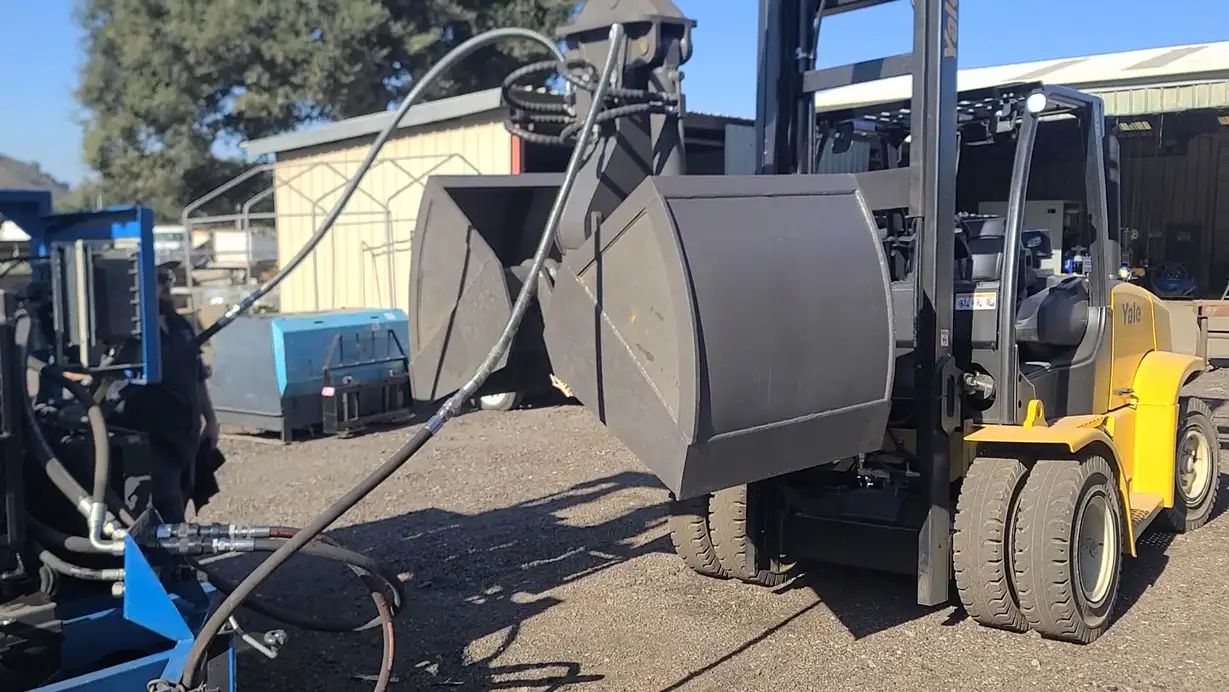

A clamshell bucket works very differently from a standard excavator bucket. Instead of a fixed shell, it uses two curved jaws that open and close around material. This design allows controlled lifting, precise placement, and efficient handling of loose or submerged material. Because of this movement, clamshell buckets experience wear in more locations than rigid buckets, especially at hinge points, cutting edges, and shell contact areas.
The core structure of a clamshell bucket includes the bucket shells, hinge assemblies, pins, bushings, and the actuation system that controls opening and closing. Each of these components plays a direct role in how the bucket handles load, absorbs impact, and resists long-term fatigue. If any one area is under-engineered, wear accelerates across the entire attachment.
From an engineering perspective, functional priorities are clear. The shells must maintain shape under load. Hinges and pins must tolerate repeated cycles without elongation or cracking. Cutting edges must penetrate material without excessive abrasion. This is where clamshell bucket wear parts become essential: they protect the main structure while enabling predictable replacement during service intervals.
Hawk Excavator designs clamshell buckets with these functional priorities in mind. The layout of wear zones, reinforcement around hinge areas, and the integration of replaceable wear components are all based on how the bucket is used in real operating conditions. Rather than treating durability as a single feature, Hawk’s design approach distributes strength and wear resistance across the entire bucket structure.
Wear in the clamshell bucket is not uniform. Certain areas take repeated impact and abrasion every operating cycle, while others remain largely unaffected. This is why clamshell bucket wear parts are not optional add-ons, but core design elements that protect the bucket’s structure and extend its working life.
High-wear zones typically include the cutting edges, lower shell surfaces, side plates, hinge areas, and pin contact points. These areas are exposed to abrasive material, cyclic loading, and direct impact during opening, closing, and lifting. Without dedicated wear components in these zones, structural steel absorbs damage that is difficult and expensive to repair.
Effective wear parts are designed to be sacrificial. They absorb abrasion and impact so that the main bucket body does not. Just as important, they must be positioned correctly. Poorly placed wear plates or undersized reinforcements often fail to protect critical areas, leading to cracking, deformation, or excessive pin wear over time.
Hawk Excavator incorporates wear parts into clamshell bucket designs based on application demands rather than generic reinforcement patterns. Wear plates are applied where material contact is constant, and reinforcement is focused around the hinge and load-bearing zones. This approach allows wear parts to be replaced during maintenance cycles without compromising the bucket’s structural integrity, keeping the buckets in service for longer periods with predictable upkeep.
In a clamshell bucket, cutting edges take the most direct abuse. Every cycle begins and ends at the edge, whether the bucket is penetrating compacted material, closing under load, or releasing material at height. As a result, cutting edges are often the first components to wear out and the first place where poor engineering becomes visible.
Cutting edges do more than separate material. They control how efficiently the bucket penetrates, how much force is transferred to the shell, and how evenly wear is distributed across the jaws. Edges that are too soft wear quickly and lose profile. Edges that are too hard may resist abrasion but crack under impact. The balance between hardness and toughness is critical.
Design choices such as edge thickness, bevel angle, and mounting method directly affect service life. Replaceable or bolted edges allow faster maintenance, while welded edges may be suitable for specific applications where maximum rigidity is required. The wrong choice can increase downtime or accelerate wear in adjacent areas of the bucket.
Hawk Excavator designs cutting edges as part of the overall bucket system rather than as isolated components. Edge geometry, material grade, and attachment method are selected based on the operating environment and expected material type. This ensures the cutting edge works with the shell and wear parts, rather than transferring excessive stress into the bucket body. When cutting edges are engineered correctly, the performance and durability of buckets improve across their entire service life.


The choice of steel becomes apparent only after a bucket has been in service for some time. When shell plates start thinning unevenly, hinge areas show fatigue marks, or edges deform earlier than expected, the issue is often the material grade rather than the design.
Clamshell buckets operate under mixed loading. Abrasion from material contact happens continuously, while impact loads occur every time the jaws close on uneven or compacted material. Standard mild steel struggles in these conditions. It wears quickly and transfers stress to the joints and pins, reducing overall service life.
This is why steel alloys for heavy-duty buckets are used selectively. Harder, wear-resistant steel is applied in areas that see constant abrasion, such as shell contact zones and lower jaw sections. Tougher, more fatigue-resistant grades are used around hinge points and structural connections where cracking is a greater risk than surface wear.
Hawk Excavator builds clamshell buckets using this zoned material approach. Instead of increasing plate thickness across the entire bucket, steel grades are matched to how each area is loaded in real operation. This helps maintain bucket geometry, reduces distortion over time, and keeps buckets operating within design limits for longer.
The difference between a well-engineered clamshell bucket and an average one becomes clear after months of use, not during installation. On-site, performance is measured by how often wear parts need attention, how smoothly the jaws close under load, and whether the bucket holds its geometry over time.
In dredging and bulk material handling, uneven wear is one of the first signs of poor design. Buckets without adequate clamshell bucket wear parts tend to lose material along the lower shell and hinge zones. As wear increases, closing efficiency drops, and operators compensate with higher force, which accelerates stress in pins and cylinders.
In contrast, buckets built with reinforced wear zones and correctly specified cutting edges maintain consistent operation. Cutting edges retain their profile longer, material release remains controlled, and hinge movement stays aligned. This reduces vibration and shock loading per cycle, especially in applications involving coarse or mixed materials.
Hawk Excavator designs its clamshell buckets based on these field realities. Whether used in dredging, material transfer, or confined excavation, bucket performance is evaluated by wear patterns, service intervals, and structural stability. By aligning wear parts, cutting edges, and steel alloys for heavy-duty buckets with real operating conditions, Hawk’s buckets are built to stay productive rather than just look robust at delivery.
The real cost of clamshell buckets is not the purchase price. It is the time lost during repairs, the frequency of wear part replacement, and the impact of unexpected failures on project schedules. Buckets that wear unevenly or develop structural issues early tend to consume more resources long before they reach the end of their expected service life.
Wear parts play a major role in controlling these costs. When clamshell bucket wear parts are correctly positioned and easy to replace, maintenance becomes planned rather than reactive. Cutting edges can be changed before penetration drops. Wear plates can be replaced without welding repairs to the main shell. This reduces downtime and keeps maintenance predictable.
Material selection also affects maintenance intervals. Buckets built using appropriate steel alloys for heavy-duty buckets hold their shape longer and resist cracking around high-stress zones. This reduces the need for structural repairs, which are often more expensive and time-consuming than replacing sacrificial components.
Hawk Excavator designs clamshell buckets with service access and lifecycle cost in mind. Wear components are intended to be replaced, not worked around. By focusing on durability through wear management rather than excessive thickness, Hawk’s clamshell buckets support longer operating cycles and lower total cost of ownership across demanding applications.
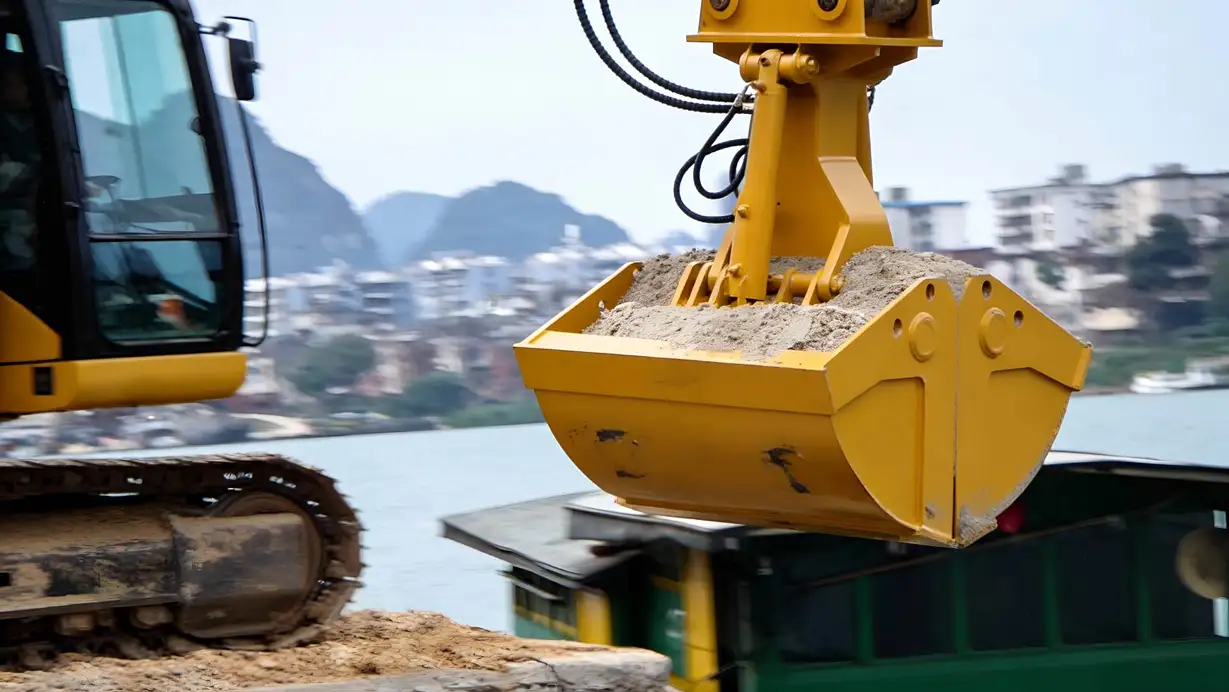

Selecting clamshell buckets is rarely about choosing the largest or heaviest option available. The correct configuration depends on how the bucket will be used, the material being handled, and the maintenance support available on site. A mismatch in any of these areas usually leads to accelerated wear or inefficient operation.
Material type is the first factor. Fine sediments and soft soils place less stress on cutting edges but increase abrasion across shell surfaces. Coarse aggregates and mixed debris impose higher impact loads, requiring stronger cutting edges and reinforced hinge zones. In both cases, the placement and quality of clamshell bucket wear parts directly affect service life.
Operating conditions also matter. High-cycle applications require buckets that manage fatigue well, while intermittent heavy-duty work may prioritize impact resistance. This is where steel selection becomes critical. Using appropriate steel alloys for heavy-duty buckets in the right areas helps maintain bucket geometry and prevents distortion that affects jaw alignment and closing efficiency.
Hawk Excavator supports this selection process by offering buckets in multiple configurations, including rotating and non-rotating designs, with material and wear options matched to application demands. The focus is on providing a bucket that fits the operating environment rather than forcing a standard design into every job. When clamshell buckets are selected this way, performance remains consistent, and maintenance stays manageable over the long term.
Durability in clamshell buckets is not achieved through thicker steel alone. It comes from understanding where wear occurs, how loads are transferred through the bucket, and which components should absorb damage over time. Wear parts, cutting edges, and material selection all play specific roles in keeping a bucket productive under continuous use.
When clamshell bucket wear parts are properly placed and maintained, structural repairs become less frequent. When cutting edges are engineered for the material being handled, penetration and efficiency remain consistent. And when the right steel alloys for heavy-duty buckets are used in the right zones, fatigue and distortion are reduced across the bucket’s service life.
Hawk Excavator’s approach to clamshell buckets reflects these practical considerations. By focusing on wear management, material performance, and serviceability, the goal is to deliver buckets that remain reliable in real operating conditions, not just at delivery. For projects where uptime and predictable maintenance matter, engineering durability at this level becomes a practical advantage rather than a specification.
Get in touch with us now!
Does RTK GPS Guidance Actually Pay Off on Excavator Projects? Yes, when grade accuracy, dredging depth, rework, survey time, or underwater...
What Is Excavator Dredging? Excavator dredging is the process of using a hydraulic excavator equipped with a pump attachment to remove and transport...
Excavator pump attachments turn standard excavators into dredging systems by using the machine’s hydraulic power to drive a submersible slurry pump....