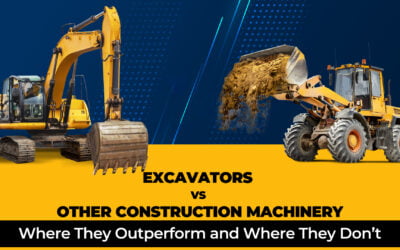
Construction Excavators vs. Other Machinery: Where They Outperform and Where They Don’t
Choosing the right equipment is critical to the success of any construction project. While construction excavators are widely used for their...


In the dynamic world of construction and mining, the long arm excavator, or the excavator boom, stands out as a pivotal piece of machinery designed to tackle tasks that other machines simply can’t reach. Its excavator boom and arm offer unparalleled reach and depth, enabling professionals to work more efficiently on various challenging projects. From constructing deep foundations to handling delicate dredging operations, long arm excavators’ versatility has revolutionized how we approach large-scale and hard-to-access tasks.
This blog delves into the myriad benefits excavators bring, highlights the latest innovations enhancing their performance, and addresses standard troubleshooting techniques to keep these mechanical giants running smoothly. As industries strive to increase productivity while reducing operational costs, understanding long arm excavators’ full capabilities and potential issues becomes crucial.
Whether you’re a seasoned operator or a business owner in the construction or mining sectors, grasping the intricacies of long arm excavators can significantly impact your operational success. By exploring these machines’ extended reach, we’ll uncover how they contribute to improved operational efficiency and project versatility. Additionally, we’ll dive into recent technological advancements that enhance their functionality and discuss how to troubleshoot common problems to avoid costly downtime.


A long-arm excavator is an enhanced version of a standard excavator equipped with an extended boom and arm. These extensions vary in length but typically range between 15 to 25 meters. This increased length of excavator parts allows for greater reach and depth than traditional excavators, making them ideal for specific tasks that require extended operational range without moving the entire machine.
The extended reach of the excavator boom significantly boosts operational efficiency in several ways. First, it allows operators to access difficult or distant areas from a single stationary position, minimizing the need to reposition the machine frequently. This capability is particularly crucial in sensitive environments with unstable ground conditions or in urban areas where space constraints limit machine mobility.
While excavator boom may have a higher upfront cost than standard excavators, the long-term benefits often justify the investment. The ability to handle more work from a single location reduces the time spent moving and setting up the machine, directly reducing labor and operational costs. Furthermore, these excavators can complete tasks requiring multiple pieces of equipment, thereby saving on leasing or purchasing additional machinery.
This cost-effectiveness is particularly evident in large-scale construction projects or operations in challenging environments where traditional excavation methods would be slow or impossible. By reducing labor and enabling faster project completion, long arm excavators enhance overall productivity, providing a significant return on investment for businesses focused on efficiency and cost control.

Recent developments in long arm excavator technology have focused on enhancing durability, efficiency, and operational capability. Advances in materials science have led to high-strength, lightweight materials for the construction of booms and arms, significantly reducing the overall weight while maintaining structural integrity. This weight reduction allows for handling heavier loads and extends the operational life of the hydraulic systems.
Moreover, hydraulic systems themselves have seen considerable innovation. Modern excavator parts feature advanced hydraulic circuits that optimize the flow and pressure of hydraulic fluid, allowing for smoother and more efficient movement and control of the excavator arm. These systems minimize energy wastage, enhance fuel efficiency, and reduce operational costs.
The functionality of the excavator boom has been dramatically enhanced by integrating improved features. These include:
Additionally, the integration of digital technologies has revolutionized how excavators operate. GPS and sensor-based monitoring systems provide real-time data on machine performance, arm position, and operational metrics. This technology allows for precise control over digging depth and angle, significantly reducing human error and enhancing safety on the job site.
Looking ahead, the evolution of long arm excavator technology will likely be heavily influenced by automation and artificial intelligence (AI). Future models could incorporate autonomous operation capabilities, allowing for unmanned excavation processes, further improving safety and efficiency. AI could predict maintenance needs and optimize the operation schedule based on real-time data analysis, reducing downtime and maintenance costs.
Furthermore, as the push for sustainability continues, the electric and hybrid excavator boom might become more prevalent, offering an environmentally friendly alternative to traditional diesel-powered machines. These developments will address growing environmental concerns and meet the increasing demand for technologically advanced, efficient, and versatile construction equipment.


Long arm excavators are subjected to intense operational stress, leading to several common issues, including:
Effective troubleshooting begins with accurate diagnosis:
Preventative maintenance is crucial for minimizing downtime:
For field repairs:
For more complex issues like structural damage or significant hydraulic failure, it is advisable to seek professional repair services. These professionals can provide the necessary expertise and equipment to safely and effectively restore the excavator to optimal working conditions. By adhering to a robust maintenance schedule and being vigilant about potential issues, operators can significantly extend the life and improve the performance of their excavator boom.


The importance of long-arm excavators in the construction and mining industries cannot be overstated. With their extended reach and depth, these machines play a pivotal role in executing complex and challenging projects that standard excavators cannot handle. Understanding the full capabilities, innovations, and maintenance needs of long-arm excavators is essential for any operation aiming to enhance efficiency and reduce costs.
Recent technological advancements have significantly improved the functionality and efficiency of the excavator boom. Innovations in hydraulic systems, structural materials, and digital integrations have made these machines more robust and precise. However, with advanced technology comes the necessity for proficient troubleshooting and maintenance strategies to ensure these machines operate at peak performance.
To capitalize on the benefits of the excavator boom, ongoing education and training for operators are crucial. Regular training sessions can help operators stay updated on the latest operational techniques and technological advancements, ensuring they can effectively handle the excavator’s capabilities. Moreover, understanding troubleshooting procedures and preventative maintenance can drastically minimize downtime and operational disruptions.
Operators and management alike should prioritize continuous learning and adherence to maintenance protocols. By doing so, they can ensure that their long-arm excavators continue to be a valuable asset in their machinery fleet, contributing to successful and efficient project completions. Thus, investing in training and education is not just about keeping up with technology—it’s about pushing the boundaries of what is possible in the industries that depend most on these powerful machines.
Get in touch with us now!
Choosing the right equipment is critical to the success of any construction project. While construction excavators are widely used for their...

Excavators have long been the backbone of earthmoving operations, valued for their digging precision, reach, and raw lifting power. But in today’s...

When it comes to keeping excavation projects on schedule, having the right parts for the right equipment is non-negotiable. For procurement teams...