
RTK GPS for Excavators: When Precision Reduces Rework and Project Cost
Does RTK GPS Guidance Actually Pay Off on Excavator Projects? Yes, when grade accuracy, dredging depth, rework, survey time, or underwater...


Long-reach excavator attachments are essential for dredging, slope work, riverbank maintenance, and deep excavation where standard boom configurations fall short. However, extending the reach significantly alters the machine’s mechanical behavior. As reach increases, leverage grows, torque rises rapidly, and excavator load capacity drops well below nominal ratings. Relying on maximum reach figures without understanding how load position, radius, and boom geometry interact can lead to instability, structural fatigue, or hydraulic overload.
This article explains how reach, excavator boom torque, and excavator load capacity are interconnected when operating a long-reach excavator attachment. Using engineering principles and industry lift-rating standards, it explains how forces are generated at extended radii, why capacity limits shrink as reach increases, and how to evaluate safe operating limits beyond brochure specifications. The goal is to provide a practical, calculation-focused framework that helps engineers, operators, and project planners make informed decisions when working at extended reach.

The geometry of a long-reach excavator attachment directly governs how forces are transferred through the boom, stick, and upper structure. Unlike standard excavator configurations, long-reach setups extend the horizontal distance between the swing axis and the load, thereby increasing leverage and amplifying bending moments throughout the machine. Every additional meter of boom or stick length increases the radius at which forces act, making geometry a primary driver of torque and stability limits.
Key geometric parameters include boom length, stick length, pin-to-pin distances, and offsets introduced by couplers or specialized tools. These dimensions determine the working envelope and the effective load radius used in the calculation of excavator boom torque. Even small changes in attachment offset or pin location can materially increase moment demand at the boom foot and stick base. For this reason, accurate geometric modeling is essential when evaluating excavator load capacity for any long-reach excavator attachment, as lift charts and capacity ratings are only valid for the specific geometry they were designed to represent.
When evaluating a long-reach excavator attachment, maximum reach is often the most visible specification, but it is also one of the most misunderstood. Maximum reach only describes the furthest point the attachment can physically extend in an unloaded condition. It does not account for torque limits, hydraulic constraints, or stability thresholds that govern real operating capability.
Effective reach is the distance at which the excavator can safely apply load while remaining within the rated excavator load capacity. This usable reach is dictated by the working radius, lift height, and attachment orientation shown on the manufacturer’s load charts. As reach increases, even modest payloads generate high overturning moments, rapidly reducing allowable capacity. In practical terms, the effective reach of a long-reach excavator attachment is often significantly shorter than its maximum geometric reach.
Understanding this distinction is critical for accurate excavator boom torque calculation. Designing or selecting attachments based solely on maximum reach can result in configurations that exceed stability or hydraulic limits under load. By focusing on effective reach instead of headline reach figures, engineers and operators can align attachment geometry with realistic capacity limits and safer working envelopes.

Understanding excavator boom torque calculation is essential when working with a long-reach excavator attachment, because torque is the primary factor governing stability, structural stress, and load capacity at extended radii. Torque is the rotational demand on the excavator structure when a load acts at a point away from a reference point, typically the swing axis or boom foot pin.
In excavator applications, torque is generated when the load’s weight creates a turning force about a pivot point. As the reach increases, the horizontal distance between the load and the machine increases, thereby amplifying the turning force even if the load weight remains unchanged.
Key characteristics of excavator torque behavior include:
At its core, excavator boom torque calculation relies on a simple moment relationship:
Where:
This relationship explains why the excavator’s load capacity drops sharply with increasing radius. Doubling the radius effectively doubles the torque demand, even if the load remains constant.
A long-reach excavator attachment increases both the physical reach and the working radius. This creates multiple compounding effects:
Because of these effects, torque often becomes the governing factor before hydraulic lifting force is exhausted. Understanding how torque scales with radius enables engineers and operators to predict capacity reductions and assess whether a given long-reach excavator attachment can operate safely within the machine’s rated envelope.
Load weight alone does not determine how demanding a lift will be. For a long-reach excavator attachment, the load position relative to the machine has a much greater influence on torque than the material’s mass. Two identical loads can produce dramatically different stress levels depending on where they are carried within the working envelope.
The horizontal distance between the load center and the swing axis is the primary driver of boom-and-stick torque. As this radius increases, the bending moment at the boom foot and stick base rises proportionally.
Key effects of increasing load radius include:
Even a small outward movement of the load can exceed safe torque limits when operating at extended reach.
Load height changes the boom and stick geometry, thereby altering the force distribution through the structure and hydraulic cylinders. At flatter boom angles, the horizontal component of the load increases, intensifying torque at the boom foot. This is why load charts vary with both radius and lift height rather than reach alone.
Important considerations include:
For long-reach applications, material properties are critical inputs to torque evaluation. Bucket volume alone is not sufficient for estimating load.
Factors that directly affect torque include:
Accurate excavator boom torque calculation must account for both load position and realistic material weight. Ignoring these variables can lead to underestimating stress levels and exceeding the excavator’s load capacity when operating a long-reach excavator attachment.
Excavator load capacity is not a fixed machine rating. It is a position-dependent limit that varies continuously with reach, lift height, and attachment geometry. When a long-reach excavator attachment is installed, the usable load capacity decreases sharply compared to standard configurations, even if the base machine remains the same.
Manufacturer lift charts define excavator load capacity based on two governing limits:
The rated load shown on a lift chart represents the lower of these two limits after applying built-in safety reductions. This is why capacity varies with radius and height rather than remaining constant.
As attachment length increases, the working radius grows, and torque demand rises. This produces several compounding effects:
In long reach configurations, stability typically becomes the governing factor well before hydraulic limits are reached, particularly when lifting over the side or working on uneven ground.
Load capacity does not decline linearly with reach. Because the overturning momentum is proportional to radius, even modest increases in reach can require significant reductions in allowable load. This nonlinear relationship explains why a long-reach excavator attachment may operate safely at mid-reach but become severely restricted near full extension.
Understanding this relationship is essential when interpreting lift charts and performing excavator boom torque calculations, as it explains why attachment length must always be evaluated relative to excavator load capacity rather than as an isolated specification.
While static calculations underpin excavator boom torque calculations, real-world operation introduces additional forces that significantly affect performance and safety when using a long-reach excavator attachment. Dynamic motion, structural behavior, hydraulic response, and machine balance all interact at extended reach, often becoming the true limiting factors long before theoretical capacity is reached.
Static load calculations assume a stationary machine lifting a steady load. In practice, long-reach excavator attachment operation involves swinging, accelerating, decelerating, and frequent load repositioning.
Key dynamic effects include:
These transient loads can exceed calculated static torque values, which is why conservative safety factors are essential in the design and planning of long-reach attachments. Without an adequate margin, even short-duration dynamic events can overload structural or stability limits.
Extended-reach geometries redistribute forces throughout the excavator structure, concentrating stress in specific zones. The most critical areas include:
As torque increases with reach, bending stresses grow rapidly at these locations. Repeated loading cycles at high moment levels accelerate fatigue damage, increasing the risk of cracking or pin bore elongation. Effective long-reach excavator attachment design relies on appropriate material selection, reinforced cross-section geometry, and controlled stress distribution to resist these bending forces over the attachment’s service life.
Hydraulic systems play a dual role in defining excavator load capacity. Cylinder force may be sufficient in isolation, but unfavorable leverage angles at extended reach reduce the effective lifting force delivered to the attachment.
Important hydraulic constraints include:
In many long-reach applications, hydraulic limitations govern performance before structural capacity is reached, particularly during digging or lifting near the end of the working envelope.
Increased torque demand from a long-reach excavator attachment shifts the machine’s center of gravity closer to the tipping line. Counterweight mass, track width, and undercarriage length become critical stability factors.
Key stability considerations include:
Optimizing these elements requires balancing stability improvements against logistical limitations. A long-reach excavator attachment that exceeds the machine’s stable operating envelope can compromise safety, even if hydraulic and structural limits appear acceptable on paper.
Engineering calculations for a long-reach excavator attachment should never aim for the absolute maximum. Real jobs involve uneven ground, small geometry changes, dynamic motion, and material variability, all of which can push torque and load demand beyond a clean theoretical estimate. The safest approach is to design and plan with conservative allowances, then validate against manufacturer limits.
A torque calculation may be mathematically correct yet unsafe in practice if it assumes ideal conditions. Conservative margins protect against unknowns such as shifting loads, operator technique, wear in pins and bushings, and minor out-of-level conditions.
Key points to apply:
Risks of running too close to calculated maximums include:
Use a repeatable workflow that combines engineering math with manufacturer ratings. This keeps long-reach excavator attachment decisions aligned with excavator load capacity limits.
Step-by-step workflow:
When to involve specialists:
These mistakes are common in long-reach planning and can invalidate both torque estimates and lift chart checks.
Avoid these pitfalls:
When these three areas are handled correctly, your calculations become a practical decision tool rather than a theoretical number, and your long-reach excavator attachment selection stays aligned with real excavator load capacity limits.
Working with a long-reach excavator attachment demands more than relying on headline specifications or nominal machine class. Accurate evaluation of reach, excavator load capacity, and excavator boom torque is essential for understanding how forces increase at extended radii and how quickly safe operating limits are reached. When geometry, load position, dynamic effects, and system constraints are properly accounted for, calculations become a critical risk management tool that helps prevent instability, structural fatigue, and premature equipment failure. This level of engineering precision directly supports safer operations, longer equipment life, and more predictable project outcomes.
At HAWK Excavator, we believe long reach performance should be engineered, not assumed. We work closely with contractors and project teams to evaluate attachment geometry, operating conditions, and machine limits, ensuring that long-reach systems perform safely and efficiently in real-world environments. If you are planning an extended-reach application or evaluating a long-reach excavator attachment, contact us to ensure your configuration is backed by sound engineering and practical operating experience.
Get in touch with us now!
Does RTK GPS Guidance Actually Pay Off on Excavator Projects? Yes, when grade accuracy, dredging depth, rework, survey time, or underwater...
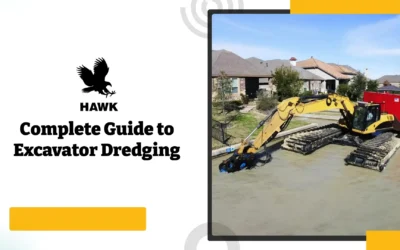
What Is Excavator Dredging? Excavator dredging is the process of using a hydraulic excavator equipped with a pump attachment to remove and transport...
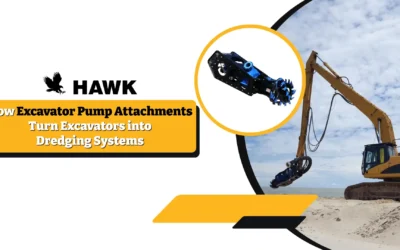
Excavator pump attachments turn standard excavators into dredging systems by using the machine’s hydraulic power to drive a submersible slurry pump....