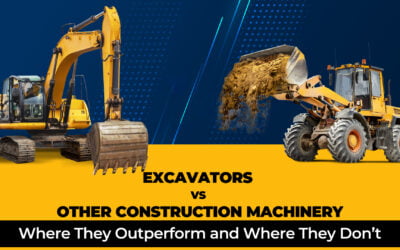
Construction Excavators vs. Other Machinery: Where They Outperform and Where They Don’t
Choosing the right equipment is critical to the success of any construction project. While construction excavators are widely used for their...


Demolition tools are the backbone of industries such as construction, mining, and recycling, where breaking down hard materials is a daily necessity. These powerful tools are engineered to tackle the toughest jobs, efficiently breaking, crushing, and demolishing materials like concrete, asphalt, and rock. Among the most widely used demolition tools are hydraulic hammers and hydraulic breakers, which have become indispensable for their ability to deliver consistent, powerful breaking force while maintaining exceptional reliability.
Hydraulic hammers and breakers are specifically designed to handle the rigorous demands of demolition, excavation, and quarrying projects. Their robust construction and advanced engineering allow them to break through hard materials with ease, making them ideal for a variety of applications—from dismantling old structures to preparing sites for new construction. In addition to their use in construction and demolition, these tools are also vital in mining operations, where they help break rock and extract valuable materials, and in recycling facilities, where they assist in processing concrete and asphalt for reuse.
The reliability and power of hydraulic hammers and breakers ensure that projects are completed efficiently and safely, reducing downtime and increasing productivity. Whether you’re working on a large-scale quarrying operation or a smaller demolition project, these tools offer the performance and durability needed to get the job done right.
Hydraulic hammers are essential excavator attachments that have transformed the way demolition projects are carried out. By harnessing hydraulic pressure, these hammers generate immense breaking energy, allowing operators to efficiently break through hard materials such as concrete, rock, and asphalt. Available in a wide range of sizes and models, hydraulic hammers can be matched to the specific requirements of any demolition or quarrying task, from compact urban jobs to massive industrial projects.
One of the key advantages of hydraulic hammers is their compatibility with both excavators and skid steer loaders. This versatility means they can be deployed across various job sites, providing the necessary power and maneuverability to tackle challenging demolition tasks. The use of hydraulic hammers as excavator attachments not only increases productivity but also helps reduce project downtime by enabling operators to break and remove materials quickly and efficiently.
By choosing the right hydraulic hammer model for the job, contractors can ensure maximum efficiency and performance, whether they are breaking up reinforced concrete, demolishing old infrastructure, or working in quarrying environments. The ability to efficiently break hard materials with minimal manual effort makes hydraulic hammers a cornerstone of modern demolition projects, helping teams complete tasks on time and within budget.
Hydraulic hammers, or hydraulic breakers, are powerful attachments excavators use to break down hard surfaces like concrete, asphalt, and rocks. These tools convert hydraulic energy into mechanical force, delivering high-impact blows with remarkable precision and efficiency.
Unlike traditional hammers that rely on manual force, hydraulic hammers use pressurized hydraulic fluid to create a rapid, repetitive striking action, making them essential for heavy-duty tasks where manual tools would be insufficient. In construction and demolition, hydraulic hammers accelerate project timelines by quickly and effectively breaking down rigid materials, reducing labor costs. They are also indispensable in mining operations for breaking large rocks and road maintenance for removing damaged pavement.
Available in a wide range of sizes and models, hydraulic hammers can be matched to the specific requirements of any demolition or quarrying task, from compact urban jobs to massive industrial projects. Medium hydraulic hammers are especially popular for their balance of power and operator comfort, often incorporating shock-absorbing features to reduce machine wear and enhance usability.
The primary aim of this blog is to provide a comprehensive understanding of the mechanics behind hydraulic hammer for excavator, demystifying their functionality and highlighting their benefits. Whether you’re a construction professional, demolition expert, or enthusiast, this blog offers valuable insights into how hydraulic hammers work and their essential role in various heavy-duty applications. Understanding the inner workings of these tools enhances appreciation for their engineering and aids in making informed decisions regarding their use and maintenance. As we explore the mechanics, advantages, and practical applications of hydraulic hammer for excavator, readers will gain a deeper awareness of their significance in modern construction and demolition projects.

Hydraulic power systems operate on fluid dynamics principles, focusing on force, pressure, and fluid behavior under pressure.
A hydraulic system consists of several vital components that work together to generate, control, and utilize hydraulic power, each playing a critical role in the system’s functionality:
Generating power in a hydraulic system begins with the hydraulic pump, driven by a mechanical source, such as an engine or electric motor. Here’s a step-by-step breakdown of how hydraulic systems convert mechanical energy into hydraulic energy:
By understanding these basics of hydraulic systems, we can appreciate how they provide the power and control needed to operate hydraulic hammers for excavator and other heavy-duty equipment.


A hydraulic hammer consists of several main components that work together to deliver powerful blows for breaking down rigid materials:
Hydraulic hammers are designed for easy integration with excavators, enhancing their use in various construction and demolition tasks. The integration process involves several key steps:

Hydraulic hammers convert hydraulic energy into mechanical impact force through a step-by-step process:
The operation of a hydraulic hammer for an excavator consists of three main phases:
Hydraulic hammers come in various types, each with specific features and mechanisms tailored to different applications. Here’s an overview of some common types:
Gas-Assisted Hydraulic Hammers: These hammers use a combination of hydraulic fluid and gas (typically nitrogen) to enhance the hammering force. The gas chamber provides additional energy to the piston during the impact phase, resulting in more powerful blows. Gas-assisted hammers are known for their high-impact energy and efficiency, making them suitable for heavy-duty applications.
Fully Hydraulic Hammers: Fully hydraulic hammers operate solely on hydraulic fluid without the use of gas. They are simpler in design and maintenance compared to gas-assisted hammers. Fully hydraulic hammers are preferred for applications where precision and control are more important than maximum impact force.
Hybrid Hydraulic Hammers: Hybrid hammers combine features of both gas-assisted and fully hydraulic hammers. They use both hydraulic fluid and gas to optimize performance and efficiency. These hammers balance power and control, making them versatile for various applications.
Variable Impact Hammers: These hammers allow operators to adjust the impact force and frequency to match the specific requirements of the task at hand. This variability is achieved through sophisticated valve systems and control mechanisms. Variable impact hammers are ideal for applications requiring different force and precision levels.
Silent Hammers: Silent hydraulic hammers are designed to reduce noise levels during operation. They incorporate unique materials and design features to minimize the noise generated by the hammering action. These hammers are used in urban areas and environments where noise pollution is a concern.
Many hydraulic hammers are engineered for easy serviceability, allowing them to be rebuilt when necessary. This design not only reduces maintenance costs but also extends the lifespan of the equipment. There are virtually options available for every make and model of excavator, ensuring broad compatibility across different machines and brands.
Understanding the different types of hydraulic hammers and their operating principles allows operators to choose the right tool for their specific needs, ensuring optimal performance and efficiency in various construction and demolition tasks.

Rock breakers are highly versatile tools that play a critical role in a wide range of construction, demolition, and quarrying applications. Engineered to break through the toughest materials—including rock, concrete, and asphalt—rock breakers are essential for projects that require excavation, trenching, and asphalt cutting. Their robust design and powerful performance make them a go-to solution for contractors and operators who need to break hard materials efficiently and reliably.
Whether you’re preparing a site for new construction, demolishing old structures, or working in a quarry, rock breakers provide the force and precision needed to handle demanding tasks. Their ability to break, cut, and remove materials quickly helps streamline project timelines and ensures that work progresses smoothly, even in challenging conditions. From trenching for utility installation to cutting through asphalt for road repairs, rock breakers are indispensable tools for a variety of applications.
In the fields of construction and demolition, rock breakers are frequently used to tackle some of the most challenging tasks. These powerful breakers are ideal for breaking through concrete foundations, walls, and other structural elements, making them invaluable for building demolition and site preparation. They are also commonly used to demolish bridges, pavements, and other infrastructure, where their efficiency and breaking power help reduce project costs and improve safety.
Hydraulic breakers, in particular, excel at breaking through reinforced concrete and asphalt, enabling crews to complete demolition tasks more quickly and with less manual labor. Their use in mining and quarrying further highlights their versatility, as they can efficiently break rock to access valuable materials or prepare sites for further excavation. By incorporating rock breakers into construction and demolition projects, contractors can achieve higher efficiency, reduce operational costs, and maintain a safer work environment.
Beyond standard construction and demolition tasks, rock breakers are also utilized in a variety of specialized applications across different industries. In mining, rock breakers are essential for breaking through rock to extract minerals and facilitate further processing. In the recycling sector, these tools are used to break down concrete and asphalt, making it easier to recover and reuse valuable materials, thus supporting sustainable practices.
Rock breakers can be paired with other demolition tools, such as hydraulic hammers and excavator attachments, to create a comprehensive solution for even the most demanding jobs. Leading manufacturers like NPK offer a wide selection of hydraulic hammers, rock breakers, and compatible accessories, ensuring that operators can find the right model for any application—whether it’s construction, demolition, mining, or quarrying. By selecting the appropriate rock breaker and hydraulic hammer for each job, users can maximize efficiency, reduce costs, and boost productivity across a range of projects.
The performance of a hydraulic hammer for an excavator depends heavily on the hydraulic pressure and flow rate supplied by the excavator’s system.
Choosing the right chisel, a type of demolition tool used with hydraulic hammers, is vital for optimal performance in different tasks:
Selecting the right demolition tool ensures the best results and prolongs the life of the hammer and chisel.
Ensuring compatibility of the hydraulic hammer for the excavator is essential for safe and efficient operation:

Hydraulic hammers for excavator enhance work efficiency and productivity in construction and demolition:
Hydraulic hammers offer enhanced precision and control for diverse applications:
Hydraulic hammer for excavator are durable and easy to maintain, ensuring long service life:

Hydraulic hammers are mighty, versatile tools that have revolutionized the construction and demolition industries by significantly enhancing efficiency, precision, and productivity. By understanding the basics of hydraulic systems and the critical components of hydraulic hammers, we can appreciate the sophisticated mechanics that convert hydraulic energy into impactful force. Integrating these hammers with excavators further amplifies their utility, ensuring compatibility and optimal performance. Hydraulic pressure, chisel types, and excavator compatibility are crucial for maximizing effectiveness. The advantages of hydraulic hammers for excavator, including their durability and ease of maintenance, make them indispensable for a wide range of applications, from breaking and demolishing to trenching and excavation. This comprehensive understanding equips operators to leverage these tools effectively, ensuring successful and efficient project outcomes.
Get in touch with us now!
Choosing the right equipment is critical to the success of any construction project. While construction excavators are widely used for their...

Excavators have long been the backbone of earthmoving operations, valued for their digging precision, reach, and raw lifting power. But in today’s...

When it comes to keeping excavation projects on schedule, having the right parts for the right equipment is non-negotiable. For procurement teams...