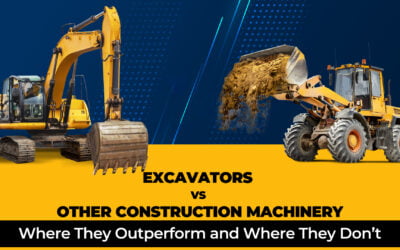
Construction Excavators vs. Other Machinery: Where They Outperform and Where They Don’t
Choosing the right equipment is critical to the success of any construction project. While construction excavators are widely used for their...


In the dynamic and ever-evolving construction industry, excavators are pivotal machinery that has revolutionized project execution. These powerful machines are indispensable in a variety of construction activities, from digging foundations and trenches to lifting and moving heavy materials. Their versatility and efficiency have made them a cornerstone in small-scale residential projects and large-scale infrastructure developments.
In the construction and mining industry, excavators play a crucial role in enhancing productivity and efficiency, making them essential for various projects in these sectors.
This blog aims to spotlight the top 10 leading excavator brands currently manufacturing equipment at the forefront of innovation (and from international production locations) – transforming construction practices with advanced technologies, extensive product ranges, and commitment to sustainability. These brands are among the world’s leading excavator manufacturers, whose global impact is evident in the diversity and reach of their products. By showcasing these leading excavator manufacturers, we hope to provide insights into how these construction machine companies are shaping the future of construction and pushing the boundaries of what is possible with excavator technology. The achievements of these companies are underpinned by engineering excellence, driving technological advancement and meeting the evolving needs of the industry.


Excavators play a crucial role in a wide range of construction projects and serve as the backbone of modern construction sites. These versatile machines are designed to perform various tasks, including digging, lifting, grading, and demolition. Excavators come in different sizes and configurations, including crawler excavators and wheeled excavators, making them suitable for both small-scale projects like residential landscaping and large-scale endeavors such as highway construction, mining, and urban development. They are available with operating weights ranging from compact models to large heavy-duty machines, ensuring suitability for a variety of project types. Crawler excavators are known for their stability and are ideal for rough terrain, while wheeled excavators offer enhanced mobility and are perfect for urban environments. Their ability to handle diverse functions with precision makes them an essential asset in the construction industry.
The introduction of excavators has significantly improved operational efficiency in the construction sector. Traditional excavation and material handling methods were labor-intensive and time-consuming, often leading to prolonged project timelines and increased labor costs. With their robust hydraulic systems and advanced attachments, excavators can perform these tasks much faster and more accurately.
Compact excavators, known for their maneuverability and versatility, are particularly suitable for various tasks such as site preparation and landscaping.
For example, an excavator equipped with a bucket can dig trenches or foundations in a fraction of the time it would take manual laborers. This speed accelerates the completion of specific tasks and allows for more complex project scheduling and better resource allocation. Additionally, the precision of modern hydraulic excavators reduces the likelihood of errors and rework, further streamlining construction processes and ensuring projects stay on track.
Technological innovations have dramatically enhanced the functionality and efficiency of excavators. Some of the critical advancements include:
Selecting the top excavator companies requires a comprehensive evaluation of several critical factors that set industry leaders apart. Evaluating different excavator brands is crucial, as each brand offers unique features and reliability that cater to diverse needs in the construction industry. The criteria for our selection include innovation, product range, market reputation, and sustainability. Additionally, we consider whether companies provide not only equipment but also related services and support through dedicated sales and aftermarket teams, ensuring they can meet diverse customer needs and maintain strong client relationships. These aspects ensure that the companies featured are prominent and contribute significantly to advancing construction technology and practices.
Innovation is a cornerstone of progress in the construction industry. Leading excavator companies distinguish themselves through continuous technological advancements. This includes developing autonomous and semi-autonomous systems, integrating artificial intelligence, and adopting advanced hydraulic systems. Companies prioritizing research and development and consistently introducing groundbreaking features and functionalities in their excavators are at the forefront of transforming construction practices.
Another critical criterion is a diverse and specialized product range. Top excavator companies offer various models to cater to different project needs. This includes mini excavators for small-scale projects, standard excavators for general construction, and large, heavy-duty excavators for major infrastructure developments. Additionally, the availability of various attachments, such as specialized buckets, grapples, and augers, allows for greater versatility and customization. Companies that provide a broad and adaptable range of products can better meet the specific demands of their clients.
Market reputation is a testament to a company’s reliability and the quality of its products. This criterion encompasses customer reviews, industry awards, and overall brand recognition. Companies with a strong market presence and positive feedback from users are more likely to be trusted and preferred by construction professionals. Industry awards and recognitions also highlight companies that excel in innovation, quality, and customer satisfaction.
In today’s construction industry, sustainability is paramount. Companies that adopt eco-friendly practices and produce environmentally sustainable products are leading the way toward greener construction. This includes the development of hybrid and electric excavators that reduce emissions and fuel consumption, as well as implementing energy-efficient manufacturing processes. Companies committed to sustainability contribute to environmental protection and appeal to a growing market of environmentally conscious clients. Through ongoing innovation in eco-friendly technologies and corporate initiatives, these companies are helping to build a more sustainable world.
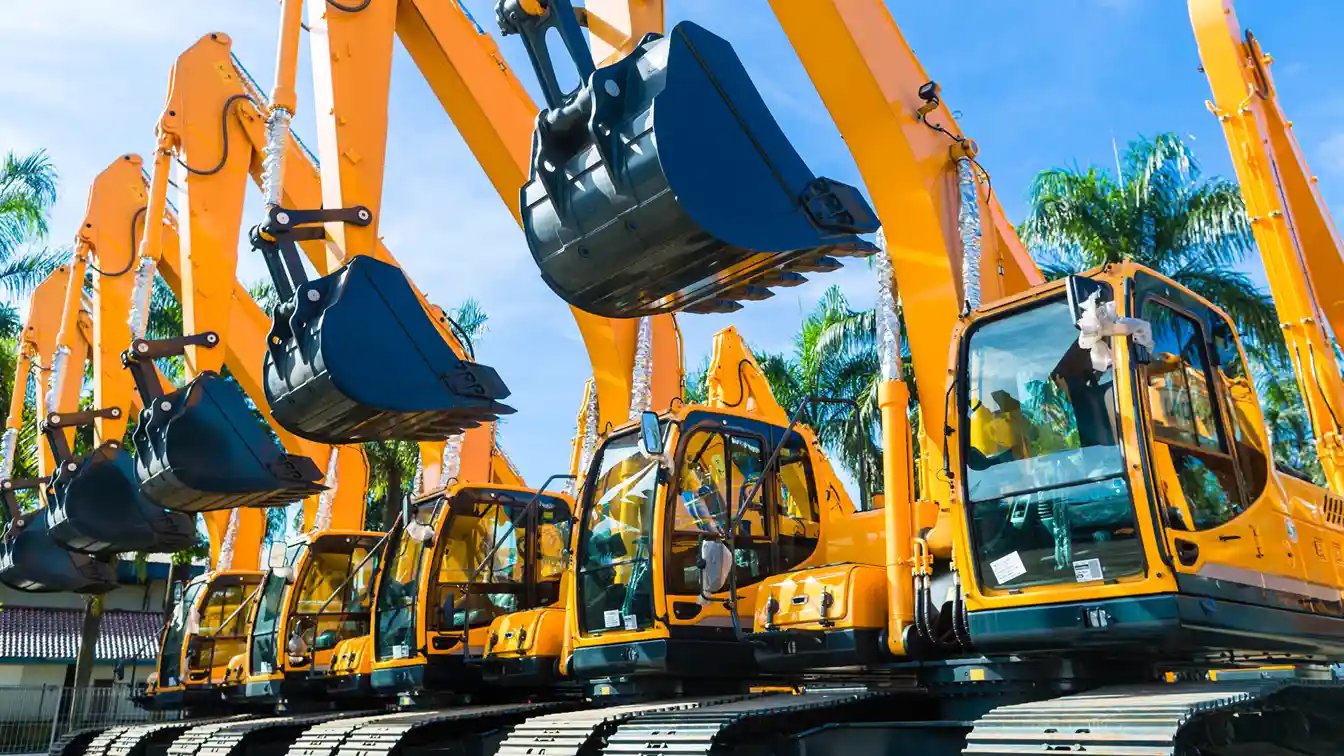

Overview: Hawk Excavator is a relatively new excavator company in the global construction machinery market, quickly establishing itself as a leader in innovative excavator technology. With a strong presence in North America and expanding operations worldwide, Hawk Excavator is known for its commitment to cutting-edge advancements and high-quality machinery.
Innovations: Hawk Excavator is at the forefront of technological innovation, offering a range of autonomous and hybrid models that cater to the modern demands of construction projects. Their excavators are equipped with advanced GPS and telematics systems, which provide real-time data and enhance operational efficiency. Hawk’s hybrid models also reduce fuel consumption and emissions, aligning with the industry’s move toward sustainability. Additionally, Hawk Excavator offers compact track loaders known for their performance and versatility in various applications such as landscaping, material handling, and construction tasks.
Key Projects: Hawk Excavators have been instrumental in several high-profile projects, including major urban development projects in New York and Los Angeles. Their autonomous models have been particularly effective in large-scale infrastructure projects, demonstrating their capability to handle complex tasks with minimal human intervention.
Overview: Caterpillar Inc., commonly known as CAT, is a global construction and mining equipment leader. Founded in 1925, CAT has a rich history and a vast international presence, with its machinery used in countless construction projects worldwide. As part of their advanced industrial equipment offerings, Caterpillar also manufactures diesel electric locomotives, combining diesel engines with electric propulsion for greater efficiency and sustainability.
Innovations: The excavator company is renowned for its technological advancements, particularly in autonomous and hybrid excavators. Their equipment features state-of-the-art control systems, including remote operation capabilities and machine-learning algorithms that enhance productivity and safety. Additionally, Caterpillar’s mining machinery plays a crucial role in enhancing productivity and safety in mining operations.
Key Projects: Caterpillar excavators have been pivotal in several iconic projects, such as constructing the Panama Canal expansion and developing various infrastructure projects in the Middle East. Their robust and reliable machinery is preferred for large-scale, high-stakes construction tasks.
Overview: Komatsu Ltd., founded in 1921, is a Japanese multinational corporation and a leading construction and mining equipment manufacturer. With a significant market presence across Asia, Europe, and the Americas, Komatsu is known for its commitment to quality and innovation.
Innovations: The excavator company’s innovative construction solutions, including its Intelligent Machine Control (iMC) technology, have set new standards in the industry. Komatsu’s role in manufacturing construction equipment, such as excavators and compactors, highlights their commitment to quality and innovation, ensuring safety, comfort, and productivity in various construction-related applications. Their excavators are designed with eco-friendly machinery, reducing environmental impact through improved fuel efficiency and lower emissions.
Key Projects: Komatsu excavators have played a crucial role in various major projects, such as the construction of the Tokyo Olympic Stadium and numerous mining operations in Australia. Their advanced technology and durable equipment make them a trusted choice for critical infrastructure projects.
Overview: Volvo Construction Equipment, part of the Volvo Group, is a leading international manufacturer of premium construction equipment. With a strong emphasis on sustainability and innovation, Volvo has built a reputation for producing reliable and efficient machinery.
Innovations: Volvo emphasizes fuel efficiency and the development of electric excavators. Their electric models offer zero emissions and low noise levels, making them ideal for urban construction projects. Volvo’s Co-Pilot system also provides operators with real-time data to optimize performance. Additionally, Volvo’s construction machinery products, including loaders and excavators, reflect their commitment to quality and innovation in providing a diverse range of machinery for the construction industry.
Key Projects: Volvo excavators have been utilized in significant projects such as developing the Öresund Bridge between Sweden and Denmark and various sustainable urban development initiatives across Europe. Their commitment to eco-friendly solutions positions them as leaders in green construction technology.
Overview: Hitachi Construction Machinery, a subsidiary of Hitachi Ltd., has a long history since 1951. Known for its robust and technologically advanced equipment, Hitachi has a strong global presence and a reputation for reliability. Hitachi Construction Machinery Americas Inc. (HCMA) plays a significant role in the construction machinery market across North and Latin America, with notable achievements in manufacturing and a commitment to technology and service.
Innovations: Hitachi focuses on advanced hydraulic systems and machine intelligence to enhance the performance of their excavators. Their machines feature sophisticated control systems that improve precision and efficiency, making them suitable for various construction applications.
Key Projects: Hitachi excavators have been essential in numerous prominent projects, including developing the Hong Kong-Zhuhai-Macau Bridge and various large-scale infrastructure projects in Southeast Asia. Their advanced technology and reliable performance make them a preferred choice for complex construction tasks.
Overview: Founded in 1949, the Liebherr Group is a large equipment manufacturer based in Switzerland. Liebherr is renowned for its high-quality, heavy-duty machinery and robust construction, mining, and maritime presence.
Innovations: Liebherr is known for its cutting-edge technology in heavy-duty excavators. Their machines feature advanced hydraulic systems, innovative control technologies, and energy-efficient designs that enhance performance and reduce environmental impact. Additionally, Liebherr’s industrial gas turbines play a crucial role in providing sustainable and innovative solutions within the construction and mining equipment sectors, furthering their commitment to reducing carbon footprints and enhancing operational efficiency.
Key Projects: Liebherr excavators have been used in significant projects such as the Gotthard Base Tunnel in Switzerland and various mining operations in Africa. Their heavy-duty equipment is designed to withstand challenging conditions and deliver exceptional performance.
Overview: Doosan Infracore is a South Korean multinational corporation that manufactures construction equipment. With a solid Asian market position and expanding operations globally, Doosan is known for its robust and reliable machinery.
Innovations: Doosan focuses on innovative construction solutions, offering excavators with advanced control systems, telematics, and fuel-efficient engines. Their machines are designed for durability and performance and cater to various construction needs. Additionally, Doosan’s forestry equipment demonstrates their commitment to delivering powerful and reliable machinery tailored for forestry applications.
Key Projects: Doosan excavators have been featured in important projects such as the construction of the Incheon International Airport in South Korea and various infrastructure developments in the Middle East. Their reliability and advanced technology make them a trusted choice for demanding construction tasks.
Overview: Founded in 1945, JCB is a British multinational corporation and one of the world’s leading construction equipment manufacturers. Known for its innovation and versatility, JCB has a significant global presence and a reputation for high-quality machinery.
Innovations: JCB emphasizes fuel efficiency and the development of versatile excavator models. Notably, JCB pioneered the first short rear swing excavator, marking a significant milestone in their product lineup. Their machines feature advanced hydraulic systems, eco-friendly engines, and a range of attachments that enhance their functionality for various construction tasks.
Key Projects: JCB excavators have been employed in notable projects such as the construction of the Channel Tunnel between the UK and France and various infrastructure projects in India. Their versatile and efficient machines are well-suited for diverse construction environments.
Overview: Hyundai Construction Equipment, a division of Hyundai Heavy Industries Group, is a prominent construction machinery manufacturer. With a strong market influence in Asia and expanding global operations, Hyundai is known for its advanced technologies and user-friendly designs.
Innovations: Hyundai focuses on integrating advanced technologies into their excavators, including intelligent control systems, fuel-efficient engines, and ergonomic designs. Their machines are designed to enhance operator comfort and productivity.
Key Projects: Hyundai excavators have been used in significant projects such as developing the Hyundai Global Business Center in South Korea and various infrastructure projects in Southeast Asia. Their innovative and reliable equipment is favored for complex construction tasks.
Overview: Kobelco Construction Machinery, a subsidiary of Kobe Steel Ltd., has a long history in the construction equipment industry. Known for its commitment to innovation and quality, Kobelco has a strong market presence and a reputation for producing efficient, eco-friendly machines.
Innovations: Kobelco emphasizes eco-friendly and efficient machines, offering excavators with advanced hydraulic systems, fuel-efficient engines, and low-emission technologies. Their focus on sustainability and performance sets them apart in the industry.
Key Projects: Kobelco excavators have been featured in critical projects such as the construction of the Tokyo Skytree and various urban development projects in Japan. Their efficient and environmentally friendly machines are well-regarded for their performance and reliability.
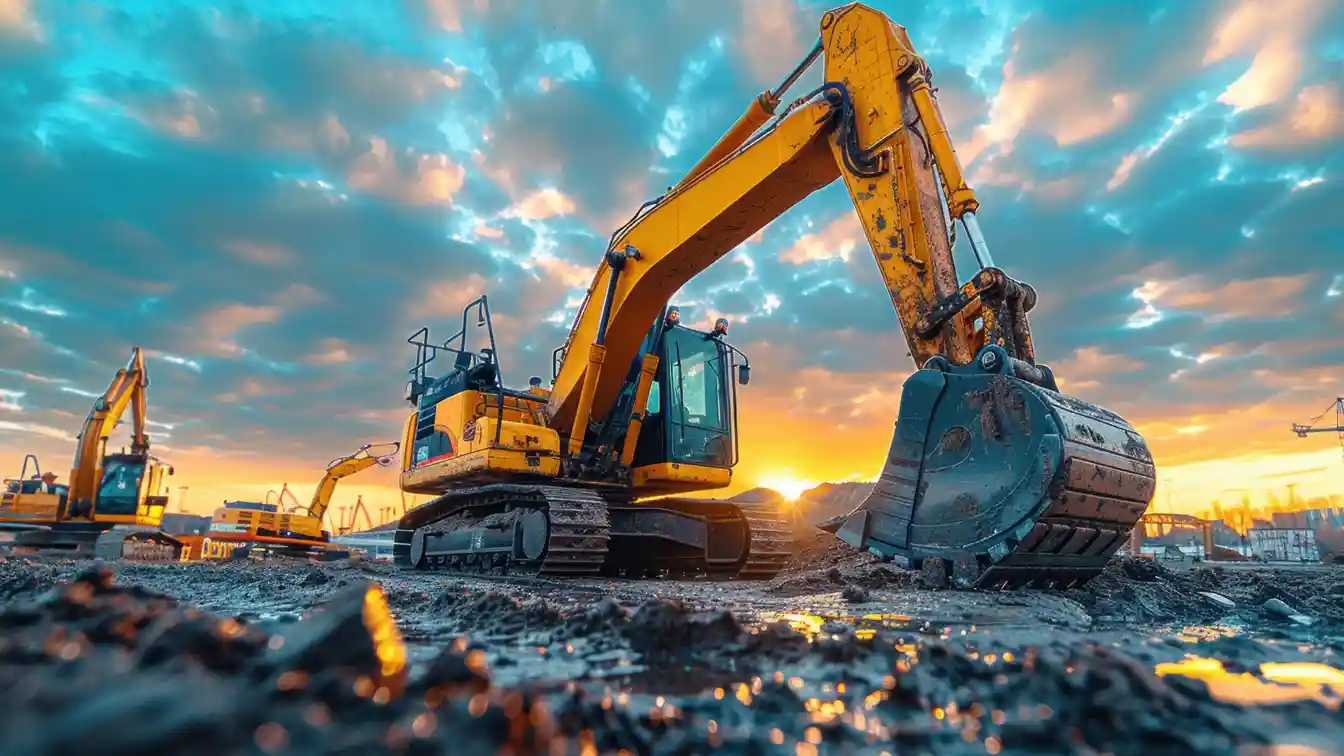
The growing trend of autonomous excavators and AI integration is transforming construction sites. These technologies enhance productivity, safety, and precision, enabling the efficient completion of more complex and large-scale projects.
The move towards green technologies and sustainable practices is becoming increasingly crucial in excavator manufacturing. Hybrid and electric models are reducing emissions and fuel consumption, contributing to more environmentally friendly construction practices.
Mini excavators have become an indispensable part of the construction equipment industry, offering unmatched versatility and efficiency for a wide range of construction projects. These compact excavators are specifically engineered to deliver powerful performance in confined spaces, making them the go-to choice for urban construction projects, landscaping, site preparation, and material handling tasks where maneuverability is crucial.
Leading excavator manufacturers such as Hitachi Construction Machinery Americas, Caterpillar, and John Deere have developed a diverse range of mini excavator models that combine advanced technology with reliable machinery. These mini excavators are designed to tackle everything from small-scale construction tasks to more complex infrastructure projects, providing construction professionals with the flexibility needed to adapt to various job site requirements.
When selecting a mini excavator, it’s important to consider several key factors to ensure optimal performance for your construction project. Operating weight is a primary consideration, with mini excavators typically ranging from 1,000 to 12,000 pounds. This range allows for precise matching of machine size to the demands of the job, whether it’s delicate landscaping or more robust site preparation. Hydraulic systems play a vital role in delivering the necessary power and control, while industrial gas turbines in some models further enhance efficiency and performance. Additionally, the availability of a comprehensive range of excavator attachments—such as buckets, augers, and grapples—enables these versatile machines to handle a variety of construction tasks with ease.
Several top excavator brands stand out in the mini excavator segment. The Bobcat company, for example, is renowned for its compact excavators equipped with advanced hydraulic systems and a wide selection of attachments, making them ideal for diverse construction and material handling applications. Komatsu, JCB, and John Deere also offer mini excavators that feature innovative technology, ergonomic designs, and fuel-efficient engines, ensuring both operator comfort and reduced fuel consumption on the job site.
Environmental protection is another key advantage of modern mini excavators. Many models are equipped with hybrid engines or low-emission technologies, helping construction companies meet stringent environmental regulations while minimizing their carbon footprint. Hybrid models, in particular, offer a smart balance between power and fuel efficiency, making them a sustainable choice for forward-thinking construction projects.
Mini excavators are frequently deployed in key projects such as urban infrastructure developments, landscaping, and site preparation for residential or commercial buildings. Their compact size and advanced features make them especially valuable in urban construction projects, where space is limited and precision is essential. Notable models like the Hitachi ZX17U-5N, Caterpillar 303.5E2, and John Deere 17G exemplify the latest advancements in mini excavator technology, offering robust hydraulic power, fuel-efficient engines, and a comprehensive range of attachments to maximize productivity.
In summary, mini excavators are a vital asset for any construction site, providing the versatility, efficiency, and environmental benefits needed to meet the demands of modern construction. With a wide selection of models from leading excavator manufacturers, construction professionals can find the perfect mini excavator to enhance productivity and achieve success on any project, large or small.
The trend of customized solutions for specific project needs is gaining momentum. Excavator manufacturers are developing specialized models and attachments to cater to the unique requirements of different construction tasks, enhancing versatility and efficiency.
Historically, innovations such as the link belt drive chain played a foundational role in developing durable and reliable excavator machinery, setting the stage for today’s specialized and robust equipment.

This blog highlights the top 10 excavator companies that are revolutionizing the construction industry through innovation, product diversity, market reputation, and sustainability. As the industry continues to evolve, these companies are leading the way with cutting-edge technology and advanced machinery. The future of excavator technology promises to bring even more advancements, driving progress and enabling more ambitious and environmentally friendly construction projects. Stay updated on industry trends and innovations to remain at the forefront of construction excellence.
Get in touch with us now!
Choosing the right equipment is critical to the success of any construction project. While construction excavators are widely used for their...

Excavators have long been the backbone of earthmoving operations, valued for their digging precision, reach, and raw lifting power. But in today’s...

When it comes to keeping excavation projects on schedule, having the right parts for the right equipment is non-negotiable. For procurement teams...