Construction Excavators vs. Other Machinery: Where They Outperform and Where They Don’t
Choosing the right equipment is critical to the success of any construction project. While construction excavators are widely used for their...


In construction, heavy machinery is crucial for driving efficiency, speed, and safety. These types of construction machines perform essential tasks like laying foundations, demolishing structures, and moving large amounts of earth, materials, and debris—functions that would be difficult or impossible to accomplish manually. Their role is vital in maintaining the pace and quality of construction excavator projects, making them indispensable in developing infrastructure and landscapes.
Among the various types of construction machines, backhoes and excavators are two of the most versatile and essential tools. Although often used interchangeably, they serve distinct purposes on the job site. A backhoe, with its dual functionality as a loader and digging tool, is widely used for tasks ranging from trenching to material handling. In contrast, understanding what an excavator is is crucial, as they are specialized for digging and earthmoving, offering greater power and reach, particularly in large-scale projects. Understanding the specific roles of these machines can significantly impact the efficiency and success of a construction project. This blog will clarify the differences between types of backhoe and excavators, helping readers make informed decisions when selecting the right equipment for their needs.


A backhoe is a type of heavy equipment widely used in construction, agriculture, and other industries that require digging, lifting, and moving materials. It is named after its primary digging mechanism, which mimics the motion of pulling material back towards the machine, similar to how a person would draw something towards themselves using a hoe.
The backhoe consists of two primary tools: a loader at the front and a backhoe at the rear. This dual functionality makes it an incredibly versatile piece of equipment, capable of performing a wide range of tasks on a job site. The history of the backhoe dates back to the late 1940s when the first backhoe-loader combination was developed by the British company JCB. This innovation revolutionized the construction excavator industry by combining two machines into one, significantly increasing efficiency and reducing the need for multiple types of construction machines on site.
The backhoe is defined by its main components, each serving a specific function to enable its versatility:
Backhoes are celebrated for their versatility, making them indispensable on a variety of job sites. Some of the most common applications of types of backhoe include:

An excavator is a powerful piece of heavy equipment primarily used for digging, lifting, and moving large amounts of earth and other materials. It is often characterized by its long arm, which is attached to a pivoting cab that allows the operator to rotate the machine 360 degrees. This design provides excellent maneuverability and reach, making an excavator one of the most versatile types of construction machines on any construction site.
The history of excavators dates back to the early 19th century, with the first steam-powered construction excavator invented by William Otis in 1835. Known as the Otis Steam Shovel, this invention laid the groundwork for the modern excavator. Over the years, advancements in technology led to the development of hydraulic systems, which greatly enhanced the power, precision, and efficiency of an excavator. Today, excavators are equipped with sophisticated hydraulic systems, advanced controls, and attachments that enable them to perform a wide range of tasks beyond just digging.
The excavator’s design consists of several key components, each playing a vital role in its operation and versatility:
Excavators are among the most versatile and widely used types of construction machines on construction sites, owing to their ability to handle a variety of tasks with precision and power. Some of the most common applications of excavators include:


Backhoes are generally smaller and lighter than excavators, making them highly maneuverable, especially in tight spaces. Weighing between 13,000 and 25,000 pounds and measuring about 18 to 22 feet in length, they are well-suited for navigating urban environments, residential areas, and smaller construction sites. Their compact size and versatility make them ideal for projects requiring frequent movement around or between sites.
In contrast, an excavator is typically larger and more powerful, with a broad range of sizes to accommodate various project needs. Mini-excavators, weighing as little as 3,500 pounds, are perfect for small-scale tasks, while large excavators can exceed 200,000 pounds, making them suitable for major construction excavator or mining operations. Although their size limits maneuverability in confined spaces, what an excavator is is that it excels in projects requiring significant digging, earthmoving, or heavy lifting due to its greater reach, depth, and power.
Both the excavator and types of backhoe are known for their versatility, largely due to the wide variety of attachments available for each machine. However, the type and variety of attachments can influence their overall versatility.
Types of backhoe are inherently versatile due to their dual functionality as both a loader and a digging machine. This built-in versatility is further enhanced by a range of available attachments, including:
An excavator, while primarily designed for digging, can be outfitted with a wide range of specialized attachments that significantly enhance their versatility:
While both types of construction machines can be equipped with various attachments, an excavator generally offers a broader range of attachments, particularly for specialized tasks such as demolition, heavy lifting, and material handling. This makes excavators highly adaptable to different types of construction machines work, from construction and landscaping to mining and forestry.
Power and performance are crucial when choosing between types of backhoe and what an excavator is, especially regarding digging depth, lifting capacity, and overall control. Backhoes offer moderate power, with digging depths of 12 to 16 feet and lifting capacities of around 3,000 to 4,000 pounds. This makes them suitable for a variety of tasks but may limit their effectiveness in heavy-duty work.
An excavator, on the other hand, excels in both power and performance. It offers a broader range of digging depths, from 6 to 10 feet for mini-excavators to 20 to 30 feet or more for larger models. Its lifting capacities also vary widely, with small excavators handling 4,000 to 6,000 pounds and larger ones exceeding 50,000 pounds. Excavators’ superior hydraulic power enables more efficient digging and lifting, making them ideal for demanding projects.
Cost is a critical factor in choosing between a backhoe and an excavator. Due to their smaller size and simpler hydraulic systems, backhoes generally have a lower upfront cost, ranging from $50,000 to $120,000. Renting a backhoe costs between $200 and $500 per day, and maintenance costs are typically lower due to fewer moving parts.
An excavator, being larger and more complex, has a higher price tag, with new models starting around $100,000 and going beyond $500,000. Renting an excavator costs between $300 and $1,000 per day. Maintenance and fuel costs are also higher for excavators, reflecting their greater operational demands and more advanced systems.
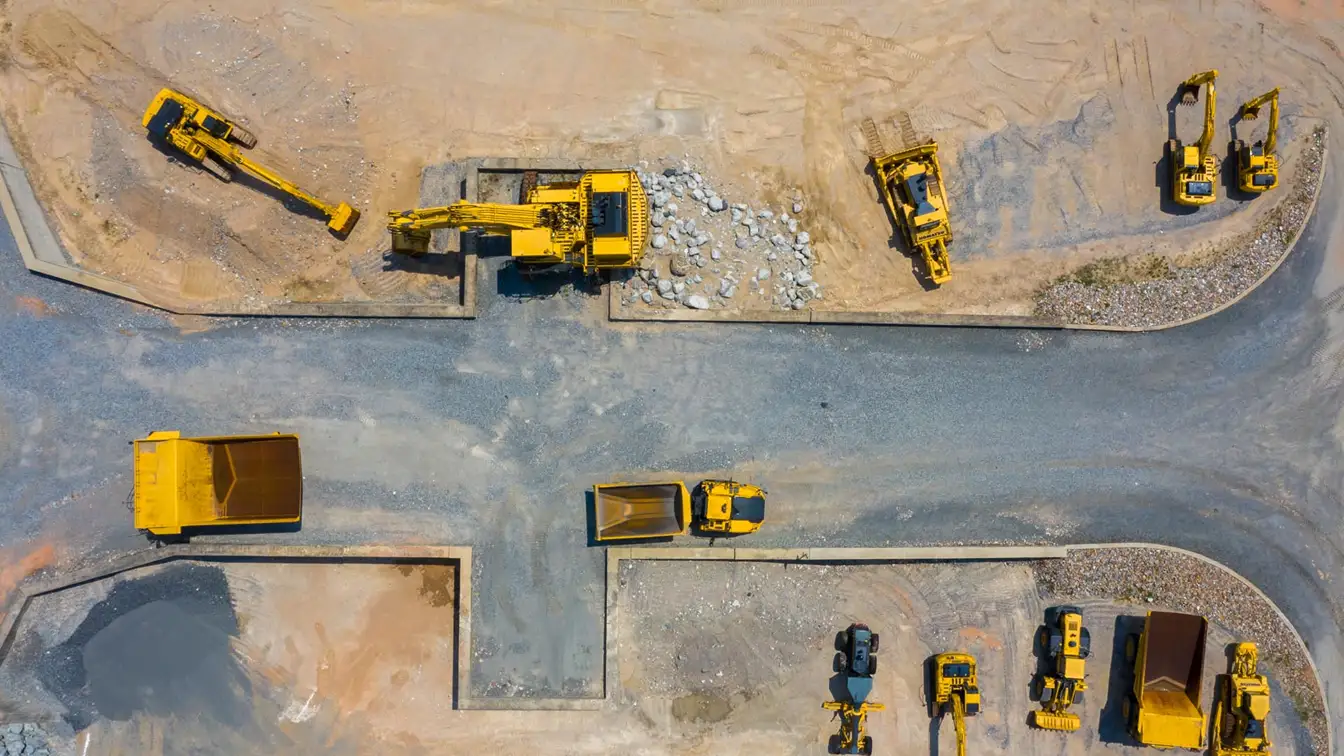
Recent technological innovations in types of backhoe and excavators are transforming how these machines are used on construction excavator sites. Automation and remote operation are leading the way, with machines now capable of performing tasks with minimal human intervention, improving precision and safety. Advanced telematics systems are also becoming standard, providing real-time data on machine performance and maintenance needs, enabling more efficient operation and reducing downtime.
Sustainability is increasingly influencing the design and selection of types of construction machines. Manufacturers are focusing on eco-friendly designs and fuel-efficient models to reduce environmental impact. Electric and hybrid versions of both types of backhoes and excavators are being developed, offering lower emissions and quieter operation, which is particularly beneficial in urban areas. These advancements are making it easier for companies to meet environmental regulations and reduce operating costs.
Market trends show a growing demand for compact, versatile types of construction machines, particularly in urban and residential construction. The rise in equipment rental over purchasing is also shaping the market as businesses seek flexibility and access to the latest technology without large upfront investments. Additionally, the ongoing global infrastructure boom is expected to drive significant demand for powerful and efficient machinery, with excavators likely to see increased usage due to their versatility and high performance in large-scale projects.


Each type of backhoe and excavator offers distinct advantages depending on the project requirements. Backhoes are versatile, combining digging and loading functions, making them ideal for smaller projects and tight spaces. An excavator, on the other hand, provides greater power, deeper digging capabilities, and a wider range of specialized attachments, making them better suited for large-scale construction and heavy-duty tasks.
When choosing between a construction excavator backhoe and an excavator, consider the specific needs of your project: the size of the site, the type of work required, and your budget. Ask yourself key questions: Do you need a machine that can perform multiple tasks? Is deep excavation or heavy lifting required? How important is maneuverability in tight spaces? By assessing these factors, you can select the equipment that will deliver the best performance and efficiency for your project.
Get in touch with us now!
Choosing the right equipment is critical to the success of any construction project. While construction excavators are widely used for their...

Excavators have long been the backbone of earthmoving operations, valued for their digging precision, reach, and raw lifting power. But in today’s...

When it comes to keeping excavation projects on schedule, having the right parts for the right equipment is non-negotiable. For procurement teams...