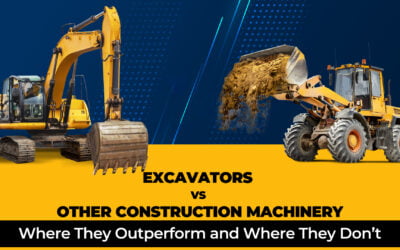
Construction Excavators vs. Other Machinery: Where They Outperform and Where They Don’t
Choosing the right equipment is critical to the success of any construction project. While construction excavators are widely used for their...


Dredging and underwater digging are critical to maintaining and enhancing our waterways, ports, and coastal areas. These operations are essential for various reasons, including removing sediments and debris to maintain navigable waterways, creating and maintaining port facilities, and environmental restoration projects. The importance of these activities cannot be overstated, as they ensure safe and efficient maritime transport, protect shorelines from erosion and support various industrial and recreational activities.
In the realm of dredging and underwater digging, long reach diggers have emerged as indispensable tools. These specialized excavators are designed with extended arms and booms, enabling them to reach depths and distances that standard excavators cannot. Their unique capabilities make them highly effective in dredging and underwater digging tasks, where precision, reach, and efficiency are paramount.
This blog aims to delve into the significant role that long reach diggers play in dredging and underwater digging operations. We will explore their design, functionality, and the numerous benefits they offer, highlighting how they contribute to the success and efficiency of these critical activities. Through this exploration, we aim to understand why long reach diggers comprehensively are a valuable asset in dredging and underwater excavation.


Long reach diggers are a type of excavator designed explicitly for tasks requiring vertically and horizontally extended reach. They are characterized by their elongated booms and arms, which enable them to operate in areas that are difficult to access with standard excavators. These machines are commonly used in dredging, underwater digging, and other applications that demand a greater reach.
Critical features of long reach diggers include:
While both long reach diggers and standard excavators serve similar essential functions, several vital differences distinguish them:
Long reach diggers can be equipped with various attachments, each designed to enhance their functionality for specific tasks. Some of the most common attachments include:
By understanding the capabilities and attachments of long reach diggers, operators can better select the appropriate equipment for their specific dredging and underwater digging needs. This ensures efficient, safe, and effective operation, whether the task involves deep excavation, sediment removal, or construction in challenging environments.

Dredging removes sediment, debris, and other materials from the bottom of water bodies such as rivers, lakes, harbors, and oceans. This process is essential for maintaining the depth and navigability of waterways, preventing flooding, and supporting various economic activities. Dredging offers several significant environmental and economic benefits:
Environmental Benefits:
Economic Benefits:
Underwater digging is critical to maintaining and developing waterways and infrastructure. It involves excavating underwater materials to achieve various objectives, including constructing foundations for bridges and piers, laying underwater pipelines and cables, and removing obstacles that impede water flow.
Key Importance:
Despite their importance, dredging and underwater digging operations face several challenges that can impact their effectiveness and efficiency:
Dredging and underwater digging operations can continue to provide significant environmental and economic benefits by addressing these challenges through innovative technologies, effective planning, and regulatory compliance. Long-reach diggers, with their specialized capabilities, play a crucial role in overcoming some of these challenges, enhancing the efficiency and effectiveness of these essential activities.

One of the most significant advantages of using long reach diggers in dredging operations is their enhanced reach and depth capabilities. Unlike standard excavators, long reach diggers are designed with elongated booms and arms, allowing them to access otherwise difficult areas. This extended reach is particularly beneficial for:
Long reach diggers offer improved precision and control, which are crucial for underwater dredging operations. Their design and capabilities allow for:
Long reach diggers are versatile machines capable of handling various sediment types and underwater materials. This versatility is achieved through:

Long-reach diggers play a vital role in maintaining canals and rivers. These waterways often accumulate sediment, debris, and vegetation over time, obstructing water flow and reducing navigability. With their extended arms, long-reach diggers can effectively reach the bottoms and sides of these channels to remove obstructions. Their ability to operate in confined and difficult-to-access areas makes them particularly useful for regular maintenance tasks, ensuring that canals and rivers remain clear for navigation and flood prevention.
Harbors and ports are crucial hubs for maritime trade and transportation. Maintaining these facilities requires regular dredging to keep the channels deep enough for large vessels. Long-reach diggers are ideal for this purpose because they can reach significant depths and distances. During construction projects, they can excavate underwater foundations, install pilings, and remove underwater obstructions. For ongoing maintenance, long-reach diggers help remove silt and debris that accumulate over time, ensuring the continued operation of these critical infrastructures.
Flood prevention and management are essential for protecting communities and infrastructure. Long-reach diggers contribute significantly to these efforts by dredging rivers, canals, and drainage systems to ensure they have sufficient capacity to handle high water volumes. By removing sediment and debris that can block water flow, these hydraulic diggers help mitigate the risk of flooding. Additionally, they can be used to create and maintain flood defense structures, such as levees and embankments, providing an added layer of protection against floodwaters.
Environmental restoration projects often involve the removal of contaminated sediments, the reconstruction of natural habitats, and the improvement of water quality in affected areas. Long reach diggers are well-suited for these tasks due to their precision and control in underwater environments.
They can carefully excavate contaminated materials without disturbing the surrounding areas, helping to restore aquatic ecosystems. These hydraulic diggers are also used to create or restore wetlands, rivers, and lakes, providing habitats for wildlife and improving biodiversity.
Long reach diggers, adapted for underwater operations, require several key technical considerations to ensure efficiency and safety.
Equipment Modifications for Underwater Use: Adapting long reach diggers for underwater use involves waterproofing critical components such as electrical, engines, and hydraulic systems. Seals and coatings must be robust to prevent water ingress and corrosion. Specialized hydraulic systems with high water resistance and controls designed for underwater conditions are essential.
Safety Protocols and Best Practices: Underwater operations with long-reach diggers require stringent safety protocols. Operators must be trained in underwater operations and equipped with proper safety gear, including diving suits, helmets, and communication devices. Regular checks on equipment condition, depth gauges, and emergency procedures are crucial to mitigate the risks of accidents and ensure operator safety.
Maintenance and Care: Maintaining long-reach diggers used underwater requires meticulous attention. Regular inspection for signs of corrosion, particularly in hydraulic fittings and structural components, is vital. Greasing and lubricating moving parts must be done with water-resistant materials. Post-operation rinsing and drying to remove saltwater residue are essential to prevent long-term damage and ensure equipment longevity.
Using long reach diggers underwater demands precise adaptation, adherence to safety protocols, and rigorous maintenance to maximize operational efficiency and safety in challenging aquatic environments.

When considering the acquisition of a long-reach digger for your dredging and underwater digging operations, one crucial decision is whether to buy or rent. Each option has advantages and disadvantages; the best choice depends on your specific needs and circumstances. Here, we will compare the pros and cons of buying versus renting a long-reach digger, using the keyword’ long-reach digger for sale.’
The decision to buy or rent a long-reach digger depends on your project duration, budget, and operational needs. For long-term and frequent use, purchasing a long-reach digger for sale may be more advantageous, offering cost efficiency and availability. Conversely, renting provides flexibility and lower initial costs, making it suitable for short-term or occasional projects. Careful consideration of these factors will help you make the best choice for your dredging and underwater digging operations.

Long reach diggers stand out as invaluable assets in dredging and underwater digging due to their enhanced reach, precision, and versatility. Whether it’s maintaining canals and rivers, constructing and maintaining harbors and ports, managing flood risks, or undertaking environmental restoration projects, these machines prove their worth time and again. Buying or renting a long reach digger depends on various factors, including project duration, budget, and specific operational needs.
By carefully evaluating the pros and cons of both options, businesses can make informed decisions that align with their long-term goals and financial strategies. Whether opting for a long reach digger for sale or choosing the flexibility of rental, the ultimate goal remains the same: achieving efficient, effective, and environmentally responsible dredging and underwater digging operations.
Get in touch with us now!
Choosing the right equipment is critical to the success of any construction project. While construction excavators are widely used for their...

Excavators have long been the backbone of earthmoving operations, valued for their digging precision, reach, and raw lifting power. But in today’s...

When it comes to keeping excavation projects on schedule, having the right parts for the right equipment is non-negotiable. For procurement teams...