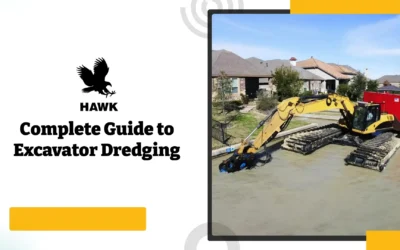
Complete Guide to Excavator Dredging
What Is Excavator Dredging? Excavator dredging is the process of using a hydraulic excavator equipped with a pump attachment to remove and transport...


From the earliest days of waterborne trade to the construction of modern ports and inland waterways, dredge buckets have been at the center of human progress. These robust mechanical tools, once operated manually, evolved into powerful, precision-driven dredging systems capable of transforming rivers, harbors, and industrial sites worldwide. Their ability to excavate compacted sediments, deepen channels, and maintain critical waterways has made them indispensable across industries — from mining and marine construction to environmental restoration. As dredging demands continue to grow in scale and complexity, the evolution of dredge buckets showcases how a simple yet ingenious concept can adapt, modernize, and remain vital in an ever-changing industrial landscape.

Before the era of advanced hydraulic systems and GPS-guided dredgers, sediment removal was a slow, labor-intensive process carried out with basic tools. Early civilizations relied on manual dredging — often using hand-held scoops, baskets, and crude wooden shovels — to clear silt from rivers, irrigation channels, and small harbors. These primitive techniques were essential for maintaining water flow and enabling the movement of goods and people, but they were limited in both depth and scale. As trade expanded and waterways became critical to commerce, infrastructure, and defense, the need for a more efficient and powerful solution grew rapidly.
The transition from manual dredging to mechanized excavation marked a turning point in maritime engineering. By the 17th and 18th centuries, innovators began attaching bucket-like implements to simple cranes and winches mounted on barges. These early dredging buckets, although rudimentary by today’s standards, significantly increased productivity and enabled deeper, more consistent sediment removal. The real breakthrough came with the development of the bucket ladder dredger — a continuous chain of buckets driven by mechanical power. Instead of manually lowering and lifting tools, engineers could now automate the dredging cycle, removing large volumes of material with far greater speed and precision.
These early mechanical dredgers quickly found widespread use in some of the most critical water engineering projects of the time. River navigation channels were deepened to accommodate heavier vessels and expanding trade routes. Canals, essential to industrial growth and inland transport, were maintained and expanded with unprecedented efficiency. Coastal ports and harbors — the lifelines of global trade — were kept navigable, enabling the rise of larger fleets and more complex shipping networks.
What made the dredge bucket such a revolutionary concept was its simplicity combined with its scalability. Its fundamental design — a robust metal scoop capable of cutting into compacted sediment and carrying it to the surface — could be adapted to a wide range of conditions, from shallow riverbeds to deep-water harbors. The mechanical reliability of bucket systems, along with their ability to deliver predictable, controlled excavation, laid the groundwork for nearly every modern dredging technique that followed. Even as more sophisticated technologies emerged, the basic principle behind the dredging bucket remained unchanged — proof that a simple idea, executed effectively, can transform entire industries.

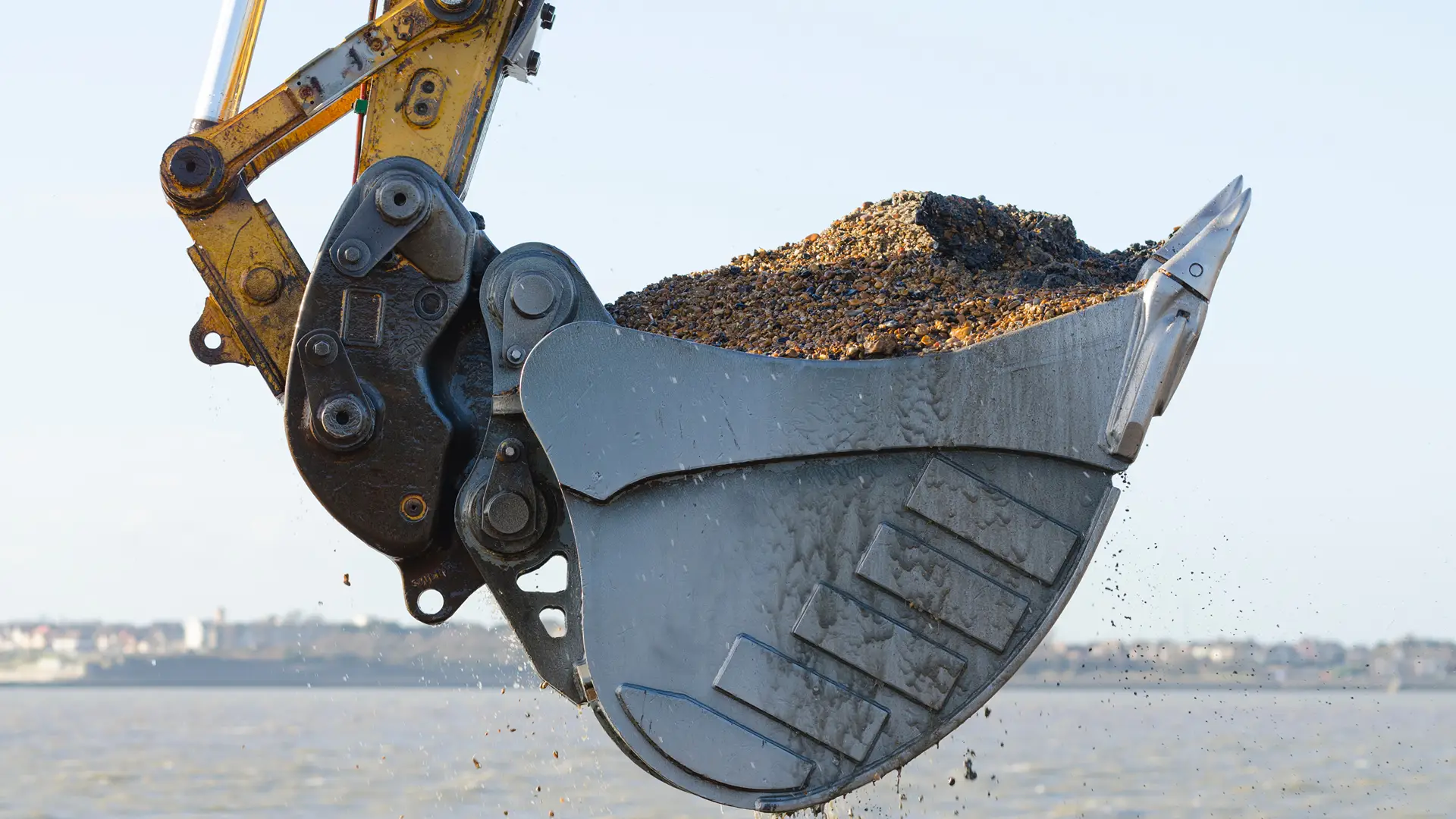
At the heart of every mechanical dredging operation lies a deceptively simple yet highly effective tool — the dredge bucket. Engineered for durability, precision, and versatility, it remains one of the most reliable methods of sediment excavation even in an era dominated by hydraulic and automated systems. To understand why bucket dredgers have stood the test of time, it’s essential to break down how these machines are built and how they function in the field
The operation of a dredge bucket follows a straightforward but highly effective cycle:
Dredge bucket systems are far from one-size-fits-all. Their design is often tailored to match the unique challenges of each dredging environment:
What sets the dredge bucket apart is not its complexity, but rather its mechanical elegance. With few moving parts and a proven operating principle, these systems deliver consistent performance with minimal maintenance. They excel in shallow water, confined spaces, and projects requiring precise excavation — areas where more complex hydraulic systems often face limitations. The predictability of their operation, combined with their robustness, makes dredge buckets indispensable for everything from canal maintenance to large-scale port construction.

As global trade expanded in the 18th and 19th centuries, the limitations of small, manually operated dredging buckets became apparent. Growing ports, deeper shipping channels, and larger vessels demanded equipment capable of removing massive volumes of sediment quickly and reliably. This demand led to the development of larger, mechanized bucket dredgers — machines that transformed dredging from a slow, manual process into a continuous, high-capacity operation.
The most significant leap came with the introduction of bucket chain and bucket ladder dredgers. Instead of lifting individual buckets one by one, these systems mounted a series of buckets on a continuous chain or ladder, allowing them to dig, lift, and discharge material in an uninterrupted cycle. The result was a dramatic increase in efficiency and throughput, enabling dredgers to handle harder soils, deeper channels, and larger excavation projects with ease.
Throughout the 19th and early 20th centuries, bucket dredgers played a central role in major infrastructure projects. They deepened ports to accommodate the first steamships, carved out new canals like the Suez and Panama, and maintained vital river trade routes that fueled industrial growth. Compared to early hydraulic dredgers, bucket systems offered greater precision and superior performance in compacted or mixed sediment, where suction technology often struggled.


The evolution of dredge buckets was more than just an engineering achievement — it fundamentally reshaped global trade, infrastructure development, and environmental management. By enabling large-scale sediment removal and precise excavation, bucket dredgers became indispensable to some of the most important waterway projects in history, laying the foundation for modern maritime logistics and resource industries.
One of the most significant applications of bucket dredgers has been in the construction and expansion of ports. As global shipping shifted to larger vessels, harbors needed deeper berths and wider access channels. Bucket dredgers provided the precision and power necessary to remove compacted clay, sand, and gravel, ensuring safe navigation for heavy cargo ships. Projects like the expansion of Rotterdam and Hamburg ports relied on mechanical dredging to deepen basins and maintain year-round accessibility.
Rivers are vital commercial arteries, but natural sediment buildup can quickly render them impassable. Bucket dredgers have been used extensively to maintain navigable depths on waterways such as the Mississippi, Rhine, and Danube. Their ability to handle varied materials — from soft silt to consolidated layers — ensures consistent shipping lanes and reduces the risk of flooding by improving water flow.
Beyond navigation, dredge buckets also play a critical role in resource extraction. In alluvial mining, they are used to excavate mineral-rich sediments with precision, minimizing waste and maximizing yield. Similarly, in construction and aggregate industries, bucket dredgers efficiently recover sand and gravel from riverbeds and coastal zones, supporting infrastructure projects and raw material supply chains.
In cities, dredge buckets are vital for cleaning and restoring canals, reservoirs, and stormwater channels. Their mechanical strength makes them ideal for removing accumulated debris, sludge, and contaminated sediments. Restoration projects in historic waterways — such as Amsterdam’s canal system and London’s Thames — have relied on bucket dredging to preserve heritage while improving water quality and flood resilience.
Across all these applications, the economic and environmental benefits are profound. By maintaining shipping routes, supporting trade, unlocking natural resources, and restoring ecosystems, dredging has helped sustain global commerce and urban development while contributing to safer, cleaner, and more navigable waterways.

Despite the rise of advanced hydraulic and suction-based dredging technologies, bucket dredgers remain an essential component in modern sediment removal operations. Their enduring relevance is rooted in a combination of mechanical strength, operational precision, and adaptability that many newer systems still struggle to match. These characteristics make bucket dredging the preferred choice for a wide range of specialized and challenging projects.
One of the greatest advantages of dredge buckets is their ability to handle dense, compacted, or mixed materials with accuracy and consistency. Unlike suction dredgers, which perform best in loose sediments, bucket dredgers use mechanical force and cutting teeth to penetrate and excavate harder layers such as clay, gravel, and consolidated silt. This precision is particularly valuable in port deepening projects, channel maintenance, and mineral recovery operations, where controlled excavation is critical.
Bucket dredgers excel in conditions where other dredging methods face limitations. Their ability to operate efficiently in shallow waters, narrow channels, and confined urban waterways makes them ideal for projects such as canal restoration, dock excavation, and riverbank maintenance. Their maneuverability and mechanical control allow them to work close to structures, pipelines, and foundations without the risk of over-dredging or unintended damage.
With a simple design and robust construction, dredge buckets are built for reliability. Fewer moving parts mean less wear and tear, translating to lower maintenance costs and longer operational lifespans. Even in abrasive or debris-heavy environments, high-strength steel construction and replaceable cutting teeth ensure continued performance with minimal downtime. This mechanical resilience is a major reason why bucket dredgers remain a cost-effective solution for long-term projects.
Another key advantage of bucket dredging is the ability to handle and remove sediment with minimal disturbance to the surrounding water. Because excavation is mechanical rather than fluid-driven, there’s less sediment dispersion and turbidity, which is particularly beneficial in environmentally sensitive areas. This controlled removal is essential for projects focused on habitat restoration, the removal of contaminated sediment, or operations near critical infrastructure.
These combined strengths — precision, versatility, durability, and environmental control — ensure that bucket dredgers remain indispensable in modern dredging. For specific applications where accuracy, material type, or site constraints are most critical, they continue to outperform more complex systems, proving that traditional mechanical dredging still holds a vital place in today’s marine engineering landscape.

While the fundamental principle behind bucket dredging has remained largely unchanged for over a century, recent advances in engineering, materials science, and digital technology are transforming how these machines operate. What was once a purely mechanical system is now evolving into a sophisticated, data-driven tool — blending proven reliability with the precision and intelligence required for modern dredging challenges.
One of the most significant advancements in dredge bucket design is the use of new, high-performance materials that extend service life and improve operational efficiency. Modern buckets are built with abrasion-resistant steels, hardfacing alloys, and wear-resistant coatings that withstand the harsh conditions of continuous dredging in abrasive and mineral-rich environments. Replaceable cutting teeth, modular bucket shells, and reinforced joints further reduce maintenance downtime and extend operational longevity, making dredging more cost-effective over the long term.
Mechanical dredging is no longer a “blind” operation. Today’s bucket dredgers are increasingly equipped with smart technologies that provide real-time data and precise control. Sensors embedded in buckets can measure load weight, digging resistance, and wear levels, helping operators optimize excavation cycles. GPS and RTK positioning systems enable pinpoint accuracy, ensuring dredging occurs precisely where needed and minimizing the risk of over-excavation. Combined with automation software, these tools help improve efficiency, consistency, and safety across dredging projects.
As digital infrastructure advances, remote operation is becoming a standard feature in modern dredging fleets. Control systems now enable operators to monitor and manage dredging activities from onshore stations or centralized control centers. Semi-autonomous operation — where dredgers follow pre-programmed excavation paths or respond to real-time sensor data — further enhances precision while reducing reliance on manual intervention. These capabilities are particularly valuable in hazardous or hard-to-reach environments, where safety and efficiency are paramount.
The future of bucket dredging lies in hybridization, which combines traditional mechanical excavation with advanced dredging platforms. In some cases, bucket dredgers are paired with suction systems to handle a wider range of materials or boost production rates. Others integrate with digital project management platforms that track dredging progress, sediment volumes, and environmental impacts in real-time. These hybrid solutions leverage the robustness and reliability of mechanical systems while incorporating the adaptability and intelligence of modern technology.
By merging time-tested mechanical excavation with cutting-edge innovations, bucket dredging is transitioning from a legacy solution into a high-precision, data-informed technology. This evolution not only enhances performance and reliability but also positions bucket dredgers as a vital component of future marine infrastructure and sediment management strategies.

As global attention shifts toward environmental protection and sustainable infrastructure, dredging practices — including those involving bucket dredgers — are undergoing a major transformation. Historically, dredging was focused almost exclusively on excavation efficiency and channel depth, but today, regulatory frameworks, ecological considerations, and public expectations demand a more responsible approach. Modern bucket dredging systems are being redesigned and operated with sustainability at the forefront, ensuring that essential sediment removal activities can proceed without compromising sensitive aquatic ecosystems.
Tightening environmental regulations worldwide now govern the planning, execution, and monitoring of dredging projects. Compliance often requires detailed environmental impact assessments, sediment quality testing, and water quality monitoring throughout the project lifecycle. As a result, mechanical dredging equipment is being engineered to meet stringent standards, with a focus on controlled sediment handling, reduced turbidity, and minimized ecological disruption. These efforts help ensure that dredging operations not only support navigation and development but also align with long-term environmental stewardship goals.
Modern dredge buckets are designed to minimize sediment resuspension — a common concern in traditional dredging that can impact water quality and aquatic habitats. Features such as sealed bucket designs, optimized discharge systems, and improved hoisting control reduce sediment dispersion during lifting and emptying. In sensitive environments, containment curtains, silt screens, and geotextile barriers are deployed to further isolate dredging activity from surrounding waters. Together, these techniques reduce the spread of fine particles and contaminants, protecting downstream ecosystems and water users.
Beyond infrastructure projects, bucket dredging has become a valuable tool in environmental restoration and remediation efforts. Its mechanical precision is ideal for targeted removal of contaminated sediments from industrial waterways, harbors, and urban canals, where suction methods risk wider dispersal of pollutants. Similarly, bucket dredgers are used in wetland restoration and habitat rehabilitation projects to reshape riverbeds, reestablish natural flow patterns, and remove obstructions that hinder aquatic biodiversity.
By integrating sustainable practices, advanced containment methods, and environmental monitoring into every stage of the dredging process, bucket dredgers are evolving into essential instruments of ecological management — not just tools for excavation. Their adaptability makes them uniquely suited for projects that balance development with environmental protection, supporting healthier waterways and resilient ecosystems.


The story of dredge buckets is more than just a history of mechanical innovation — it’s a testament to engineering that continues to shape global infrastructure, commerce, and environmental restoration. Even in an era of automation and AI, these systems remain unmatched in terms of precision excavation, versatility, and reliability in challenging dredging environments. As technology pushes the boundaries of what’s possible, bucket dredgers are evolving to meet new environmental standards, deliver smarter performance, and support sustainable development. If you’re planning a dredging or excavation project and need powerful, field-proven solutions, talk to us at HAWK Excavator — we’re here to help you tackle any sediment removal challenge with precision and efficiency
Get in touch with us now!
What Is Excavator Dredging? Excavator dredging is the process of using a hydraulic excavator equipped with a pump attachment to remove and transport...
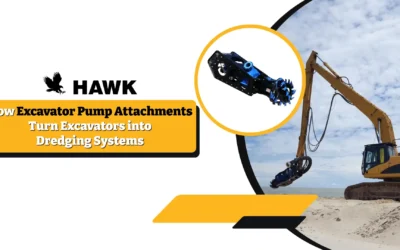
Excavator pump attachments turn standard excavators into dredging systems by using the machine’s hydraulic power to drive a submersible slurry pump....

Yes – amphibious excavators can float, but not in the same way a boat operates in open water. These machines are built to work in wetlands,...